John Bolton Pleads Guilty in Classified Documents Case, Faces Prison and Hefty Fine
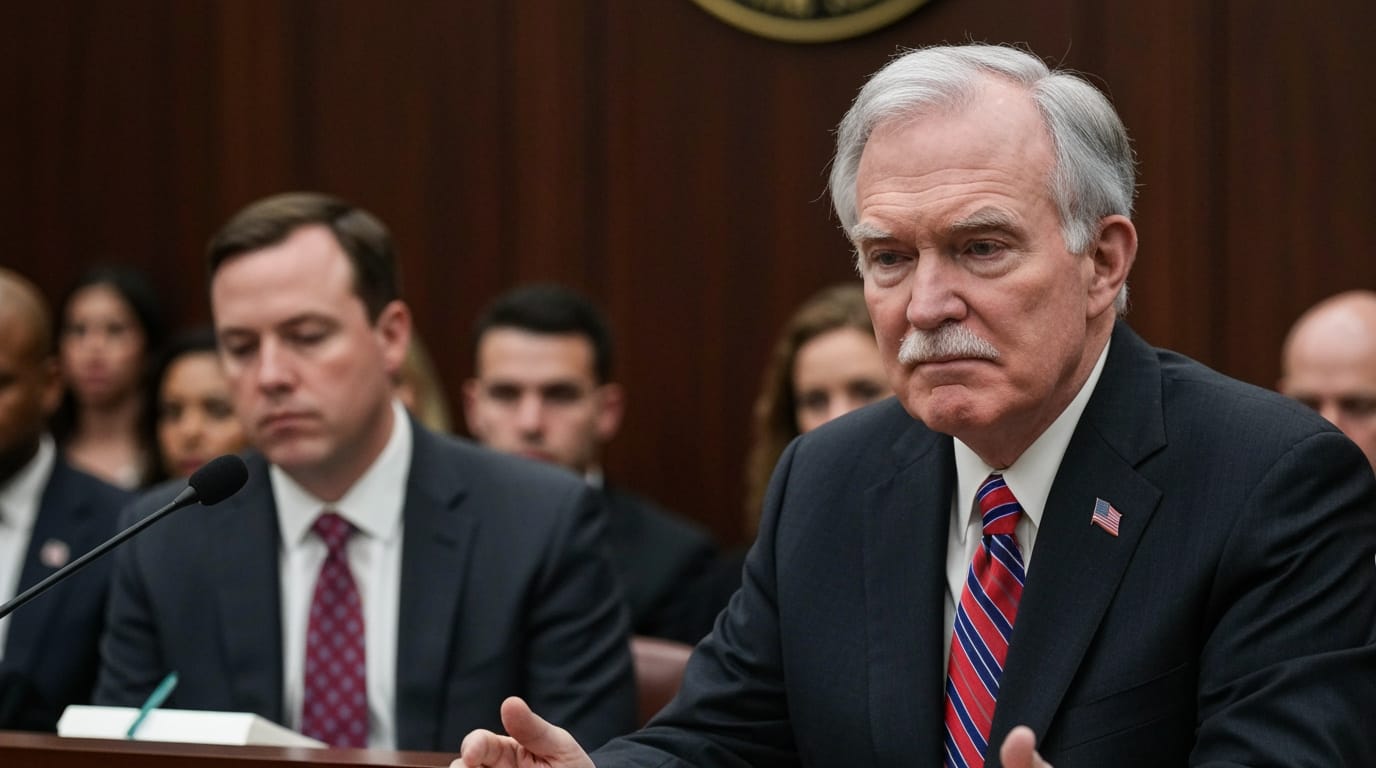
Greenbelt, Maryland — John R. Bolton, the former National Security Adviser under President Donald Trump and later a vocal critic, pleaded guilty Friday to one count of retaining sensitive government information, bringing a significant chapter in his distinguished but controversial public career to a close. The plea agreement, reached in federal court in Greenbelt, Maryland, mandates a substantial financial penalty and a potential prison sentence, underscoring the gravity with which the Justice Department views the mishandling of classified materials by high-ranking officials.
Bolton, 77, admitted to unlawfully holding onto and sharing classified "diary-like" notes from his time in the White House, information deemed critical to national security. His admission to U.S. District Judge Theodore D. Chuang, where he stated, "I am your honor, and I'm sorry for it," marked a reversal from his initial not-guilty plea last year to an 18-count indictment. The resolution of this case sends a clear message regarding accountability for those entrusted with the nation's most guarded secrets.
The Plea Agreement: Terms and Consequences
Under the terms of the plea agreement, Bolton pleaded guilty to a single count of retaining national defense information, a charge that carries a maximum potential sentence of five years in federal prison. His sentencing has been scheduled for October 28. While the original indictment encompassed 18 charges, including both unlawful transmission and retention of national defense information, each carrying up to 10 years in prison, prosecutors have agreed to recommend a sentence not exceeding five years as part of the deal. The final determination on the sentence will rest with Judge Chuang.
Beyond potential incarceration, the financial repercussions for Bolton are substantial. He has agreed to forfeit his government pension and pay a fine of $2.25 million. This hefty sum is to be paid in two installments: half within five days of his sentencing and the remainder within 90 days. In addition to these penalties, Bolton is committed to debriefing national security officials on any unlawfully retained information and performing 100 hours of community service. This service aims to assist government efforts in preventing the unlawful disclosure of classified materials, a commitment that highlights the broader objective of the Justice Department in this case.
Unveiling the Breach: The Classified Information at Stake
The core of the charges against Bolton revolved around his alleged mishandling of highly sensitive information, much of which was contained in "diary-like" summaries of his daily activities as National Security Adviser. Prosecutors contended that Bolton shared over a thousand pages of these notes, accumulated between April 2018 and August 2025, with two relatives—reportedly his wife and daughter—who did not possess the necessary security clearances. This sensitive information was transmitted through personal email accounts, including AOL and Google, and various messaging applications, bypassing official secure channels.
Among the disclosed materials was information deemed "top secret," the highest classification level, which included details about an adversary's plans to attack U.S. forces in another country. Prosecutors emphasized that this information revealed human intelligence sources and methods, posing a direct threat to national security. During FBI raids on Bolton's home and office in August 2025, agents reportedly seized documents related to weapons of mass destruction, intelligence on foreign adversaries' leadership, and foreign-policy relations, further illustrating the scope and sensitivity of the retained information.
From White House to Courtroom: Bolton's Tumultuous Trajectory
John Bolton's career has been marked by decades of high-level service in Republican administrations, including roles as U.S. Ambassador to the United Nations under President George W. Bush. His tenure as National Security Adviser to President Trump, from April 2018 to September 2019, was tumultuous. He was ultimately fired by Trump amidst significant policy disagreements, particularly concerning foreign policy. Following his departure, Bolton became a prominent and outspoken critic of the former president.
The genesis of the classified documents case is inextricably linked to Bolton's 2020 memoir, "The Room Where It Happened." The book offered a critical, behind-the-scenes account of his time in the Trump administration, portraying the president as "stunningly uninformed" and "ill-informed about geopolitics." The Justice Department and the White House attempted to block the book's publication, arguing it contained classified information that had not been properly vetted. A judge, however, denied the injunction, and the book was released. Prosecutors later alleged that the "diary-like" notes Bolton shared with relatives were intended for use in the preparation of this very memoir.
Bolton's lawyer, Abbe Lowell, maintained that his client's actions were driven by a desire to "preserve history" through his diary, rather than malicious intent, drawing a distinction between Bolton's case and other high-profile classified documents controversies. Lowell noted that Bolton "took responsibility for a mistake he made, thereby saving the government resources to pursue a case that could expose additional sensitive information," suggesting a pragmatic motivation behind the guilty plea.
A Warning from Justice: National Security and Precedent
The investigation into Bolton's handling of classified information began during the Biden administration, though questions about his conduct dated back to his memoir's publication. A critical turning point in the probe involved a cyberattack in 2021 by actors believed to be linked to the Iranian government, who successfully hacked Bolton's personal email account. While Bolton reported the breach, he reportedly failed to disclose that the account contained classified information, meaning the foreign adversaries gained access to highly sensitive national defense materials.
Justice Department officials have seized upon Bolton's plea as an opportunity to reinforce the severe consequences for mishandling classified information. Hayden O'Byrne, a top official in the National Security Division, stated that Bolton "betrayed that trust" and "jeopardized our nation's security," emphasizing that the plea should serve as a stark warning to all government officials who handle state secrets. U.S. Attorney Kelly Hayes echoed this sentiment, asserting that Bolton, with his extensive experience, understood the protocols for classified information and the "grave risk" his actions posed to national security.
This prosecution unfolds within a broader political landscape where the Justice Department has faced scrutiny over cases against other prominent critics of former President Trump. While some have viewed these actions through a partisan lens, officials have stressed that the Bolton investigation predated Trump's return to office in 2025 and was supported by career prosecutors, aiming to uphold the principle that no one is above the law when it comes to safeguarding national security.
Bolton's guilty plea marks a somber moment for a figure who has long been at the center of U.S. foreign policy. It highlights the enduring tension between public officials' roles as policymakers and their responsibilities to protect classified information, particularly in an era of heightened geopolitical risks and porous digital boundaries. The impending sentencing in October will provide further clarity on the personal cost of this breach of trust, solidifying the precedent for accountability in the handling of America's most sensitive intelligence.


