Historic Washington Accord Signed, Offering Glimmer of Hope for Volatile Congo-Rwanda Border
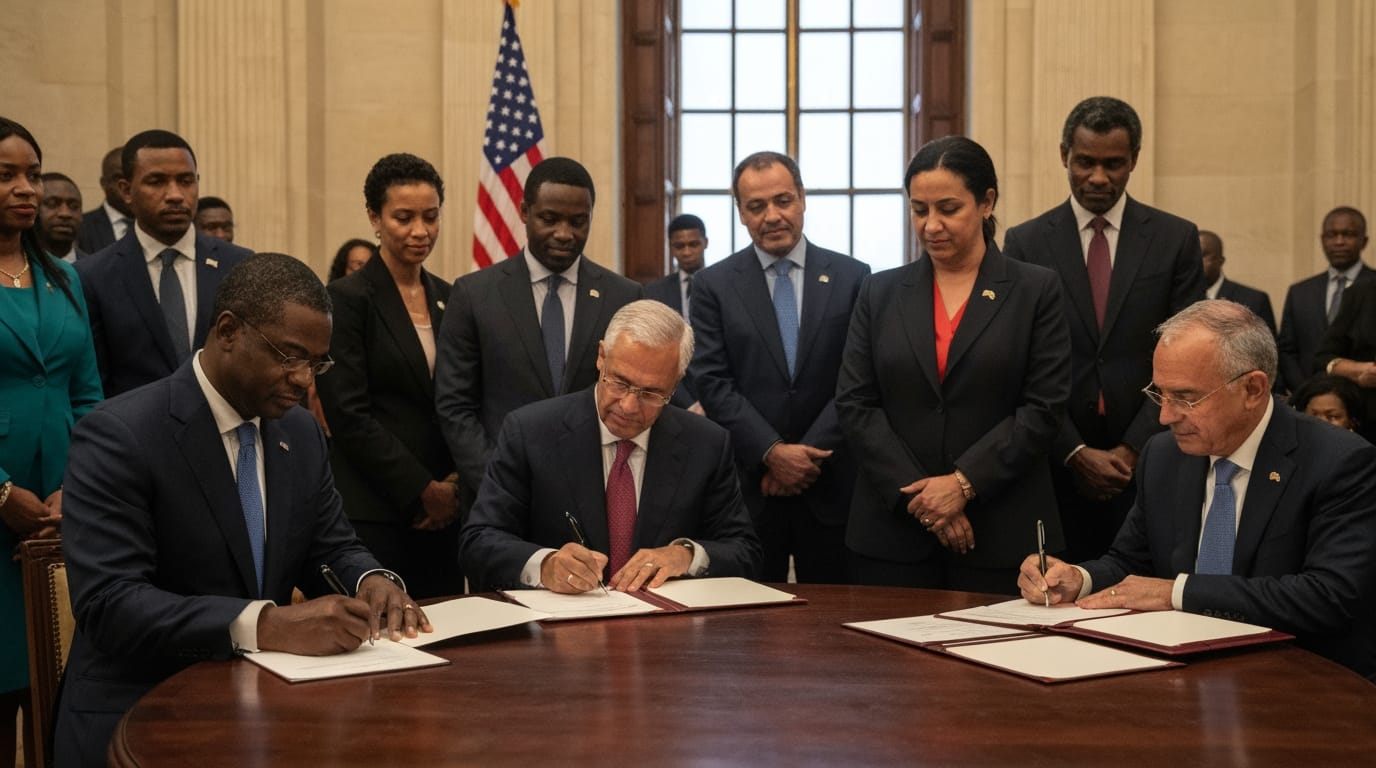
Washington D.C. – In a landmark diplomatic event aimed at quelling decades of conflict, the presidents of the Democratic Republic of Congo (DRC) and Rwanda formally ratified a comprehensive peace agreement, known as the Washington Accord, on December 4, 2025, in the U.S. capital. The accord, signed by DRC President Félix Tshisekedi and Rwandan President Paul Kagame under the auspices of U.S. President Donald Trump, represents a significant international push to stabilize the perennially volatile Great Lakes region and unlock its economic potential. However, even as leaders gathered for the ceremonial signing, reports of continued hostilities in eastern DRC underscored the formidable challenges ahead for an agreement already facing skepticism regarding its enforcement.
Decades of Destabilization: A Regional Crisis
The eastern Democratic Republic of Congo has been a hotbed of conflict for nearly three decades, a legacy rooted in the aftermath of the 1994 Rwandan genocide and fueled by a complex web of ethnic tensions, resource exploitation, and proxy warfare. The conflict has involved numerous armed groups, including the M23 rebels and the Democratic Forces for the Liberation of Rwanda (FDLR), with both Kinshasa and Kigali routinely accusing each other of supporting these factions. Rwanda has been accused of backing the M23, an allegation it denies, while the DRC has faced accusations of harboring the FDLR, a Hutu extremist group that includes individuals linked to the Rwandan genocide. This protracted instability has resulted in millions of deaths, widespread displacement, and a profound humanitarian crisis, severely hindering development in a region rich in critical minerals.
The Diplomatic Road to Washington
The path to the Washington Accord was protracted, involving extensive mediation efforts from various international and regional actors. Following earlier, often stalled, initiatives like the Luanda Process and Nairobi talks, the United States, along with Qatar, intensified its diplomatic engagement in recent months. A preliminary peace deal was initially inked by the foreign ministers of the DRC and Rwanda, Thérèse Kayikwamba Wagner and Olivier Nduhungirehe, respectively, on June 27, 2025, in Washington D.C.. This initial agreement laid the groundwork for a permanent ceasefire, addressing security concerns, and outlining steps for regional economic integration. U.S. Secretary of State Marco Rubio oversaw this earlier signing. Subsequent meetings, including a Joint Security Coordination Mechanism, were held in Washington to review progress on military plans against the FDLR and the withdrawal of Rwandan troops, but by mid-September 2025, implementation had largely stalled. Despite these setbacks and continued clashes, the commitment to a high-level signing ceremony persisted, culminating in the December 4 event.
Core Tenets of the Washington Accord
The Washington Accord is a multifaceted agreement designed to tackle both the immediate security threats and the underlying drivers of the conflict. Central to its provisions are explicit calls for the withdrawal of Rwandan troops from the eastern DRC and a commitment from the Congolese government to cease support for the FDLR militia. The accord further mandates the establishment of a joint security coordination mechanism within 30 days of its entry into force, tasked with overseeing the implementation of disarmament protocols and ensuring transparency in operations. Beyond security, a significant component of the agreement is the creation of a regional economic integration framework, particularly focused on the critical minerals trade. This framework aims to foster economic cooperation between the two nations, with a notable emphasis on attracting U.S. companies and investment into the region's vast mineral resources. The document also includes commitments to respect territorial integrity, facilitate the return of refugees, and explore transitional justice mechanisms.
Implementation Hurdles and Lingering Mistrust
Despite the ceremonial signing, the road to lasting peace remains fraught with significant challenges. Observers noted a palpable sense of mistrust during the Washington ceremony, exemplified by the lack of a direct handshake between Presidents Tshisekedi and Kagame. This uneasy atmosphere underscored deeply rooted suspicions that have historically undermined previous peace efforts. Critically, the March 23 Movement (M23), a major rebel group active in eastern DRC and accused of Rwandan backing, was not a signatory to the Washington Accord. The M23 is engaged in separate, Qatar-mediated negotiations with the Congolese government, and reports indicate that fighting between M23 and Congolese forces continued even on the day of the signing. Both sides accused the other of violating existing ceasefires, suggesting that the top-level agreement has yet to translate into an immediate cessation of hostilities on the ground. Rwandan troops had not fully withdrawn from the DRC by mid-September, and the FDLR remained active, indicating a slow and difficult implementation phase.
A Fragile Future for Regional Stability
The Washington Accord, hailed by U.S. President Donald Trump as a "historic success" and a "turning point" by President Tshisekedi, represents a renewed international commitment to resolve one of Africa's most enduring conflicts. African Union Chairperson Mahmoud Ali Youssouf commended the deal as a significant milestone, calling for faithful implementation from all parties. However, the real test of the agreement will lie not in its signing, but in its consistent and verifiable implementation. The ongoing hostilities, coupled with the absence of M23 from the core agreement and the historical lack of trust between Kinshasa and Kigali, necessitate sustained diplomatic pressure and robust monitoring mechanisms. While the promise of economic integration and U.S. investment offers a powerful incentive for cooperation, successfully transforming the Washington Accord from a diplomatic triumph into tangible peace will demand unwavering political will and accountability from all involved parties.


