Hitler's Birthplace Reborn: Austrian Police Station Aims to Neutralize Dark Legacy
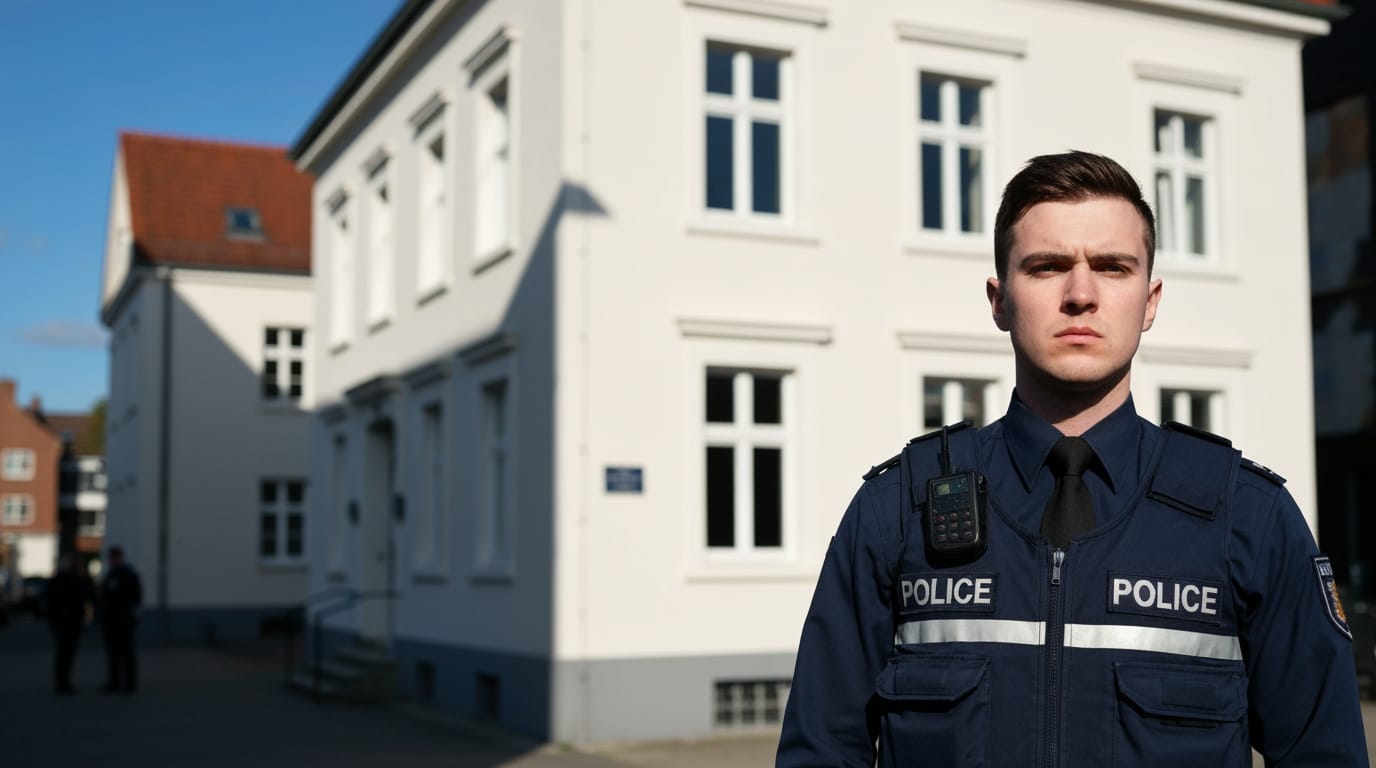
BRAUNAU AM INN, Austria – Decades of national deliberation over the fate of Adolf Hitler's birthplace have culminated in a symbolic transformation, as the unremarkable 17th-century building in Braunau am Inn formally reopens its doors today as a police station. This decisive move by the Austrian government is intended to definitively neutralize the site, preventing it from serving as a pilgrimage destination for neo-Nazis and far-right extremists globally, while simultaneously asserting the firm presence of state authority against the glorification of Nazism. The €20 million redevelopment project brings to a close a long-standing and often sensitive debate surrounding the property's future, a dialogue deeply interwoven with Austria's ongoing reckoning with its historical role in the Holocaust.
The transformation represents a tangible effort by Austria to confront a deeply troubling piece of its past. For years, the house at Salzburger Vorstadt 15 has been a focal point of controversy, with authorities struggling to find a purpose that would both acknowledge its dark historical significance and actively deter any attempts to venerate its most infamous former resident. The decision to establish a police station, including district police headquarters and a security academy branch focused on human rights training, is a clear statement of intent: to repurpose a symbol of hatred into an institution dedicated to upholding law, order, and democratic values.
A House Steeped in Dark History
Adolf Hitler was born in this rented apartment on April 20, 1889, in the small town of Braunau am Inn, near Austria's border with Germany. While his family lived there for only a few weeks after his birth, and subsequently moved within the town, the address became inextricably linked to the dictator. During the Nazi regime, the building was used as a place of worship, effectively becoming a pilgrimage site for his followers. After World War II, the property was returned to its former owners. For decades, the Austrian Interior Ministry leased the premises, subletting it to various charitable organizations, including a care center for adults with disabilities, which occupied it until 2011.
The challenge of the house's future intensified after 2011 when it became vacant, reigniting the contentious public debate. Options ranging from demolition to conversion into a museum or memorial were intensely discussed, each presenting its own set of complexities and potential pitfalls. The overriding concern for the Austrian government was to prevent any scenario that could inadvertently provide a platform or rallying point for extremist ideologies.
Decades of Dilemma and Nationalization
The Austrian government's struggle with the building reached a critical juncture in 2016 when it decided to nationalize the property after its private owner refused to sell it. This move, supported by Austria's highest court, aimed to grant the state full control over the site's destiny. Following nationalization, a government-appointed commission of 13 experts was tasked with recommending a definitive future for the site.
The commission carefully weighed various proposals. The idea of transforming the building into a museum or a center for remembrance, while seemingly appropriate given its historical weight, was ultimately rejected due to concerns that even a memorial space could be misused or misrepresented by visitors with extremist leanings. Similarly, outright demolition, while favored by some, was ruled out. The 17th-century building is an integral part of Braunau am Inn's historic center and is protected as an architectural monument. Furthermore, experts cautioned that dismantling the structure could be perceived as an attempt to erase historical memory, a problematic approach for a nation grappling with its past. The commission concluded that housing a police station would ensure "restricted public access and the presence of state authority," minimizing the risk of its use for propaganda purposes.
A Symbolic Overhaul and Public Opinion
The comprehensive refurbishment of the building, which reportedly cost €20 million, has dramatically altered its appearance. The once roughcast yellow walls have been whitewashed, making the structure "all but unrecognizable" from its former state. Work on the transformation officially began in October 2023, with police anticipated to occupy the premises in early 2026. Interior Minister Gerhard Karner is presiding over the official opening today, marking the completion of this sensitive and significant project.
Despite the government's clear rationale, the decision has not been universally embraced by the Austrian public. While officials believe the police presence will "clearly show" that no commemoration of Nazism is acceptable, public opinion remains divided. A 2023 sociological survey indicated that only 6% of respondents supported the administrative use of the building. In contrast, more than half of those surveyed expressed a preference for the creation of a memorial center dedicated to anti-fascism, tolerance, and historical understanding, while a quarter still supported demolition. This reflects the ongoing national struggle to find an appropriate balance between remembrance, deterrence, and the complex heritage of the Nazi era. Notably, the memorial stone outside the house, bearing the inscription "For Peace, Freedom and Democracy - Never Again Fascism - Millions of Dead Warn," will remain in place, serving as a permanent reminder of the lessons learned from history.
The opening of the police station in Hitler's birthplace signifies a concerted effort by Austria to reclaim a site that has been tainted by a dark past. By transforming a potential beacon for extremist ideologies into a symbol of law enforcement and democratic values, the government hopes to definitively "neutralize" the location. This move, though met with mixed public sentiment, underscores Austria's determination to prevent any resurgence of Nazi glorification and to instead project an image of vigilance and commitment to peace, freedom, and democracy. The repurposed building stands now not as a monument to evil, but as a bastion against it, embodying the state's resolve to counter extremism through tangible action and symbolic redefinition.