International Media Voices Stand With Georgians Resisting Pressure on Democracy
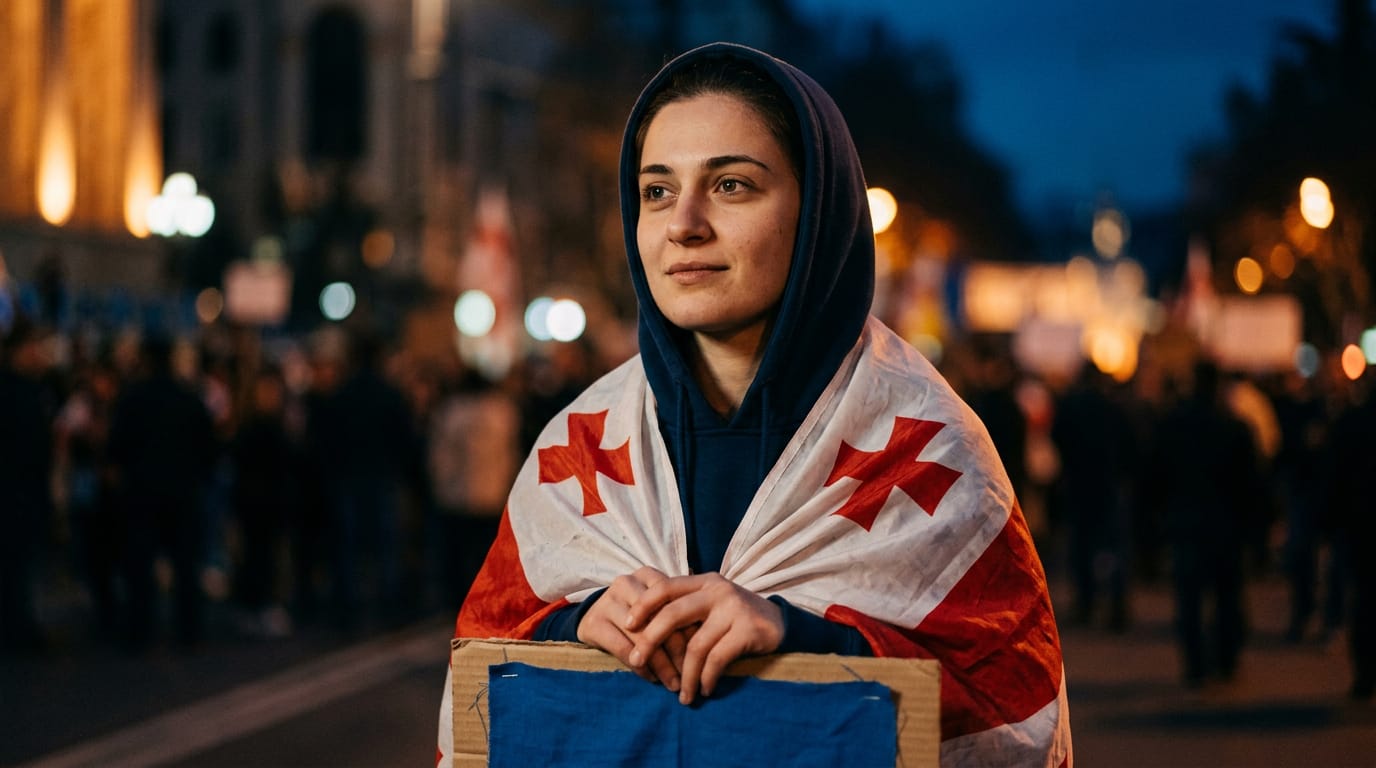
TBILISI — Tens of thousands of demonstrators carrying Georgian and European Union flags have filled Rustaveli Avenue outside the parliament building in Tbilisi, sustaining an extended campaign of civil resistance that has drawn widespread international support. Global press organizations, led by Germany’s international broadcaster Deutsche Welle, have amplified solidarity campaigns defending Georgia’s democratic aspirations and independent journalism as civic space rapidly contracts across the South Caucasus nation.
The popular mobilization reflects a profound standoff between a pro-Western public and the governing Georgian Dream party. For months, civil society organizations, independent journalists, and student groups have organized daily marches, human chains, and round-the-clock vigils. International media freedom networks have pledged structural backing for local reporters who face legal penalties, surveillance, and physical harassment while documenting the historic civic confrontation.
The Legislative Spark and Democratic Backsliding
The immediate catalyst for the sustained crisis was the passage of restrictive foreign influence legislation. Modeled after similar measures enacted in Moscow, the statute forces nongovernmental organizations and media organizations to register as entities pursuing the interests of a foreign power if they receive more than 20 percent of their annual funding from abroad.
Supporters in the ruling party contend that the measures are necessary to ensure domestic financial transparency and to prevent outside meddling in state affairs. Lawmakers allied with the administration argue that the country must insulate its political structures amid heightened regional tensions and the ongoing Russian military occupation of Abkhazia and South Ossetia.
Opponents, however, describe the rules as a coordinated effort to silence watchdog reporting and paralyze civic oversight. Rights monitors emphasize that the overwhelming majority of Georgia's independent media and anti-corruption watchdogs rely on grants from European and North American institutions due to the absence of a viable domestic advertising market. Public surveys consistently demonstrate that roughly 80 percent of the Georgian population favors accession to the European Union, making the official pivot away from Western norms a flashpoint for broad public anger.
Independent Journalists on the Front Lines
The impact of the administrative clampdown on the local press corps has been severe. Independent press monitors report that Georgia has experienced a steep decline in press freedom rankings, plummeting dozens of spots on global indices as legal harassment and official hostility have intensified.
Reporters covering public rallies in Tbilisi and other urban hubs have faced tear gas, water cannon deployments, and targeted physical intimidation. Dozens of community reporters and camera operators have suffered injuries, while prominent civic analysts have reported coordinated beatings near their homes. Media offices have been defaced with threatening graffiti, and journalists face steep administrative fines for declining to register under the new rules.
Rather than complying with the foreign agent designations, major independent publishers and broadcasting outlets have declared open defiance. Editors and reporters have affirmed that their primary accountability remains to the domestic public rather than state regulators. Many outlets have adapted by moving editorial operations to decentralized models or relying on emergency contingency assistance to keep reporting alive.
Global Broadcasters and Solidarity Networks
The stand taken by Georgian civil society has resonated with major international media organizations. Broadcasters such as Deutsche Welle have intensified coverage through on-the-ground reporting, panel discussions, and investigative programming that showcase the direct link between press freedom and democratic survival.
Through specialized media development initiatives, international organizations have provided practical assistance to at-risk Georgian newsrooms. These efforts include emergency legal aid funds, secure digital communication tools, and international training to counter cyberattacks and targeted disinformation campaigns. European media watchdogs have also coordinated international advocacy campaigns, demanding that foreign leaders hold Georgian authorities accountable for attacks on free expression.
Public forums hosted in European capitals have provided Georgian editors a global platform to brief policymakers. During these conferences, international media leaders have commended the courage of local reporters, underscoring that the struggle for media independence in Tbilisi carries vital consequences for democratic resilience across the wider post-Soviet space.
Geopolitical Deadlock and the Road Ahead
The domestic confrontation has pushed Georgia's relations with historic allies toward an unprecedented low point. Brussels formally froze Georgia's European Union accession process following the enactment of the foreign influence law and subsequent crackdowns on dissent. Concurrently, the United States imposed targeted travel bans and financial sanctions on state officials deemed responsible for eroding democratic institutions.
Despite the growing diplomatic isolation and official warnings, demonstrations show little sign of dissipating. Mass rallies frequently swell during national holidays and parliamentary sessions, bringing together generations of citizens who view the current crisis as a decisive historical crossroad. Protesters continue to assemble along the capital's central avenues, singing traditional songs and carrying signs demanding closer integration with European democracies.
As state authorities face growing international pressure and an unyielding domestic resistance, the country remains at a high-stakes turning point. The ongoing solidarity from international media networks and civil society advocates has provided vital momentum for local citizens, who continue to risk their safety and livelihoods to ensure that democratic governance and free speech survive in Georgia.