Honda Surprises with Successful Reusable Rocket Test, Eyes 2029 Suborbital Launch
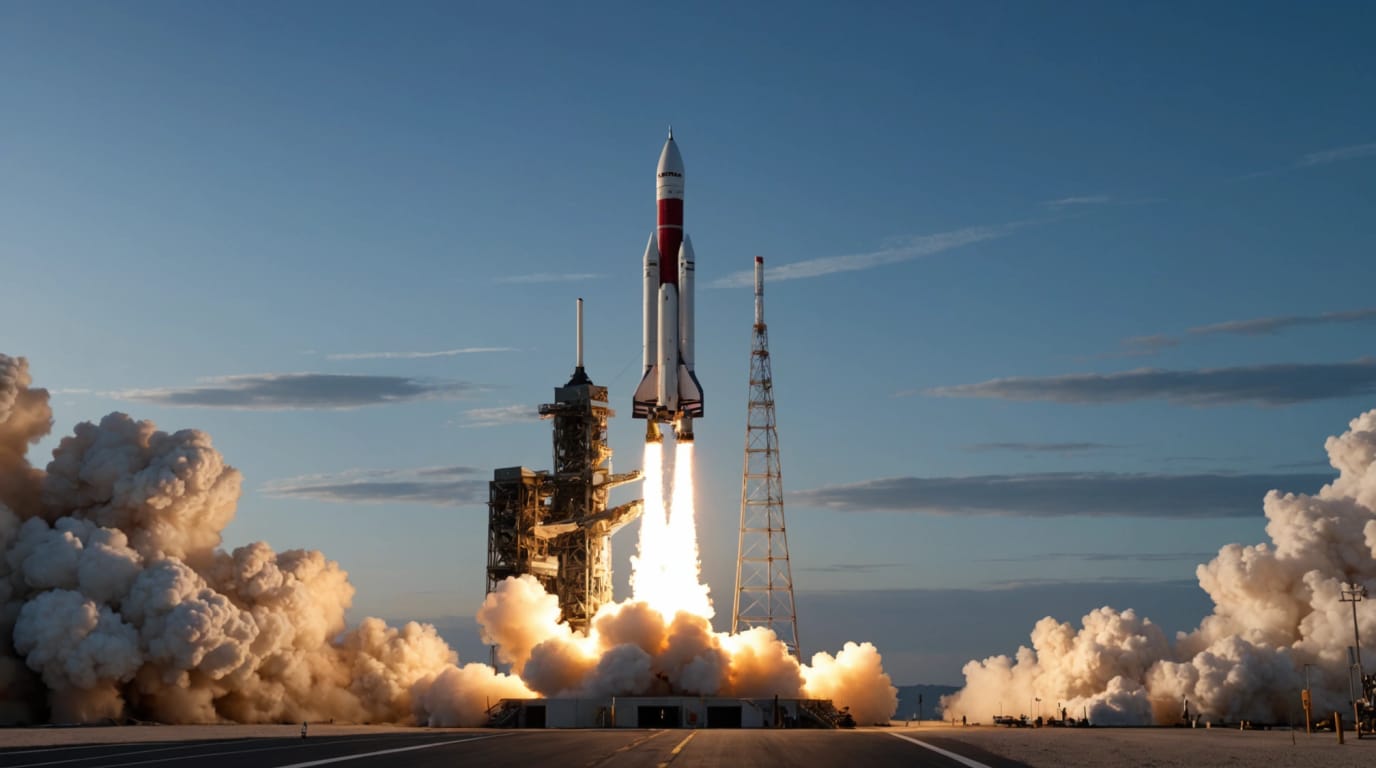
In a move that has caught the aerospace industry off guard, Honda Motor Co. has announced the successful test launch and landing of its experimental reusable rocket. The achievement marks a significant step for the Japanese automaker as it ventures into the burgeoning space sector, with ambitions to conduct a suborbital launch by 2029.
The test, conducted at Honda's research facility in Hokkaido, Japan, saw the 6.3-meter (20.6-foot) prototype reach an altitude of nearly 300 meters (984 feet) before executing a controlled descent and landing. The rocket, weighing 900 kilograms (1,984 pounds) without fuel, touched down a mere 37 centimeters (14.6 inches) from its designated target, demonstrating remarkable precision.
A Calculated Leap into Space
Honda's foray into space technology may seem unexpected, but the company has been quietly laying the groundwork for this expansion. A space development team was formed in 2019, and since 2024, Honda has been conducting engine combustion and hovering tests in Taiki Town, Hokkaido. The company's official statement emphasizes that this project leverages technologies amassed from their existing automotive and automated driving systems.
The decision to develop reusable rockets is driven by the anticipated increase in demand for satellite launch capabilities. Honda envisions a future where "a data system in outer space" becomes increasingly vital, necessitating more frequent and cost-effective satellite deployments. Reusable rockets are key to reducing operational costs in the long run.
The Rocket's Technical Details
The experimental rocket, officially dubbed the "reusable launch vehicle" or RLV, is a single-stage design. It measures 85 centimeters (33.5 inches) in diameter and weighs 1,312 kilograms (2,892 pounds) when fully fueled. While the company has been tight-lipped about specific engine details, the successful test indicates a robust and reliable propulsion system.
Honda's achievement is particularly noteworthy as it represents the first time a private Japanese company has successfully landed a rocket after reaching a significant altitude. This milestone places Honda among a growing number of companies worldwide, including Elon Musk's SpaceX, that are actively developing reusable rocket technology.
Implications for the Space Industry
Honda's entry into the space race has several important implications. First, it signals a growing diversification of players in the industry. Traditionally dominated by government agencies and specialized aerospace companies, the sector is now attracting interest from established corporations with diverse technological expertise.
Second, Honda's focus on reusability aligns with the broader industry trend toward more sustainable and affordable space access. Reusable rockets have the potential to significantly reduce the cost of launching satellites and other payloads, opening up new opportunities for commercial and scientific endeavors.
Finally, Honda's involvement could spur further innovation in related fields, such as advanced materials, propulsion systems, and autonomous control technologies. The company's expertise in these areas, honed through decades of automotive development, could prove invaluable in advancing the state of the art in space technology.
Japan's Growing Space Ambitions
Honda's success comes at a time when Japan is actively seeking to bolster its presence in the space sector. The Japanese government has established a multibillion-dollar space venture fund to support private companies involved in rockets, satellites, and other space-related missions. The goal is to double the size of Japan's space industry to 8 trillion yen ($55.20 billion) by the early 2030s.
However, Japan has faced setbacks. Space One, a Japanese startup, suffered its second failed rocket launch in December. The Japan Aerospace Exploration Agency (JAXA) is also working to become a major player for satellite launches, including with its H3 rocket, which is not reusable. Toyota, through its research arm, has invested in Interstellar Technologies, another rocket maker based in Taiki.
Looking Ahead
While Honda acknowledges that its rocket research is still in the fundamental research phase, the company is committed to pursuing its goal of achieving a suborbital launch by 2029. The company envisions using its rocket technology to launch satellites for communication and Earth observation purposes, contributing to a wide range of services, including environmental monitoring and global warming research.
The successful test launch represents a major step forward for Honda and a promising development for the future of space exploration. As Honda continues to refine its technology and pursue its ambitious goals, the world will be watching to see if this automotive giant can successfully navigate the challenges of the space industry and emerge as a major player in the years to come.


