Hong Kong Votes in Somber LegCo Election Amidst Shadow of Deadly Blaze
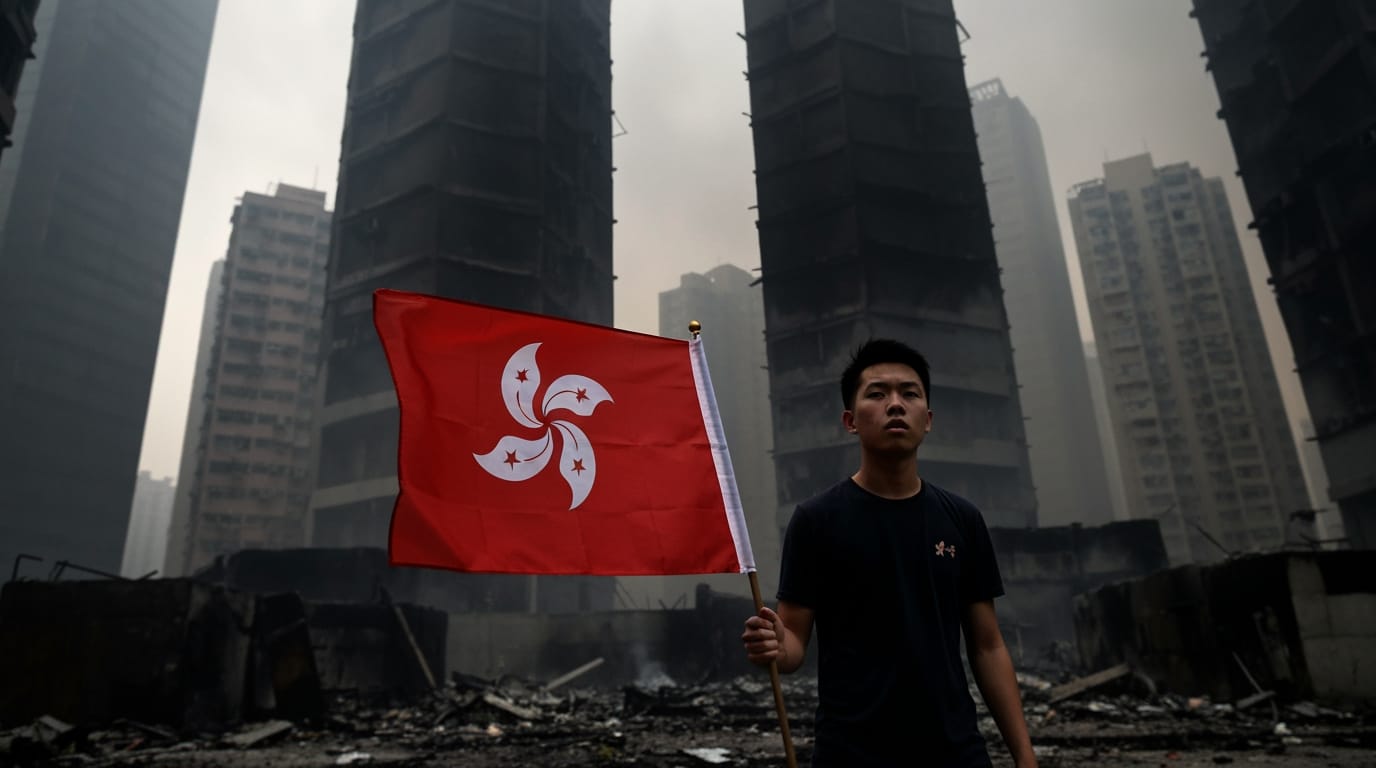
HONG KONG – As residents headed to the polls on Sunday, December 7, 2025, for a Legislative Council (LegCo) election, Hong Kong remained gripped by sorrow and simmering anger following its deadliest fire in decades. Less than two weeks prior, a catastrophic inferno at the Wang Fuk Court residential complex in Tai Po claimed at least 159 lives, casting a profound shadow over an election already under intense scrutiny after a sweeping electoral overhaul designed to ensure a "patriots-only" legislature. The government pressed ahead with the vote, urging citizens to participate, while the tragedy amplified public concerns over accountability and building safety.
A City in Mourning: The Wang Fuk Court Tragedy
The devastating fire, which erupted on November 26, 2025, at the 1980s-era Wang Fuk Court, quickly spread across seven of its eight 31-story towers, housing approximately 4,600 residents. The death toll, initially reported in the dozens, tragically climbed to at least 159, with dozens more injured and some still unaccounted for, making it Hong Kong's worst blaze since 1948. Images of flames engulfing the high-rise buildings, exacerbated by bamboo scaffolding and construction netting, shocked the city and the world.
Preliminary investigations suggested that substandard building materials, specifically highly flammable polystyrene foam panels used to cover windows and non-fire-retardant netting around scaffolding, fueled the rapid spread of the fire. Authorities arrested 15 individuals from various construction companies on suspicion of manslaughter, and six others for allegedly misreporting the condition of the complex's fire prevention system. The incident highlighted critical failures in government oversight and contractor practices, sparking widespread public outrage and questions about safety regulations in Hong Kong's aging high-rise buildings. Chief Executive John Lee Ka-chiu acknowledged the "catastrophe" and pledged a "systemic reform" of building maintenance regulations.
Despite the profound grief and public disquiet, Chief Executive Lee announced that the election would proceed as scheduled, asserting that new lawmakers would be crucial partners in launching reforms and responding to the disaster. Campaigning activities were temporarily suspended out of respect for the victims, resuming in a subdued manner just days before the vote.
The "Patriots-Only" Election Landscape
This election marks the second LegCo vote since Beijing imposed a sweeping electoral overhaul in 2021, fundamentally reshaping Hong Kong's political landscape. The changes were designed to ensure that only "patriots" govern Hong Kong, effectively sidelining the city's once vibrant pro-democracy opposition. Under the new system, the total number of LegCo seats was increased from 70 to 90, but the number of directly elected geographical constituency seats was drastically reduced from 35 to 20. The bulk of the new seats – 40 – are now elected by the Beijing-controlled 1,500-member Election Committee, with 30 seats allocated to indirectly elected functional constituencies. All candidates must undergo a stringent vetting process by a Candidate Eligibility Review Committee, with input from national security authorities, to ensure their loyalty.
The 2021 LegCo election, the first under these new rules, saw a record-low voter turnout of 30.2%. This sharp decline from previous elections, where turnout often exceeded 50%, was widely attributed to a boycott by pro-democracy supporters who viewed the new system as undermining genuine representation. In the run-up to the current election, the Hong Kong government made extensive efforts to boost voter participation, including extending polling hours, establishing new polling stations, offering free transport, and holding government-organized candidate forums. However, analysts warned that the fire tragedy, coupled with ongoing political apathy and the perceived lack of meaningful choice, could lead to another historically low turnout.
Public Sentiment and Governance Under Scrutiny
The Wang Fuk Court fire ignited a wave of public anger and frustration, redirecting focus from the election campaign to issues of government accountability and public safety. Residents voiced trauma and indignation, with many questioning the timing of an election amidst such profound loss. Concerns mounted over allegations that complaints about safety issues at Wang Fuk Court had been ignored prior to the fire. The incident underscored a broader unease about the oversight of building maintenance projects and the potential for corruption.
Against this backdrop, the government faced the dual challenge of managing the disaster's aftermath and encouraging participation in an election perceived by some as a legitimization exercise for the new political order. Authorities repeatedly urged citizens to vote, with a statement from Hong Kong's national security office emphasizing that "every voter is a stakeholder in the homeland of Hong Kong" and that "if you truly love Hong Kong, you will vote sincerely". Concurrently, there were reports of arrests for inciting others not to vote or to cast invalid ballots, a practice criminalized under the 2021 electoral reforms. Human Rights Watch also noted the arrest of individuals for peaceful activism and criticism related to the fire, raising concerns about the suppression of dissent.
The somber atmosphere and public sentiment were palpable. Polling stations, typically bustling during past elections, saw muted activity. In Tai Po, the district where the fire occurred, early voter turnout was notably lower than the city-wide average. Analysts viewed the election's turnout as a crucial barometer of public sentiment, reflecting not only engagement with the new electoral system but also the government's handling of the crisis.
The Path Forward: Reforms and Challenges
Chief Executive John Lee emphasized that the newly elected LegCo would be instrumental in initiating critical reforms stemming from the Wang Fuk Court tragedy. He pledged to present proposals to the new legislature on supporting victims and closing loopholes in the construction sector's practices. The incident has already prompted China to launch a nationwide inspection of fire hazards in high-rise buildings, highlighting the broader implications of Hong Kong's disaster.
The election unfolds at a complex juncture for Hong Kong. The "patriots-only" system has profoundly altered its political landscape, centralizing power and largely eliminating opposition voices from the legislature. While the government portrays the election as a step towards unity and stability, external observers and a segment of the local population view it as a further erosion of democratic representation. The LegCo will now largely comprise pro-Beijing members, with expectations of a smoother legislative process aligned with the government's agenda. However, the devastating fire has introduced an unforeseen variable, refocusing public attention on pressing social issues and the effectiveness of governance.
Conclusion
As the ballots were counted on this solemn Sunday, Hong Kong navigated a delicate balance between democratic process and collective grief. The LegCo election, designed to usher in a new era of "patriots governing Hong Kong," took place against a backdrop of unparalleled tragedy. The fire at Wang Fuk Court not only underscored persistent challenges in urban safety and governance but also tested the government's legitimacy and ability to address profound public concerns. The incoming legislature faces the immediate task of responding to the disaster's aftermath and enacting reforms, all while operating within a political framework that has significantly narrowed the scope of public participation and dissent. The long-term implications of this election, intertwined with the indelible memory of the Tai Po inferno, will undoubtedly shape Hong Kong's trajectory in the years to come.


