Humanoid Robots: The New Frontier in Trump's Escalating Trade War with China
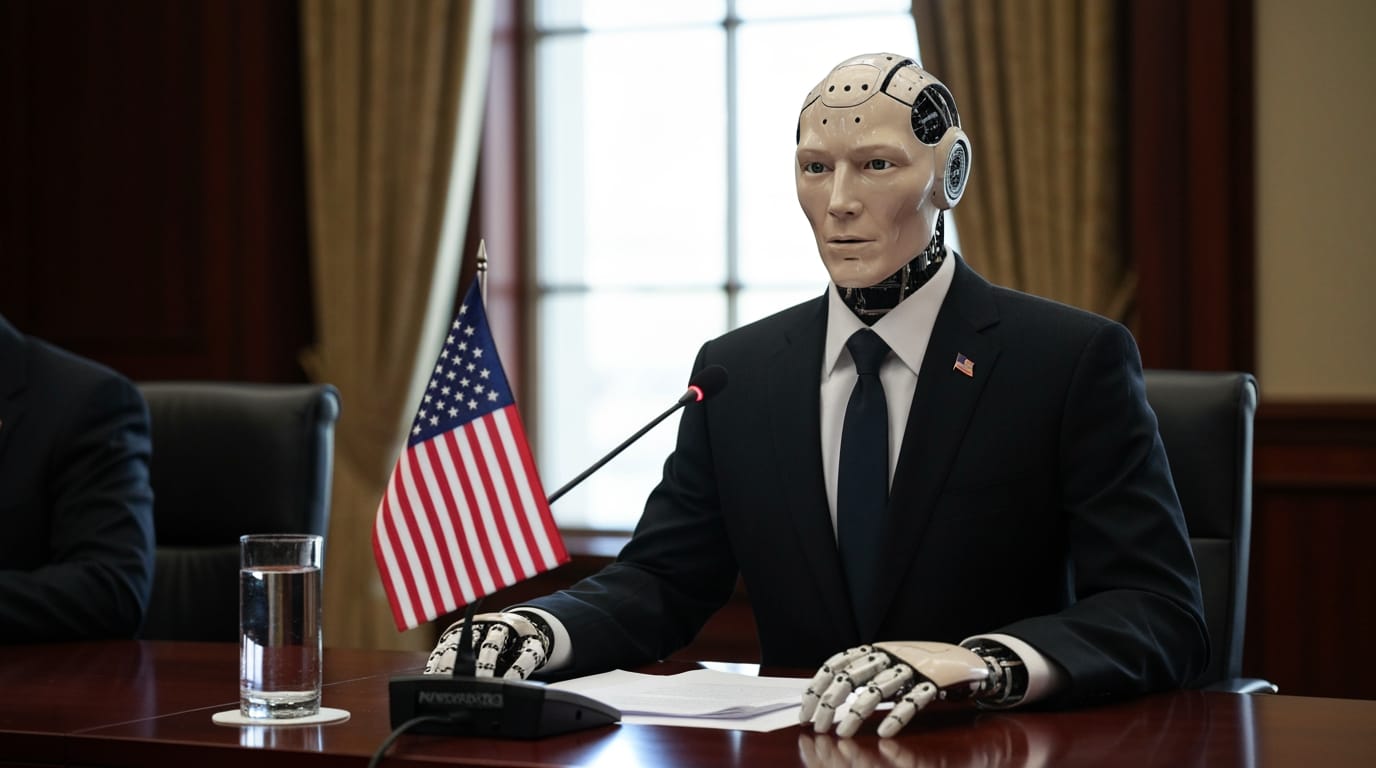
The United States has fired a new salvo in its tech trade battle with China, imposing a sweeping ban on the import of Chinese-made humanoid robots. Citing profound national security and cybersecurity risks, the Federal Communications Commission (FCC) enacted the restrictions, immediately drawing sharp condemnation and threats of retaliation from Beijing. This move marks a significant escalation in the ongoing technological rivalry between the world's two largest economies, transforming the burgeoning field of advanced robotics into a critical new battleground.
The FCC's recent directive prohibits the import of new humanoid and quadruped robots manufactured in China, alongside certain power inverters, asserting that these devices pose unacceptable risks to American infrastructure and data security. The ban, announced just days ago, stems from concerns that foreign adversaries could exploit these advanced robotic systems to surveil Americans, compromise critical infrastructure, or enhance foreign intelligence capabilities. An administration official highlighted that "economic security is national security," underscoring the Trump administration's broader strategy to fortify American supply chains and re-industrialize the nation. This action specifically targets new models, leaving previously approved imports unaffected, but signaling a decisive shift in policy that aims to cut off future Chinese market access for these technologies. China, which accounts for an estimated 85% to 90% of the world's humanoid robot exports, immediately denounced the ban as protectionist and vowed to take "all necessary measures" to protect its companies' interests.
Two Global Paths to Robotic Dominance
The escalating trade tensions over humanoid robots underscore a fundamental divergence in how the United States and China are pursuing dominance in this transformative field. China has adopted a strategy centered on manufacturing scale, cost efficiency, and a vast industrial ecosystem. It boasts approximately 137 humanoid robot companies, in stark contrast to the roughly 10 in the United States. This robust domestic landscape, supported by dedicated development zones and significant government subsidies, enables China to produce humanoid robots at a considerably lower cost—often 40% to 70% less than American equivalents. For instance, Unitree's R1 humanoid robot sells for around $6,000, a price point unmatched by any US manufacturer. China's sheer production capacity is also a significant factor, having installed over 300,000 industrial robots in 2025, compared to 34,000 in the U.S. This provides a deep well of expertise and infrastructure directly applicable to humanoid robot manufacturing. This manufacturing prowess allows for rapid iteration and large-scale deployment, leading to a fast accumulation of real-world operational data that further refines their technologies.
Conversely, the United States focuses on advanced artificial intelligence capabilities, autonomous performance, and high-value applications. While fewer in number, American companies like Tesla, Figure AI, and Agility Robotics lead in sophisticated AI, with Figure 03 demonstrating 67-hour autonomous operation periods and Tesla Optimus employing a fleet learning architecture. The US benefits from housing leading AI research labs, fostering partnerships that advance autonomous task execution and intelligent decision-making in robots. The strategic emphasis for the US is on developing the "brains" of these machines, while China aims to flood the market with affordable, mass-produced "bodies." Analysts note that the competition is not merely between individual robot models but between entire national ecosystems—manufacturing networks, AI stacks, deployment strategies, and capital structures.
Beyond the Bots: Strategic Imperatives of a New Era
The intensifying competition in humanoid robotics is not merely about technological bragging rights; it holds profound economic and geopolitical implications. Humanoid robots are envisioned as a cornerstone of future labor, poised to revolutionize industries ranging from manufacturing, logistics, and retail to healthcare, public safety, and even household assistance. Experts project the global humanoid robot market could reach an astonishing $9 trillion by 2050, driven by their potential to address critical labor shortages and enhance operational efficiency across diverse sectors. The ability of these robots to perform repetitive, hazardous, or physically demanding tasks could fundamentally reshape workforce dynamics, improve safety, and unlock unprecedented levels of productivity.
This transformative potential elevates humanoid robotics to a strategic national asset, making control over their development, production, and deployment a matter of intense geopolitical concern. The integration of advanced AI with mobile, physically capable platforms creates devices that can collect vast amounts of data and operate in sensitive environments. The prospect of foreign-controlled robots operating within a nation's critical infrastructure or even private homes raises legitimate security anxieties, underpinning the FCC's recent ban. The race to dominate this sector is seen as critical for future economic competitiveness and national security, influencing manufacturing supply chains and the global balance of technological power.
A Familiar Playbook: Trump's Tech Tariff Legacy
The recent ban on Chinese humanoid robots aligns squarely with the Trump administration's established approach to trade and technology relations with Beijing. Throughout his first term and into his current administration, former President Donald Trump has consistently implemented aggressive measures, including tariffs and export controls, to counter what the US perceives as unfair trade practices, intellectual property theft, and state-backed efforts to acquire critical American technologies. Previous actions have targeted a wide array of Chinese goods and tech companies, often under the banner of national security and economic protectionism. These policies have aimed to prevent China from advancing its military capabilities through access to US innovations and to safeguard American industries from subsidized foreign competition.
The current administration has repeatedly emphasized the need for independent and secure supply chains, particularly for emerging technologies like AI and robotics. This latest ban on Chinese humanoid robots is another strategic move within this broader framework, seeking to reduce US reliance on Chinese technology while simultaneously fostering domestic growth in the advanced robotics sector. The ongoing trade war, which has seen escalating tariffs and counter-tariffs since 2018, continues to shape global commerce and technological development. The introduction of humanoid robots into this contentious dynamic underscores the increasing strategic importance of advanced AI and robotics, cementing their status as central elements in the high-stakes geopolitical rivalry between the United States and China.
The US ban on Chinese humanoid robots signifies a deepening of the technological schism between the two global powers, elevating the race for robotic supremacy to a new level of urgency. As both nations pour resources into developing these transformative machines, the interplay between national security concerns, economic competition, and technological advancement will continue to shape the global landscape. The implications extend beyond trade figures, touching upon the future of work, industrial efficiency, and the very fabric of national security in an increasingly automated world. The dispute over humanoid robots is more than a trade spat; it is a critical front in the ongoing battle for technological leadership and influence in the 21st century.