Humans Triumph Over Robots in Beijing Half-Marathon Debut
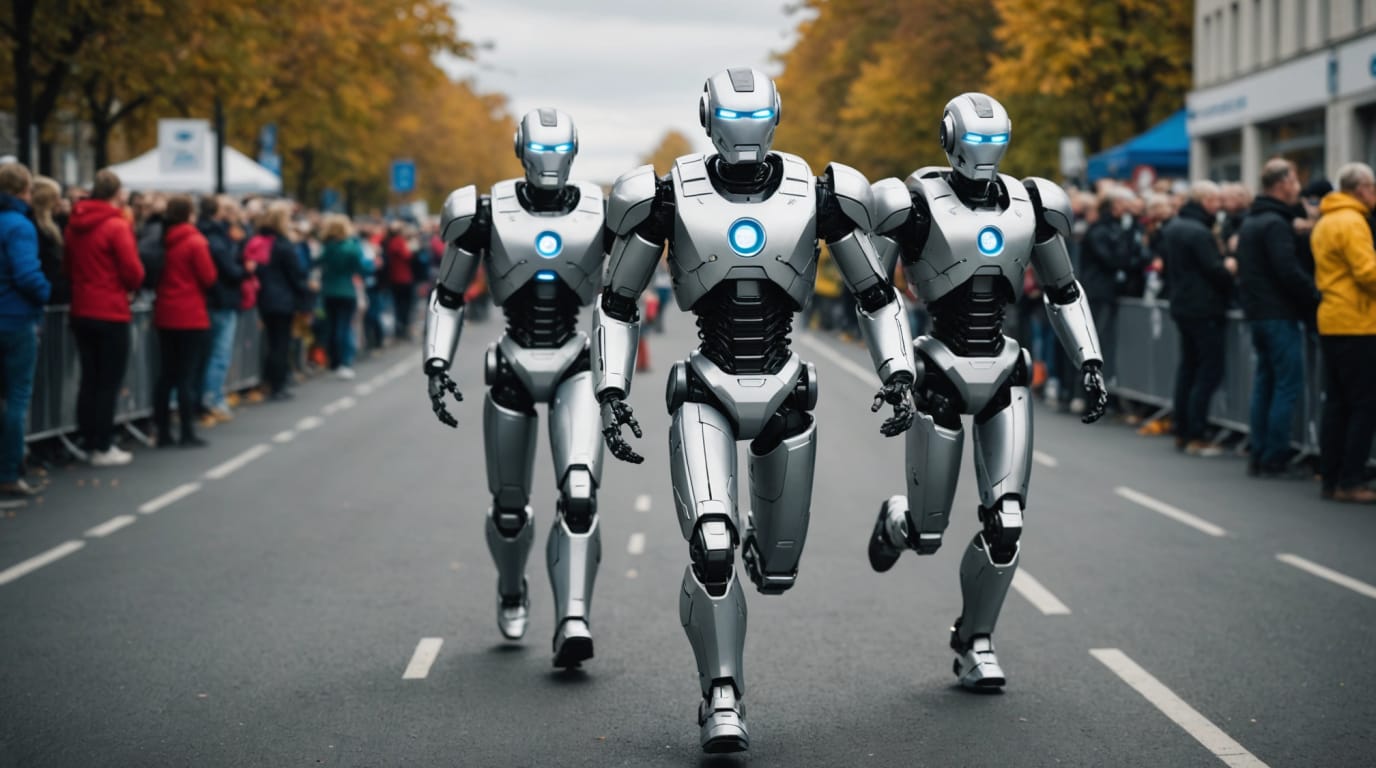
Beijing, China - In a groundbreaking event that pitted human endurance against artificial intelligence, thousands of runners participated alongside 21 humanoid robots in the world's first half-marathon featuring both humans and robots. The race, held Saturday in Beijing's Yizhuang district, showcased the latest advancements in Chinese robotics, but ultimately highlighted the superior speed and agility of human athletes.
The event drew significant attention as a demonstration of China's growing prowess in the field of robotics. The humanoid robots, created by various Chinese manufacturers including DroidVP and Noetix Robotics, varied in size and design, with some standing as tall as 1.8 meters and others as short as 1.2 meters. One company even boasted a robot with feminine features capable of winking and smiling, aiming to create a more human-like appearance. Despite the technological spectacle, the robots were unable to match the pace of their human counterparts.
The half-marathon served as a testing ground for the robots, with some firms reportedly spending weeks preparing their creations for the 21-kilometer (13-mile) course. Beijing officials likened the event to a race car competition, emphasizing the engineering and navigation challenges involved. Spectator He Sishu, who works in artificial intelligence, remarked, "The robots are running very well, very stable... I feel I'm witnessing the evolution of robots and AI."
However, the race was not without its challenges for the robotic participants. Several robots encountered difficulties, with one collapsing at the starting line and remaining motionless for several minutes before resuming the race. Another robot crashed into a railing shortly after the start, causing its human operator to fall. These setbacks underscored the limitations of current robotic technology in navigating complex and dynamic environments.
The winning robot, Tiangong Ultra, developed by the Beijing Innovation Center of Human Robotics, finished the half-marathon in 2 hours and 40 minutes. Tang Jian, chief technology officer for the robotics center, attributed Tiangong Ultra's performance to its long legs and an algorithm designed to mimic human running. He also noted that the robot only required three battery changes during the race. Despite this achievement, Tiangong Ultra's time was significantly slower than the top human competitors.
The men's winner of the half-marathon completed the course in an impressive 1 hour and 2 minutes, demonstrating a considerable gap in performance between humans and robots in long-distance running. While the robots showcased advancements in stability and endurance, they lacked the speed and adaptability of human runners. The reliance on human trainers, some of whom had to physically support the robots during the race, further highlighted the current limitations of autonomous robotic performance.
Despite the robots' inability to outperform humans in the race, the event provided valuable insights into the current state of robotics and its potential for future development. Alan Fern, a robotics professor at Oregon State University, noted that while the event was an interesting demonstration, it did not necessarily showcase the utility of robots for useful work or basic intelligence. However, the advancements in robotic stability and endurance demonstrated in the race could have implications for various industrial and practical applications.
Looking ahead, Tang Jian, CTO at Tiangong's lab, said their focus would shift to real-world tasks and industrial applications for the robots. The knowledge and experience gained from the half-marathon will likely contribute to the development of robots capable of performing more complex and practical tasks in various industries.
The Beijing half-marathon served as a unique and engaging event, highlighting both the advancements and limitations of current robotics technology. While humans emerged victorious in this race, the event provided a glimpse into a future where robots may play an increasingly significant role in various aspects of life, from industrial applications to athletic competition. The integration of robots and humans in such events sparks conversations about the evolving relationship between technology and society, and the potential for future collaborations and competitions.