Hungarian Minister's "Internal Reserve" Comments Spark Outrage, Exposing Deep-Seated Anti-Roma Sentiment
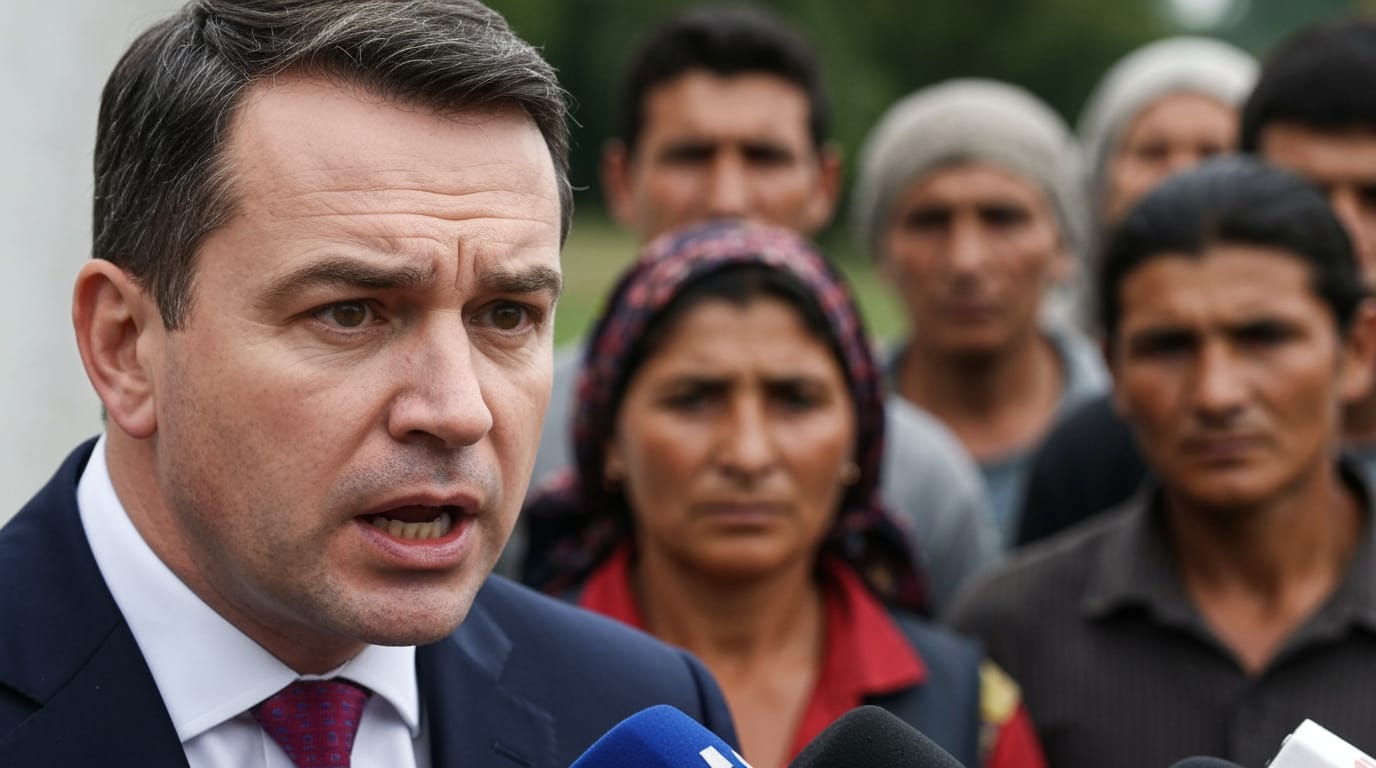
BUDAPEST, Hungary – A senior Hungarian cabinet member, János Lázár, the Minister of Construction and Transport, has ignited a firestorm of controversy and widespread condemnation following remarks suggesting that the Roma community should serve as an "internal labor reserve" for cleaning train toilets. The comments, made during an election campaign event last week, have been denounced as deeply offensive and a stark reminder of the systemic discrimination faced by Hungary's largest minority group, drawing sharp criticism from opposition figures, Roma organizations, and human rights advocates alike.
The Incident: A "Solution" to Labor Shortages
The contentious statements were delivered by Minister Lázár on Thursday, January 23, 2026, during a campaign stop in Balatonalmadi, as Hungary gears up for national elections on April 12. Addressing a perceived labor shortage, particularly in roles deemed undesirable by the majority population, Lázár articulated his vision for addressing the issue in the context of the government's anti-migration stance. "If there are no migrants and someone has to clean the toilets on the InterCity train -- because Hungarian voters are not particularly keen to clean up after other people's shitty toilets -- then internal reserves have to be tapped. And the internal reserve is the Hungarian Roma community," Lázár stated.
The remarks were positioned within the broader narrative of a staffing crisis in the railway sector, and the government's "zero migrant" policy, even as Hungary has admitted thousands of guest workers in recent years to fill labor gaps. Lázár's implication that the Roma are a readily available and appropriate demographic for such work, contrasting them with the "Hungarian voters" unwilling to perform these tasks, immediately triggered an intense backlash.
Echoes of a Troubled Past: Roma as "Internal Reserves"
The reaction to Lázár's comments was swift and overwhelmingly negative, particularly from those who recognized the historical weight and prejudicial nature of his words. Opposition leader Peter Magyar vehemently called for Lázár's resignation, accusing him of "crossing every line" and "looking down on the Roma." Magyar further elaborated on social media, branding the minister as "the Dracula of public funds" and a "threat to the railways." David Vitezi, a former State Secretary for Transport now in opposition, echoed these calls for resignation, citing not only the racist remarks but also Lázár's alleged mismanagement of Hungary's rail system.
Roma organizations expressed profound indignation, highlighting the recurring pattern of their community being used as a political football during election cycles. Szilvia Szenasi, head of the anti-discrimination Uccu Foundation, lamented the "outrageous" practice of playing the "gypsy card" in campaigns. Bela Racz, leader of the 1Hungary Association, firmly rejected the notion of Roma as a mere "labor reserve," underscoring the diverse professional contributions of Roma individuals across various sectors, including construction, entrepreneurship, and intellectual fields. He, too, demanded an apology and resignation from the minister.
This incident is not isolated, but rather representative of a long history of systemic discrimination and prejudice against the Roma in Hungary. The Roma community, comprising between 7% and 10% of Hungary's 9.5 million population, has consistently faced significant challenges across education, employment, housing, and healthcare. Their life expectancy is notably lower than the majority population, and only a small fraction of young Roma complete high school. Historically, anti-Romani sentiment has been a pervasive issue in Europe, with records indicating governmental plans for extermination in the Austro-Hungarian Empire as far back as the 18th century. Public figures and media outlets in Hungary have, at various times, been criticized for incendiary rhetoric and hate speech against the Roma, contributing to a climate where such comments from a high-ranking official are perceived as a continuation of deeply rooted prejudices.
Government Response and Political Ramifications
In the immediate aftermath, Minister Lázár initially attempted to brush off the criticism as "typical lib do-goodism" via a Facebook post, claiming a strong record of promoting Roma integration. He later offered a modified defense, asserting that his comments were not anti-Roma but rather anti-immigrant, expressing a preference for utilizing unemployed Romani individuals over foreign workers from Asia or North Africa for cleaning jobs. However, the European Roma Rights Centre (ERRC) viewed this explanation with skepticism, stating that such rhetoric is "xenophobic, racist, and even has neofascist overtones," reflecting a broader government strategy that pigeonholes Roma into degrading labor.
Reportedly, Lázár offered an apology to the Roma community at a subsequent event attended by Prime Minister Viktor Orbán. This apology, however, was quickly overshadowed by Orbán himself, who allegedly then made a racist joke about the Roma. This sequence of events, particularly the Prime Minister's alleged actions, highlights a concerning pattern where high-level officials appear to minimize or even endorse discriminatory attitudes, raising questions about the sincerity of any official apologies and the government's commitment to combating anti-Roma sentiment.
The political fallout from Lázár's remarks is significant, especially with national elections approaching. Roma voters have historically constituted a crucial segment of the ruling Fidesz party's base, particularly in rural and lower-income areas. Electoral analysts suggest that this incident could lead to a decline of 2% to 3% in Fidesz's national support, a potentially impactful shift in Hungary's proportional representation system where even small changes can affect seat distribution. This controversy adds to a series of recent challenges for Orbán's campaign, including other scandals, further intensifying scrutiny on the government's rhetoric and policies.
Implications for Human Rights and European Standing
The incident underscores the persistent struggle for human rights and equality faced by the Roma community in Hungary. Despite some progress in establishing minority self-governments and parliamentary commissions in the past, Roma continue to experience marginalization and systemic discrimination across various facets of life. Reports indicate that police practices often involve ethnic profiling and that impunity for crimes against Roma remains a concern, contributing to a lack of trust in law enforcement within the community. The European Court of Human Rights has repeatedly ruled against Hungary for failing to protect Roma from racial abuse and properly investigate police brutality.
Moreover, the Hungarian government has faced international criticism for its policies toward the Roma, including allegations of widespread corruption in the use of EU funds meant for Roma inclusion and a lack of progress in desegregating the education system. The European Roma Rights Centre has specifically accused Hungary of racist policies and called for a boycott of the Hungarian EU Presidency, citing severe and persistent breaches of EU values.
Such statements from a cabinet minister not only perpetuate harmful stereotypes but also exacerbate social divisions and undermine efforts towards a more inclusive society. They send a chilling message to the Roma community, reinforcing their precarious position and the challenges they face in achieving full equality and respect within Hungarian society.
Conclusion: A Divisive Rhetoric's Lingering Impact
János Lázár's recent comments have reopened old wounds and intensified the debate surrounding the treatment of the Roma minority in Hungary. While the minister's qualified apology and attempts at damage control have been noted, the incident highlights the deeply ingrained nature of anti-Roma prejudice within parts of the political establishment and society at large.
As Hungary approaches its national elections, the controversy serves as a critical juncture, forcing a national conversation about inclusion, discrimination, and the responsibilities of public officials. The outcome of this debate, and the government's subsequent actions, will significantly impact the trajectory of Roma rights in Hungary and the nation's standing within the European Union, which champions the principles of equality and non-discrimination. The enduring challenge remains for Hungary to move beyond rhetoric that relegates a significant portion of its population to the status of an "internal reserve" and instead embrace policies that foster genuine equality and integration for all its citizens.


