Hungary's Political Earthquake: Orbán's Defeat Reshapes Central Europe
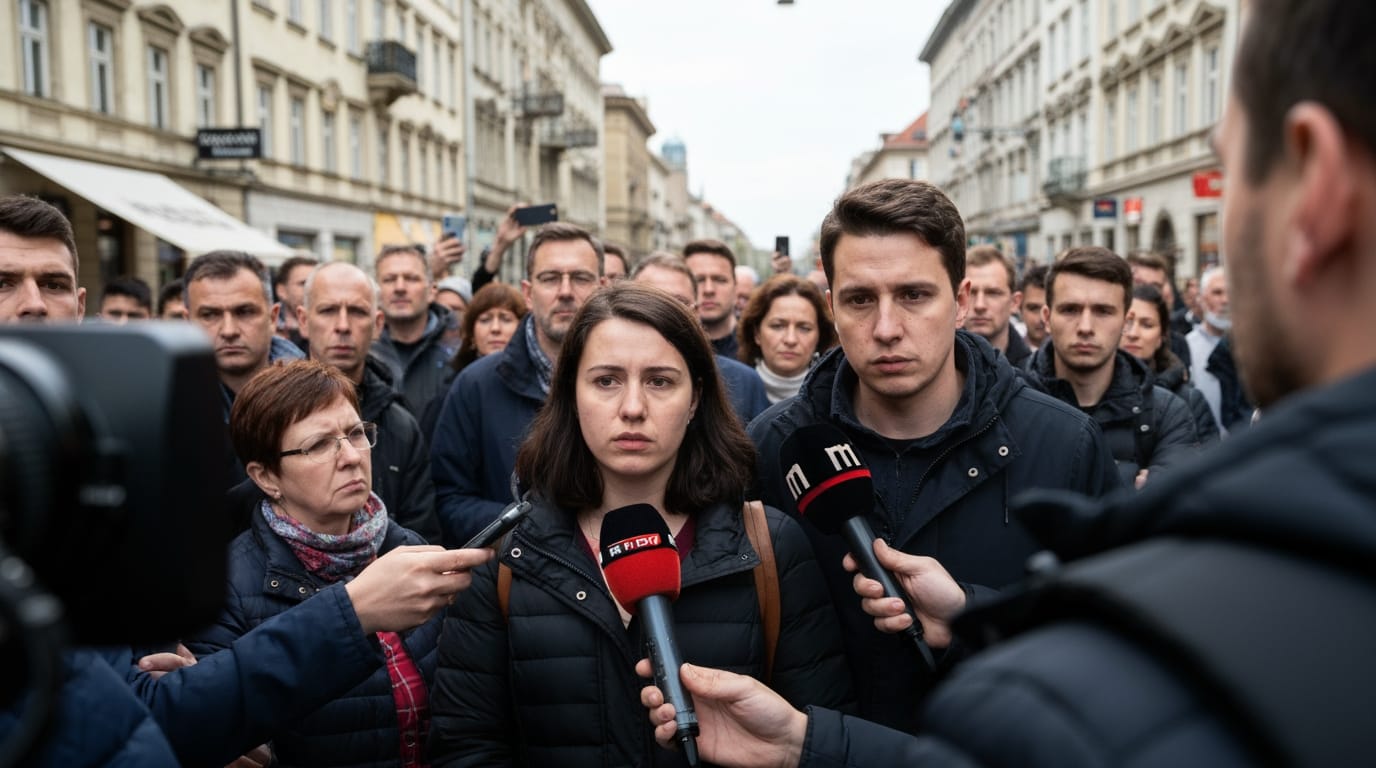
BUDAPEST — A political seismic shift has rocked Central Europe, as Hungarian Prime Minister Viktor Orbán, after 16 years at the helm, conceded a crushing defeat in the parliamentary elections held on April 12, 2026. The unexpected landslide victory of Péter Magyar's Tisza Party has not only ended an era of contentious nationalist-conservative rule in Hungary but is also sending reverberations across the European Union and the broader Central European region, signaling a potential realignment of political dynamics. The election, marked by an unprecedented turnout of nearly 80%, underscored a deep-seated desire for change among Hungarian voters, who decisively opted to dismantle a system that had increasingly centralized power and often clashed with European democratic norms.
The Fall of an Illiberal Strongman
Viktor Orbán's Fidesz party, which had dominated Hungarian politics since 2010, secured only 38.0% of the vote, translating to a mere 55 seats in the 199-member parliament. This stark outcome represents a dramatic reversal for Orbán, who had meticulously crafted an electoral system designed to favor his party and had consistently won with supermajorities. His 16-year tenure was characterized by a systematic erosion of democratic checks and balances, a hollowing out of independent institutions, and a state apparatus increasingly geared towards partisan ends. Orbán's government cultivated an anti-EU stance, often using its veto power to obstruct European policy, and maintained notably close ties with Russia, especially amid the ongoing war in Ukraine.
The architect of this historic upset is Péter Magyar, a former Fidesz insider who broke with the ruling party in 2024 and rapidly ascended as the leader of the opposition Tisza Party. Magyar's campaign effectively tapped into widespread public discontent over rampant corruption, economic stagnation, high inflation, and perceived economic mismanagement. He directly challenged the Fidesz narrative, campaigning with relentless energy in areas long considered Orbán's strongholds and promising to restore the rule of law and address the country's domestic woes. The public's desire for a return to European mainstream values and a more constructive relationship with the European Union also played a significant role in the electorate's decision. The sheer scale of Tisza's victory, securing an estimated 138 seats and a two-thirds constitutional majority, grants the new government a strong mandate for comprehensive reform, signifying that the political shift is not just a change in leadership but a deeper societal desire for systemic transformation.
Hungary's New Dawn: Promises and Thorny Paths Ahead
The decisive victory means that Hungary is now poised for its most significant political transition since the end of communism. As the Orbán administration functions as a caretaker government, the new parliament is mandated to form by May 13, initiating a critical period of change. Péter Magyar's Tisza Party has outlined an ambitious agenda centered on rebuilding democratic institutions, including restoring judicial independence, ensuring media freedom, and tackling deep-seated corruption. A paramount objective for the incoming government will be to mend strained relations with Brussels and unlock billions of euros in frozen EU funds, estimated to be around EUR 18-19 billion, which were withheld due to rule-of-law concerns under Orbán. This influx of funds is seen as crucial for bolstering Hungary's economy, with analysts projecting a potential recovery in GDP growth.
However, the path to reform is fraught with challenges. The enduring influence of Fidesz loyalists entrenched in various state institutions, media, and the economy poses a significant hurdle to dismantling what many refer to as "Orbánism." The new government will need to navigate complex economic pressures, including existing fiscal deficits and potential short-term budgetary restructuring. While Tisza has signaled an end to Russia's influence in Hungary and a break with the previous government's anti-Ukraine rhetoric, the approach to Ukraine's fast-tracked EU membership remains cautious, with Magyar suggesting a referendum after accession negotiations are complete. Despite these obstacles, the prospect of Hungary re-engaging constructively with its European partners, potentially even setting a target for euro adoption, offers a new horizon for the nation.
Regional Ripple Effects: A Shift in Central Europe's Dynamics
Orbán's defeat sends a powerful message far beyond Hungary's borders, particularly within the Visegrad Group (V4) comprising Hungary, Poland, the Czech Republic, and Slovakia. For years, Orbán had utilized the V4 platform to amplify his influence within the EU, often forming an alliance with Poland on issues of sovereignty and rule of law, though this alliance had weakened significantly due to Hungary's pro-Russia stance following the invasion of Ukraine. Orbán's consistent obstructionism, including vetoes on EU sanctions against Russia and aid to Ukraine, had isolated Hungary within the group and the wider EU.
The electoral outcome is expected to profoundly alter the dynamics of the V4, potentially fostering a more unified and cooperative stance on critical European issues. The departure of Orbán, who was often seen as the "poster-boy" and "standard bearer" of the populist right in Europe, is a symbolic blow to illiberal nationalist movements across the continent. International leaders, including French President Emmanuel Macron and European Commission President Ursula von der Leyen, have welcomed the result, highlighting its significance for democratic participation and Hungary's renewed commitment to EU values. The defeat also represents a setback for prominent populist figures like Donald Trump, who had publicly endorsed Orbán, underscoring that such endorsements might carry liabilities in European elections. This outcome suggests that even deeply entrenched illiberal regimes can be overcome, potentially offering a "blueprint" for opposition movements elsewhere.
EU and Global Repercussions: A Path to Greater Unity?
The European Union stands to gain significantly from Hungary's shift away from Orbán's confrontational policies. Hungary, under Orbán, had accounted for a substantial number of publicly reported EU vetoes, obstructing collective action on a range of issues from sanctions to financial aid packages. A more cooperative government in Budapest is expected to reduce tactical veto use, thereby enhancing the EU's ability to act collectively and present a unified front, particularly concerning support for Ukraine and its relationship with Russia. This change could allow the EU to refocus on key strategic priorities and strengthen its overall cohesion, which had been frequently tested by Budapest's independent course.
While the new Hungarian government's full foreign policy contours are still emerging, the broad commitment to re-align with EU and NATO obligations and to end Russian influence marks a significant departure. The focus on domestic governance and improving the quality of public services also reflects a broader European trend where citizens are increasingly prioritizing tangible improvements in their daily lives over ideological battles. However, the EU also faces the challenge of rebuilding trust in Hungarian institutions, a task that will require more than symbolic gestures and swift implementation of promised reforms. This electoral outcome not only heralds a new beginning for Hungary but also serves as a potent reminder of the resilience of democratic processes and the potential for voters to effect profound change, even against seemingly insurmountable odds.
Conclusion
The April 12, 2026, parliamentary elections in Hungary have undeniably ushered in a new era, concluding Viktor Orbán's 16-year grip on power and installing Péter Magyar's Tisza Party with a commanding mandate for change. This political earthquake, driven by widespread disillusionment with corruption and economic stagnation, along with a desire for renewed European integration, has profound implications. For Hungary, it signifies a potential return to democratic norms, a rebuilding of institutional integrity, and a re-engagement with the European mainstream. Regionally, it promises to reshape the Visegrad Group dynamics and deliver a symbolic blow to populist nationalist movements that looked to Orbán as a leader. On a broader European stage, the shift in Budapest could foster greater EU unity and strengthen its resolve in addressing critical geopolitical challenges. While the road to full "regime change" and comprehensive reform will undoubtedly be long and complex, Orbán's unexpected defeat stands as a watershed moment, underscoring that political landscapes, however entrenched, are never immutable.


