The Elusive 'Better Deal': Can Trump Redefine the Future of U.S.-Iran Relations?
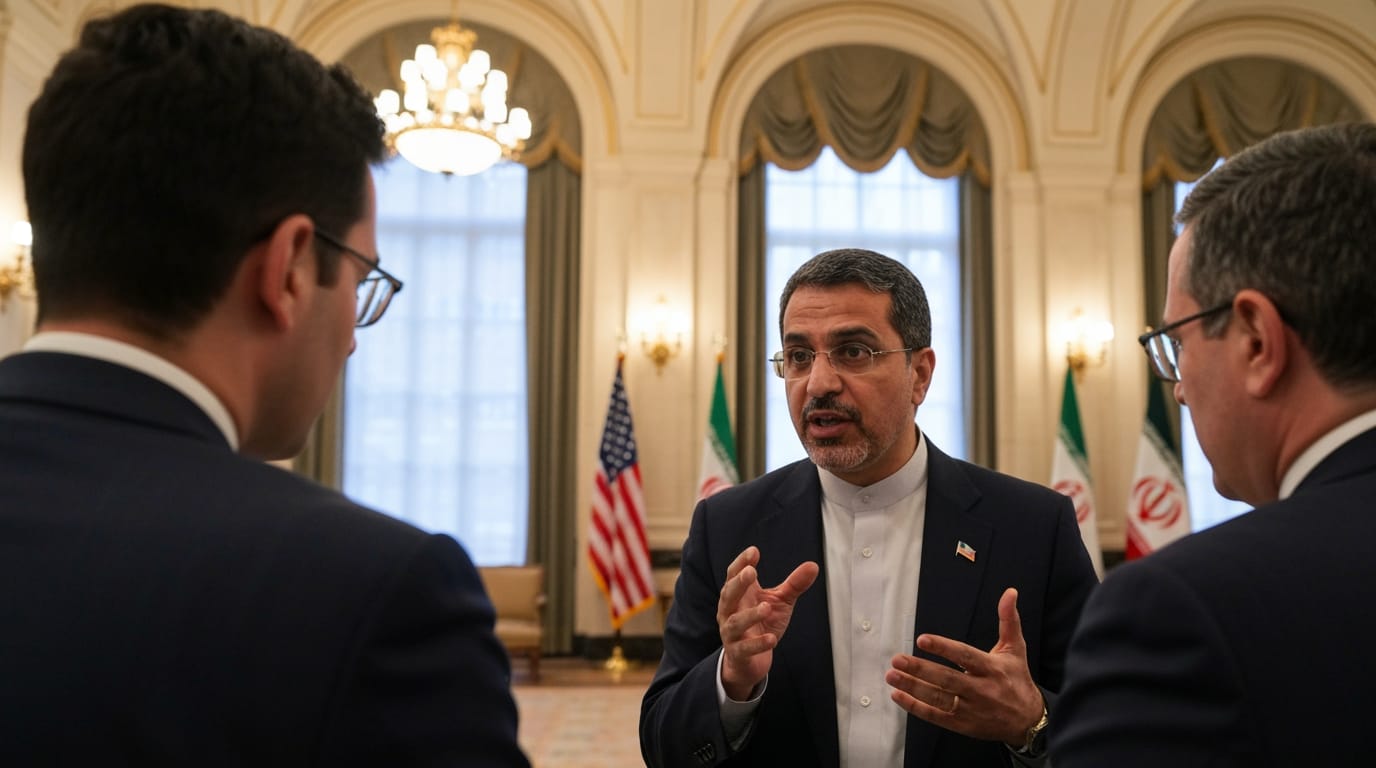
As diplomatic channels reopen amid a fragile ceasefire in early April 2026, the international community watches intently to see if former President Donald Trump can achieve a "better" nuclear deal with Iran than the landmark agreement struck during the Obama administration. Trump, a staunch critic of the original Joint Comprehensive Plan of Action (JCPOA), faces the complex task of securing broader concessions from Tehran at a time when Iran's nuclear program has significantly advanced. The recent de-escalation of hostilities, including a two-week truce, has set the stage for intense negotiations, but the path to a comprehensive and enduring resolution remains fraught with historical distrust, escalating nuclear capabilities, and clashing demands from both sides.
The Obama-Era Framework: JCPOA and its Discontents
The Joint Comprehensive Plan of Action, signed in 2015 by Iran, the P5+1 nations (China, France, Germany, Russia, the United Kingdom, and the United States), and the European Union, represented a multilateral effort to prevent Iran from developing nuclear weapons. Key provisions of the JCPOA included significant restrictions on Iran's nuclear activities. Tehran agreed to limit its uranium enrichment to 3.67%, reduce its stockpile of low-enriched uranium by 97% to 300 kg for 15 years, and reduce the number of operational centrifuges. The deal also mandated intrusive inspections and monitoring by the International Atomic Energy Agency (IAEA) to verify compliance, in exchange for the lifting of international sanctions related to Iran's nuclear program. Supporters of the agreement argued that it effectively extended Iran's "breakout time"—the period needed to produce enough fissile material for a nuclear weapon—from a few months to over a year, thereby substantially deferring its nuclear weapon capability.
However, the JCPOA faced considerable criticism from the outset. Opponents, including then-candidate Donald Trump, argued that the deal was fundamentally flawed due to its "sunset clauses," which would gradually lift key restrictions on Iran's nuclear program after 10 to 15 years. Critics also lambasted the agreement for not addressing Iran's ballistic missile program or its support for regional proxy groups, which were seen as destabilizing forces in the Middle East. Concerns were raised that the sanctions relief provided a financial windfall to the Iranian regime, enabling it to fund its malign regional activities rather than improving the lives of its citizens. The inspection regime was also questioned, with some arguing that the 24-day window for Iran to respond to inspection requests at undeclared sites could allow for the concealment of illicit activities.
Trump's "Maximum Pressure" and the Demand for a "Better" Deal
Consistent with his campaign promises, President Trump withdrew the United States from the JCPOA in May 2018, calling it a "horrible one-sided deal" and "the worst deal ever." He pledged to negotiate a "totally different deal" that would be more advantageous to U.S. interests. This withdrawal initiated the "maximum pressure" campaign, a strategy aimed at crippling Iran's economy through intensified sanctions to compel Tehran to negotiate a more comprehensive agreement. The campaign targeted critical sectors such as Iran's energy, petrochemical, and financial industries, seeking to drive Iran's oil exports to zero and cut off its access to billions of dollars in revenue.
The Trump administration's objectives for a new deal extended far beyond the nuclear limitations of the JCPOA. It demanded a full dismantlement of Iran's nuclear program, a complete halt to uranium enrichment, an end to its ballistic missile development, and a cessation of its support for regional proxy groups like Hezbollah and Hamas. Secretary of State Mike Pompeo outlined 12 demands in 2018, effectively calling for Iran to abandon its current foreign and security policies. Trump's approach was predicated on the belief that severe economic pressure would force Iran to capitulate to these broader demands, leading to a much more restrictive and permanent agreement that would eliminate Iran's nuclear weapons ambitions.
Iran's Nuclear Trajectory Post-JCPOA and Current Negotiations
Following the U.S. withdrawal from the JCPOA, Iran systematically began breaching the agreement's limits starting in 2019. Tehran steadily increased its uranium enrichment levels, far exceeding the 3.67% cap, reaching 60% purity—a level dangerously close to weapons-grade (around 90%) and with no practical civilian application. Iran also expanded its stockpiles of enriched uranium and deployed advanced centrifuges, significantly accelerating its nuclear program. By late 2024, Iran's expanded enrichment capacity and larger stockpiles had drastically reduced its "breakout time," with estimates suggesting it could produce enough weapons-grade material for several bombs in a matter of weeks or even less than a week. The IAEA has reported an inability to resolve long-standing questions about past undeclared nuclear activities due to Iran's lack of cooperation, raising concerns about future verification challenges.
Against this backdrop, recent events in early April 2026 have seen a significant, albeit precarious, diplomatic opening. Following escalating regional tensions and military actions, a two-week ceasefire was announced, accompanied by the initiation of negotiations. President Trump indicated that Iran had put forward a "workable" 10-point peace plan, leading to a temporary halt in threats of expanded U.S. military strikes. However, initial reports on Iran's demands suggest a maximalist stance. Tehran's proposed plan reportedly calls for the lifting of all primary and secondary sanctions, an end to all U.N. Security Council and IAEA resolutions against Iran, and compensation for war damages. Crucially, these reported demands make no explicit mention of re-imposing nuclear limits or allowing more intrusive inspections, a stark contrast to the core tenets of the JCPOA.
The Path Forward: Obstacles and Opportunities
The current diplomatic landscape presents a more formidable challenge for negotiating a "better" deal than the one abandoned by Trump in 2018. Iran's nuclear infrastructure and knowledge base have significantly expanded, making any rollback or dismantlement far more complex than limiting an earlier-stage program. Iran's current demands indicate a desire to leverage its advanced nuclear status for maximum concessions, potentially seeking a deal that is even more favorable to Tehran than the JCPOA. Iranian officials have expressed a willingness to negotiate but have signaled that any agreement would need to go "far beyond" the Obama-era deal.
For the United States, achieving a "better" deal would require not only significant compromises from Iran on its nuclear program and regional behavior but also a renewed commitment to international cooperation. The unilateral approach taken by the Trump administration in 2018 alienated key European allies who remained committed to the JCPOA. Any future agreement would likely require the collective backing of international partners, especially concerning the enforcement of sanctions and verification mechanisms. Furthermore, the political will in Iran to make substantial concessions is uncertain, particularly given internal hardline elements who were critical of the JCPOA for offering too many concessions. The regime, hardened by years of "maximum pressure," may view its missile and drone capabilities, alongside its proxy networks, as sufficient for deterrence, potentially making its nuclear program a bargaining chip rather than a strategic necessity for survival.
In conclusion, the prospect of President Trump securing a "better" Iran deal than his predecessor is fraught with immense difficulty. The current negotiations unfold in a dramatically altered geopolitical environment, where Iran possesses a significantly more advanced nuclear program and is presenting maximalist demands. While the ceasefire offers a crucial window for diplomacy, overcoming deep-seated mistrust, Iran's enhanced nuclear capabilities, and the diverging interests of all parties will require an intricate balance of pressure and incentives. The ultimate measure of a "better" deal will be its ability to ensure the long-term non-proliferation of nuclear weapons in the region while addressing broader security concerns, a task that appears more challenging now than ever before.


