IAEA Head Declares Iranian Nuclear Inspections "Going to Happen" Amidst High-Stakes Diplomacy
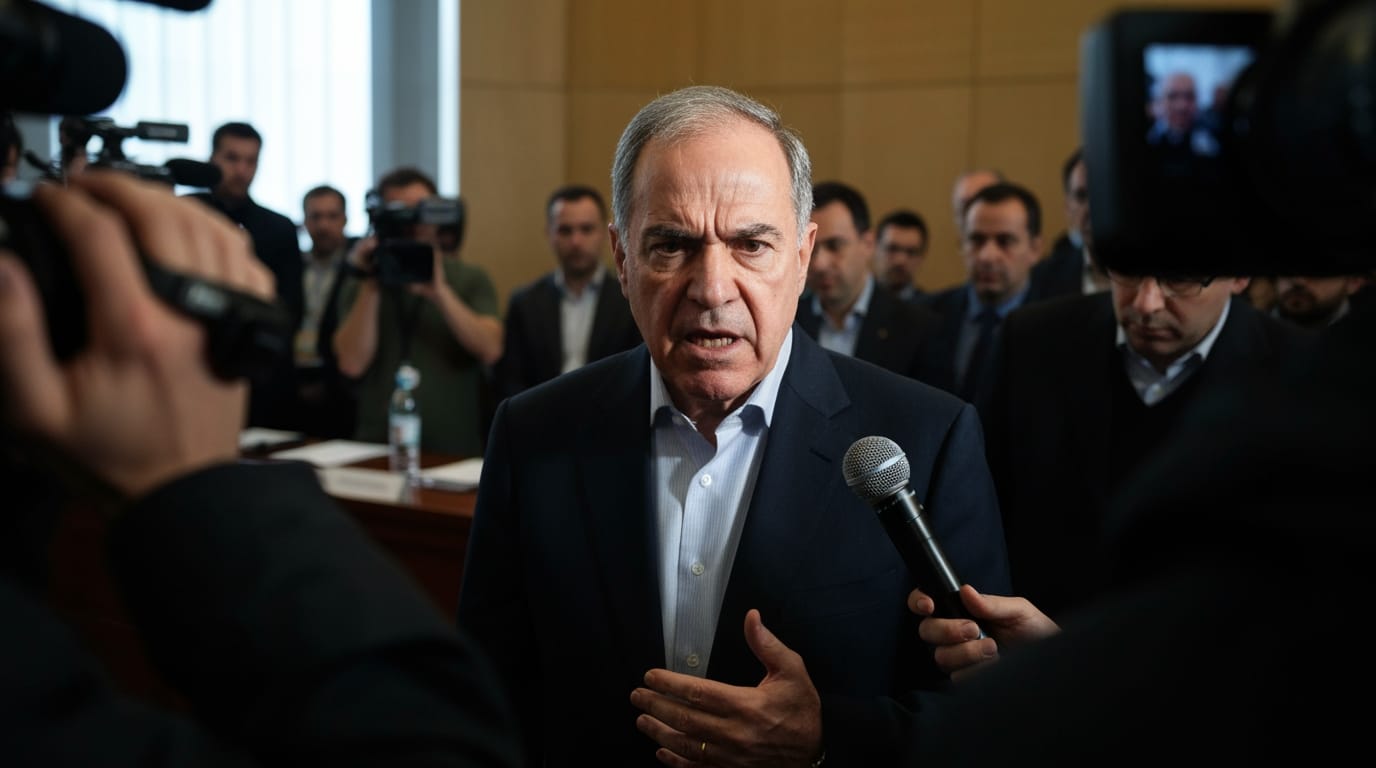
TOKYO – The head of the United Nations’ nuclear watchdog has issued a resolute declaration, stating that inspections of Iranian nuclear enrichment sites are unequivocally "going to happen," despite Tehran's immediate objections. The pronouncement by Rafael Mariano Grossi, Director General of the International Atomic Energy Agency (IAEA), underscores a critical juncture in the ongoing efforts to monitor Iran's nuclear program, a central element of a recently signed interim agreement between the United States and Iran aimed at de-escalating regional hostilities.
Grossi, speaking from Japan, affirmed that a memorandum of understanding (MOU) between Washington and Tehran explicitly mandates IAEA supervision of nuclear activities. This assertion directly contradicts statements from Iran's Foreign Ministry, which has denied any arrangements for inspectors to return to facilities previously damaged in military strikes. The divergent narratives highlight a complex diplomatic landscape where international assurances clash with national sovereignty claims, all against the backdrop of a nuclear program that continues to raise global proliferation concerns.
IAEA's Unwavering Resolve Amidst Diplomatic Tensions
Director General Grossi's statements on Wednesday, June 24, 2026, left little room for ambiguity regarding the IAEA's intention to resume comprehensive inspections. He emphasized that the timing of these inspections, whether in days or weeks, is "important, but not essential," stressing the inevitability of their occurrence. This firm stance from the IAEA comes as a direct response to a 14-point memorandum of understanding forged between the United States and Iran last week. The accord initiates a 60-day negotiation period to address various disputes, prominently featuring the fate of Iran's enriched uranium stockpile and its broader nuclear program.
The Biden administration, through President Donald Trump, has echoed Grossi's confidence, insisting that Iran will permit international scrutiny of its nuclear facilities. However, Iranian Foreign Ministry Spokesperson Esmaeil Baghaei has publicly dismissed these claims, asserting that no plans exist for IAEA inspectors to visit sites damaged during the 2025 conflict between the U.S., Israel, and Iran. Grossi acknowledged this "war of words," suggesting political posturing on both sides, yet he underscored the binding nature of the signed agreement. The return of IAEA inspectors to all of Iran's nuclear enrichment facilities, particularly those affected by recent military actions, is considered a crucial step towards de-escalation and rebuilding trust in the region.
The Troubled Legacy of the Nuclear Deal
The current impasse over inspections is deeply rooted in the history of Iran's nuclear program and the 2015 Joint Comprehensive Plan of Action (JCPOA). This landmark agreement, signed by Iran and major world powers, sought to curtail Tehran's nuclear ambitions in exchange for sanctions relief. Under the JCPOA, Iran committed to stringent limitations, including enriching uranium to no more than 3.67%, maintaining a limited stockpile, and restricting the use of advanced centrifuges. The IAEA, tasked with verification, implemented what was widely regarded as the most comprehensive and intrusive inspection regime ever negotiated, featuring continuous monitoring and 24-hour access to key facilities like Fordow and Natanz.
However, the delicate balance of the JCPOA began to unravel in 2018 when the United States unilaterally withdrew from the accord. In response, starting in 2019, Iran incrementally violated the terms of the agreement, progressively expanding its uranium enrichment program. This period saw a significant degradation of the transparency and oversight that the JCPOA had established, leading to a substantial decrease in the IAEA's "continuity of knowledge" regarding Iran's nuclear materials. The current diplomatic efforts are therefore attempting to restore a degree of verification that has been absent for several years.
Iran's Nuclear Trajectory and Verification Challenges
The current state of Iran's nuclear program presents significant challenges for international oversight. Tehran is now enriching uranium to levels far exceeding those permitted under the defunct JCPOA, reaching 60% purity, which is well beyond civilian requirements. This level is considered a short technical step away from weapons-grade uranium, typically 90% purity. As of May 2025, Iran's stockpile of 60% enriched uranium surpassed 400 kilograms, and its overall enriched uranium holdings are more than 40 times the limit set by the JCPOA. The IAEA has warned that Iran possesses enough nuclear material, if further enriched, to produce up to nine nuclear weapons. Grossi has also stated that achieving 90% enrichment from the current 60% would take "weeks—not months or years." Despite these capabilities, the U.S. intelligence community and nuclear experts continue to assess that Iran has not yet moved toward weaponization.
A primary concern for the IAEA is the reduced access it has faced since 2021, particularly to facilities that were targeted in military strikes by the United States and Israel in June 2025. The agency reported in November 2025 that it had lost continuity of knowledge over Iran's nuclear materials, a situation exacerbated by Iran's refusal to provide updated accounting reports or allow access to these key sites. Furthermore, longstanding questions persist regarding traces of uranium found at undeclared sites and other past undeclared nuclear activities, which Iran has yet to credibly explain. These unresolved issues complicate any potential future agreement and pose significant verification hurdles.
Geopolitical Stakes and the Path Forward
The renewed push for nuclear inspections in Iran carries immense geopolitical significance, particularly following the recent war in the region. The US-Iran MOU, which broadly aims to end military operations and facilitate a reconstruction plan for Iran, hinges on addressing the nuclear issue. The international community views a verifiable and peaceful Iranian nuclear program as essential for regional and global stability, and the lack of full transparency poses a continuous proliferation risk that could undermine the nuclear Non-Proliferation Treaty (NPT).
The IAEA's Board of Governors formally found Iran to be non-compliant with its nuclear safeguards obligations in June 2025, underscoring the severity of the situation. Grossi has consistently advocated for a "watertight inspections system" as the only reliable mechanism to guarantee that Iran's nuclear program remains exclusively peaceful and to prevent a nuclear crisis in the Middle East. The 60-day negotiation window established by the recent MOU represents a critical opportunity for diplomatic engagement, but its success will ultimately depend on Iran's willingness to grant the IAEA the necessary access and transparency to its nuclear facilities and activities. The international community anxiously awaits the modalities and timelines for these crucial inspections, hoping to move beyond the current "war of words" toward concrete, verifiable steps for nuclear non-proliferation.
The coming weeks will reveal whether the firm declarations from the IAEA and the diplomatic overtures from the U.S. will translate into tangible access for inspectors, or if Iran's resistance will prolong the uncertainty surrounding its nuclear ambitions. The world watches, understanding that the outcome will profoundly impact regional security and the future of global non-proliferation efforts.


