Ladakh Gripped by Protests as Demands for Statehood and Special Status Intensify
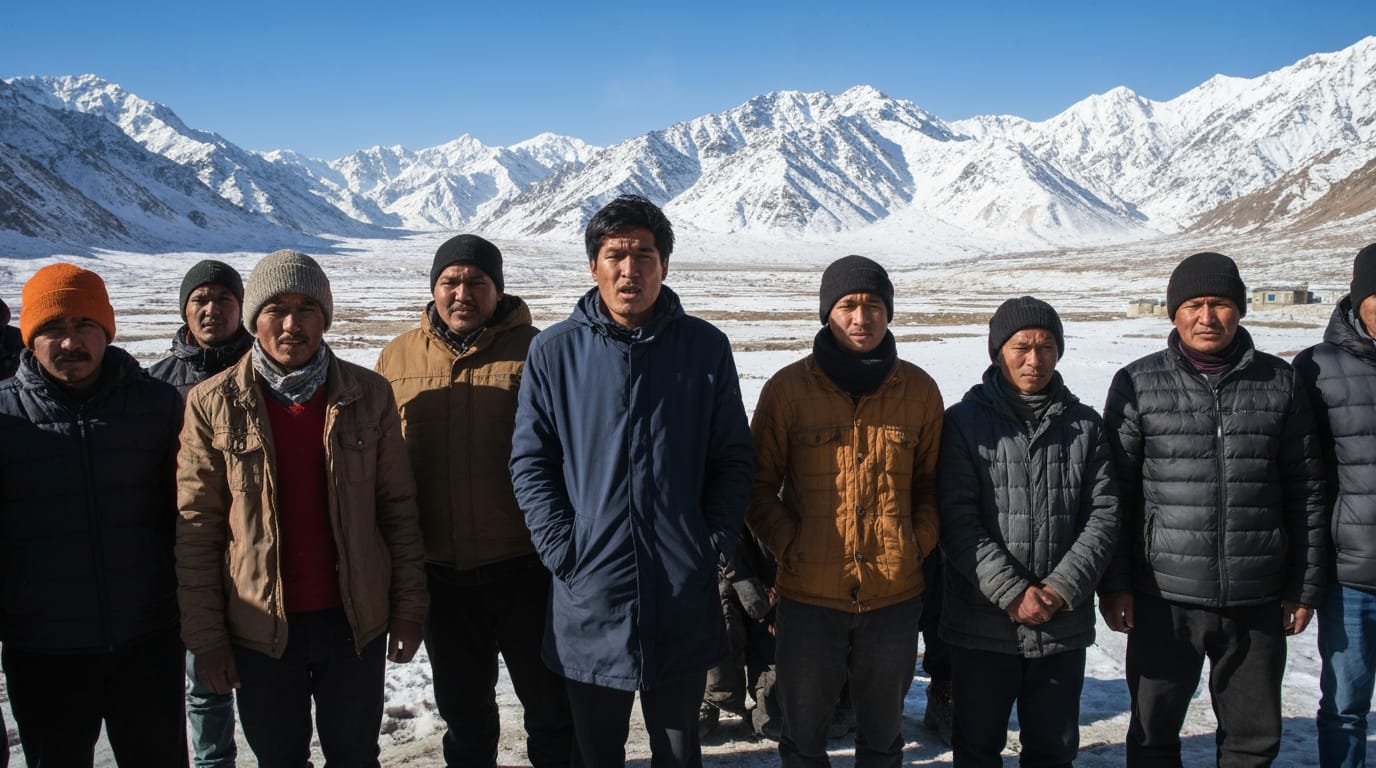
Leh, Ladakh – The remote, high-altitude region of Ladakh is once again at the epicenter of a political showdown, as local organizations escalate protests, demanding full statehood and constitutional safeguards under the Sixth Schedule of the Indian Constitution. A complete shutdown across Leh and Kargil districts on Tuesday highlighted the growing frustration of Ladakhis who accuse the central government of delaying and misrepresenting the outcomes of crucial dialogues. This latest wave of agitation underscores a deep-seated discontent that has simmered since the region's reorganization in 2019, reigniting urgent calls for democratic representation and the protection of its unique identity, land, and employment opportunities.
The Genesis of Discontent: Post-2019 Reorganization
The current unrest in Ladakh traces its roots to August 2019, when the Indian Parliament passed the Jammu and Kashmir Reorganisation Act. This legislation bifurcated the erstwhile state of Jammu and Kashmir into two Union Territories: Jammu and Kashmir with a legislature, and Ladakh without one. Initially, the decision to separate Ladakh from Jammu and Kashmir was met with some jubilation in Leh, particularly among the Buddhist majority, who had long felt marginalized by Kashmir-centric administrations and hoped for greater autonomy and development. However, this initial optimism soon gave way to apprehension as residents realized the implications of becoming a Union Territory directly administered by a Lieutenant Governor, effectively losing their elected legislative assembly and the protections previously afforded under Article 370. The absence of a legislative assembly has led to a significant "representation deficit," shifting power from elected representatives to central officials and raising concerns about local autonomy and decision-making processes. Locals now fear that the fragile ecology and unique culture of Ladakh are vulnerable to unchecked development and demographic changes.
Core Demands: Statehood and Constitutional Safeguards
At the heart of the ongoing protests are five key demands put forth by a united front of socio-political and religious groups, primarily the Leh Apex Body (LAB) and the Kargil Democratic Alliance (KDA). These demands include: full statehood for Ladakh; its inclusion under the Sixth Schedule of the Indian Constitution; the formation of a dedicated Ladakh Public Service Commission; two separate parliamentary seats for Leh and Kargil; and comprehensive job reservation for locals.
The call for statehood aims to restore democratic participation and legislative powers that were lost in 2019. More critically, the demand for Sixth Schedule status is a bid to protect Ladakh's distinct tribal identity, land rights, and cultural heritage. Over 97% of Ladakh's population belongs to tribal communities, and activists argue that the current governance framework under Article 240 lacks permanent constitutional safeguards against land alienation to non-tribal individuals. The Sixth Schedule, applicable to certain tribal areas in northeastern states like Assam, Meghalaya, Tripura, and Mizoram, grants significant autonomy through Autonomous District Councils (ADCs) with powers over land, forests, local customs, and social practices. Such a provision would create legal barriers to prevent land transfer to outsiders and preserve traditional livelihood patterns, including those of Pashmina herders whose grazing lands face pressure from development projects. The absence of a local Public Service Commission since 2019 has also hindered local job recruitment, exacerbating youth unemployment and contributing to significant anger among the region's younger generation.
Escalating Protests and Inconclusive Dialogues
The unified protest movement, spearheaded by LAB and KDA, has been ongoing since 2021, employing various methods including peaceful demonstrations, region-wide shutdowns (bandhs), and hunger strikes. Prominent local activist Sonam Wangchuk has played a significant role, undertaking extended hunger strikes, including a 21-day fast in March 2024, to highlight environmental concerns and constitutional demands. His activism has resonated deeply, particularly with the youth, described by some as a "Gen Z revolution" against unemployment and a political vacuum.
Numerous rounds of talks have been held between representatives of LAB and KDA and the High-Powered Committee (HPC) on Ladakh, formed by the Ministry of Home Affairs (MHA) in January 2023. However, these discussions have frequently ended inconclusively, marked by a growing trust deficit between the local groups and the central government. The latest flashpoint occurred following a May 22, 2026, meeting where, according to LAB and KDA leaders, key understandings regarding a democratic structure with legislative, executive, and financial powers, and constitutional safeguards under Article 371, were reached. However, a subsequent circulation of the official minutes of the meeting allegedly omitted or misrepresented these crucial points, leading to a complete breakdown of trust and the recent region-wide shutdown on June 23, 2026.
The protests have not been without incident. In September 2025, demonstrations in Leh turned violent, leading to multiple fatalities and injuries after clashes with police. While activists accused authorities of excessive force, the central government reportedly blamed activist Sonam Wangchuk for inciting unrest, leading to his detention under the National Security Act, though his detention was later revoked in March 2026. These incidents underscore the volatile nature of the situation and the deep frustration among the populace.
Beyond Politics: Environmental and Demographic Concerns
Beyond the immediate political demands, Ladakhis also harbor profound anxieties about the long-term impact of its current administrative status on its fragile environment and unique demographic makeup. The high-altitude cold desert ecosystem is particularly vulnerable to the effects of increased tourism and industrial development, which locals fear could be approved without adequate consultation or environmental safeguards under direct central rule. Concerns over "land grabbing" by outsiders and the potential for demographic change, where Ladakhis might become a minority in their own land, are frequently voiced, drawing parallels to the situation in Tibet.
A recent administrative move in April 2026, which expanded the number of districts in Ladakh from two to seven, has further fueled these apprehensions. While some see this as administrative reform, critics, including Kargil-based activist Sajjad Kargili, allege it is a "calculated attempt to fragment the unified democratic and statehood movement." Concerns have also been raised that the new district boundaries disproportionately create Buddhist-majority districts while marginalizing the Muslim population, potentially exacerbating existing communal divisions.
A Standoff with Far-Reaching Implications
The ongoing protests in Ladakh represent a critical juncture for the region, highlighting a complex interplay of democratic aspirations, identity politics, and environmental concerns. Despite some concessions from the central government, such as an 85% job reservation for locals and a 15-year residency requirement for domicile status, these measures have largely been deemed insufficient by the protest leaders. The persistent failure of dialogues to yield concrete, mutually agreeable outcomes has deepened the resolve of LAB and KDA, who warn of further agitation if their concerns are not genuinely addressed. The situation in Ladakh underscores a broader challenge within India's federal structure, where regional identities and demands for autonomy must be balanced against national security imperatives in a strategically sensitive border region. A consensus-based, tailored constitutional framework, which respects both the unique aspirations of the Ladakhi people and the country's broader strategic interests, remains a critical path forward.


