North Korean Soldier Crosses DMZ in Rare Defection, Igniting Tensions on Peninsula
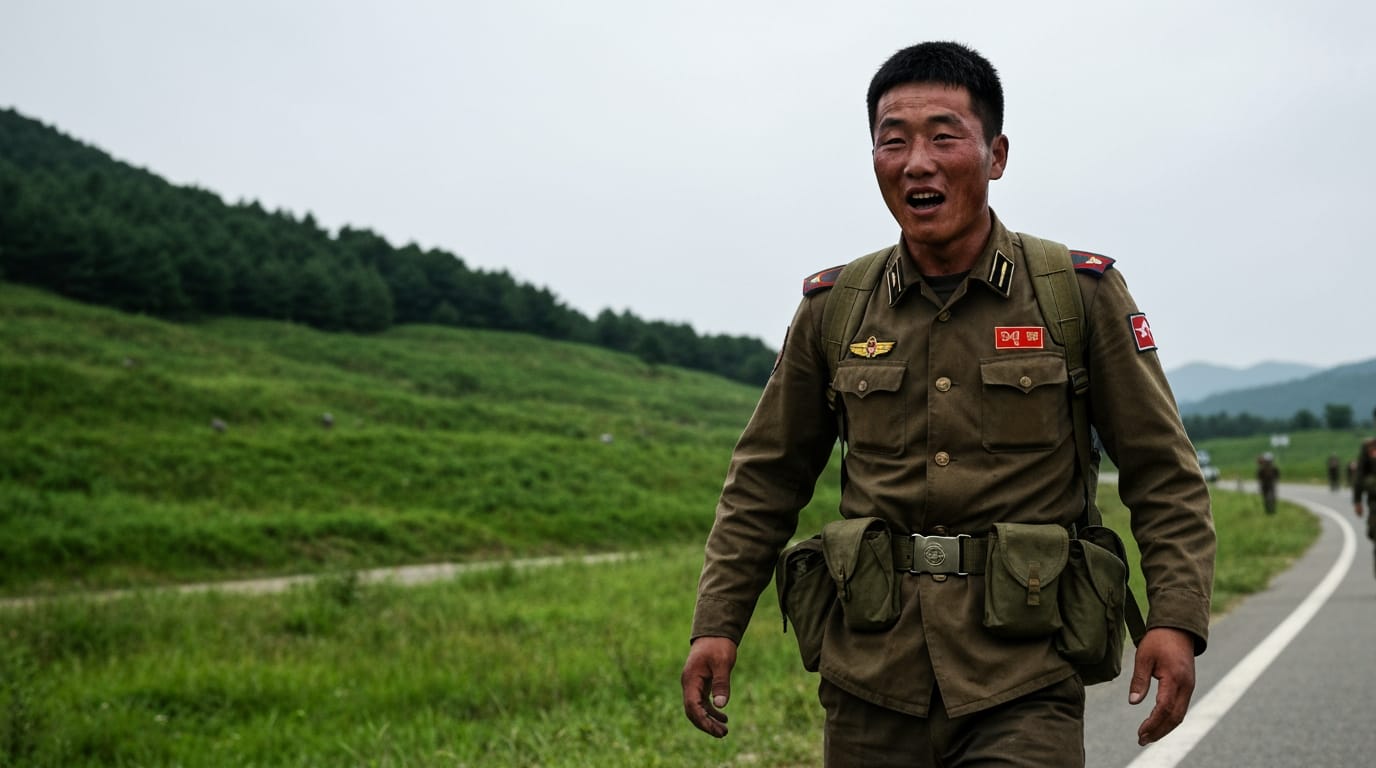
SEOUL, South Korea – A North Korean soldier successfully crossed the heavily fortified Demilitarized Zone (DMZ) into South Korea late Tuesday, June 23, 2026, marking a rare and perilous defection across one of the world's most dangerous borders. The unnamed soldier was taken into custody by South Korean military forces near the central front and has reportedly expressed a desire to resettle in the South, according to Seoul's Joint Chiefs of Staff. This incident immediately triggers investigations into the defector's motives and raises questions about the ongoing stability of inter-Korean relations.
The defection, confirmed Wednesday, June 24, 2026, represents the first known military crossing of the land border this year and the second involving a North Korean soldier since President Lee Jae Myung took office in June 2025. Such direct crossings are exceptionally uncommon, underscoring the immense risks undertaken by those seeking to escape the isolation of the North. South Korean authorities are currently investigating the precise details of the crossing and the soldier's background.
The Perilous Passage Across the DMZ
The Demilitarized Zone, a 248-kilometer (155-mile) long and 4-kilometer (2.5-mile) wide strip of land, is anything but "demilitarized." It stands as one of the most heavily fortified borders globally, laced with landmines, tank traps, barbed wire fences, and under constant surveillance by combat troops from both sides. The inherent dangers make direct crossings exceedingly rare, with the vast majority of North Koreans seeking asylum in the South doing so via a circuitous route through China and other third countries.
Previous instances of soldiers crossing the DMZ have often been dramatic. In 2017, a North Korean soldier sprinted across the border under a hail of about 40 bullets fired by his former comrades before South Korean soldiers rescued him. Another soldier, reportedly a staff sergeant, made a similar crossing in August 2024 through the eastern section of the border, followed by another in October 2025. These acts highlight the desperation and courage required to traverse such a formidable barrier. The South Korean military reported detecting a thermal signature during the recent incident and conducted a "standard guidance operation" to secure the individual, noting no signs of pursuit from North Korean forces.
Motivation and the Defector's Journey
While the specific motivations of the newly arrived soldier remain under investigation, defections from North Korea are typically driven by a complex mix of economic hardship, political repression, and a desire for greater freedom and opportunity. The North Korean regime views any defection as an act of treason, often punishing not only the individual but also up to three generations of their family. This severe penalty underscores the life-altering decision made by those who choose to leave.
Upon arrival in South Korea, defectors undergo a stringent screening process conducted by Seoul's intelligence agency, the National Intelligence Service, and other relevant authorities. This interrogation aims to verify their identity, gather intelligence, and ensure they are not spies. After this initial period, defectors are typically sent to resettlement centers, such as Hanawon, where they receive a 12-week program focused on social adaptation, including education on the South Korean economic and political system and job training. The South Korean government also offers a settlement fund and leased housing, and for those under 30, free education and healthcare.
The Broader Trend of Defections
Since the end of the 1950-53 Korean War, more than 34,000 North Koreans have fled to South Korea. However, direct crossings of the DMZ account for a minuscule fraction of these numbers, with only about 20 military defections across the DMZ since 1996. Most defectors opt for the longer, less directly dangerous route through China, which shares a long, porous border with North Korea. From China, they often travel to a third country, such as Thailand, before reaching South Korea.
The number of defections has fluctuated significantly over the years. Following the severe famine of the 1990s, there was a surge in defections. The COVID-19 pandemic, however, led North Korea to impose even stricter border controls, including shoot-on-sight orders, causing a sharp decline in arrivals in South Korea between 2020 and 2022. While the borders remained largely closed as of August 2023, the easing of some restrictions has seen a modest increase in defector numbers, with 236 North Koreans arriving in 2024. Women continue to constitute a significant majority of defectors, accounting for 88 percent of arrivals in 2024, often due to economic hardship.
Implications for Inter-Korean Relations
Each defection across the heavily guarded border is a sensitive incident that can strain already tense inter-Korean relations. Pyongyang typically responds by condemning defectors as "human scum" and views their resettlement in the South as an affront. Such events have historically been used by both sides for propaganda purposes, with South Korea highlighting human rights abuses in the North, while North Korea denounces the South's welcoming policy.
The current South Korean President, Lee Jae Myung, who took office in June 2025, has advocated for greater rapprochement with Pyongyang. However, formal talks have yet to materialize, and relations remain largely frozen. While South Korea maintains that dialogue is necessary for peace, incidents like this defection underscore the deep ideological divide and the ongoing human cost of the unresolved conflict. The latest defection, while perhaps not immediately escalating tensions, serves as a stark reminder of the fragile peace that exists on the Korean Peninsula and the enduring human struggle under North Korea's authoritarian rule.
Conclusion
The defection of a North Korean soldier across the DMZ on Tuesday night represents more than just an individual's desperate flight for freedom; it is a poignant symbol of the enduring division and human rights challenges on the Korean Peninsula. Such crossings, though rare, expose the inherent instability of the inter-Korean border and the profound differences between the two states. As South Korean authorities delve into the defector's story, the incident will inevitably reverberate through the political landscape, keeping the spotlight on the humanitarian situation in the North and the perpetual stalemate in inter-Korean dialogue. The journey of this single soldier across a mine-laden frontier encapsulates the hopes and perils faced by thousands of North Koreans seeking a different life, perpetually reminding the world of a conflict yet to find its peace.


