ICC Opens Pivotal Hearing for Former Philippine President Duterte on Crimes Against Humanity
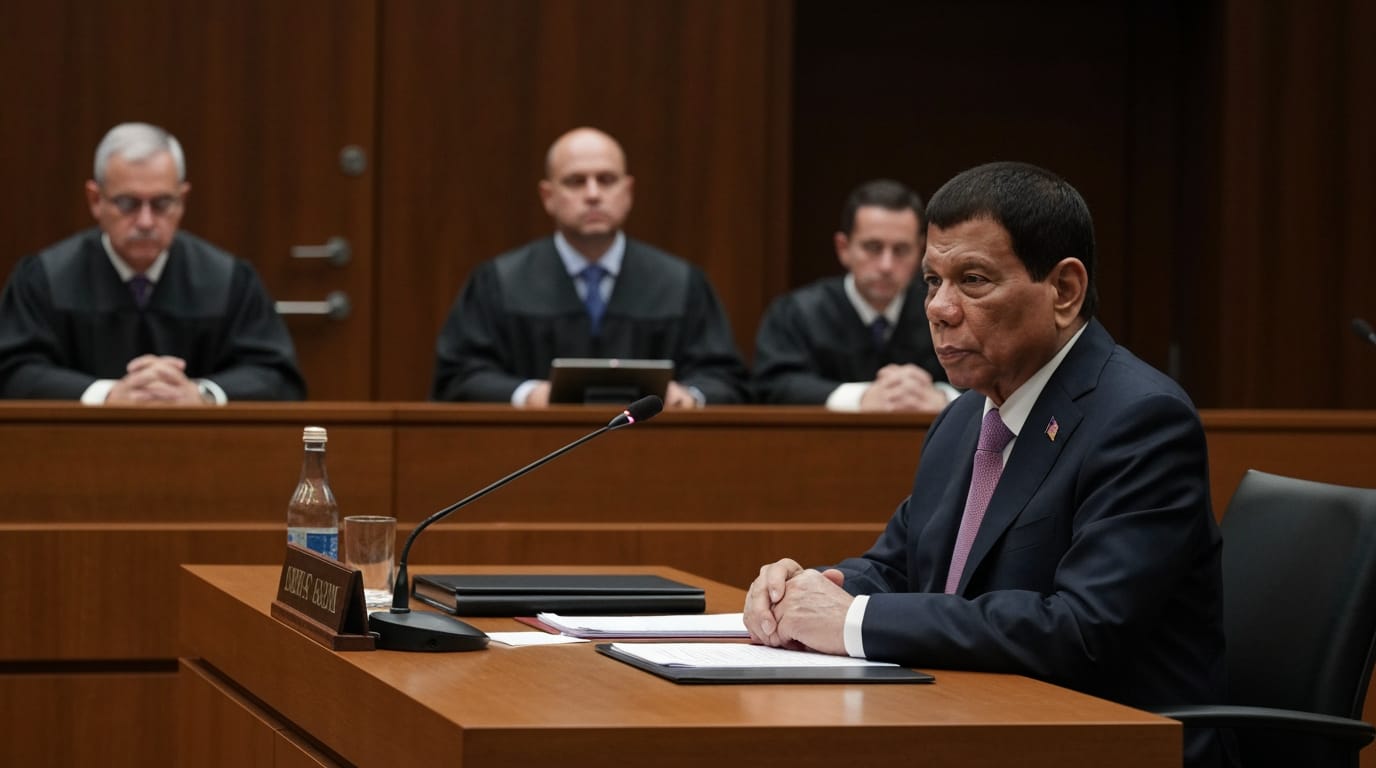
THE HAGUE, Netherlands – In a landmark development for international justice, former Philippine President Rodrigo Duterte faced the International Criminal Court (ICC) today as pretrial hearings commenced in The Hague. The proceedings mark a significant step in the global accountability effort for alleged crimes against humanity linked to his notorious "War on Drugs" campaign, which resulted in the deaths of thousands. Duterte, 80, is being evaluated on three counts of crimes against humanity, stemming from extrajudicial killings carried out during his presidency and earlier tenure as mayor of Davao City. The highly anticipated hearing, which Duterte chose not to attend, pits the might of international law against a former head of state long defiant of external scrutiny.
The Weight of Allegations: Unpacking the Charges
The ICC's Pre-Trial Chamber I is currently reviewing the prosecution's evidence to determine if there are substantial grounds to confirm the charges against Duterte, a crucial step before any potential trial can proceed. Prosecutors allege that Duterte, during his time in office and as mayor, encouraged "death squads" to perpetrate extrajudicial killings. These alleged acts were reportedly motivated by financial rewards or the fear of becoming targets themselves, as deputy prosecutor Mame Mandiaye Niang articulated in his opening statement. The scope of the investigation by the International Criminal Court covers alleged crimes committed between November 1, 2011, and March 16, 2019. This period encompasses much of Duterte's presidency, during which the "War on Drugs" was at its peak, and also includes earlier killings in Davao City. Independent estimates of the death toll from the anti-drug campaign vary widely, with human rights groups suggesting figures between 12,000 and 30,000, while national police reports indicate over 6,000 fatalities. The prosecution contends that these killings were not merely isolated incidents but part of a "widespread and systematic attack against the civilian population," carried out under a state policy.
A Long and Contested Road to The Hague
The journey to these hearings has been a protracted one, marked by significant legal and political challenges, particularly concerning the ICC's jurisdiction. The International Criminal Court first expressed concern over the rising number of extrajudicial killings in the Philippines in October 2016, just months into Duterte's presidency. A preliminary examination was officially opened in February 2018. In a move widely seen as an attempt to evade accountability, Duterte announced the Philippines' withdrawal from the Rome Statute, the treaty establishing the ICC, in March 2018. The withdrawal officially took effect a year later, on March 17, 2019. However, the ICC maintained its jurisdiction over alleged crimes committed while the Philippines was a State Party to the Statute, specifically for the period before the withdrawal became effective. This assertion of jurisdiction was later affirmed by the ICC's Pre-Trial Chamber I in October 2025, rejecting arguments from Duterte's legal team that the court lacked authority due to the Philippines' exit. Furthermore, the Supreme Court of the Philippines, in a 2021 ruling, commented that the Philippines still carries an obligation to cooperate with ICC proceedings, despite its withdrawal. This legal precedent established a critical pathway for the investigation to continue. Following the ICC's authorization of a formal investigation in September 2021 and the rejection of the Philippine government's deferral requests, the process gained momentum. Ultimately, an arrest warrant was issued, leading to Duterte's apprehension by the Philippine National Police and Interpol on March 11, 2025, and his subsequent transfer to The Hague.
Duterte's Defiance and the Defense Strategy
Former President Duterte has consistently denied the allegations, labeling them an "outrageous lie," and has steadfastly rejected the ICC's jurisdiction over him. Citing health concerns and a steadfast refusal to acknowledge the court's authority, Duterte waived his right to be present at the pretrial hearings. His legal team, led by British-Israeli lawyer Nick Kaufman, argues that the prosecution has "cherry-picked" instances of Duterte's "bombastic rhetoric" and that his words were not intended to incite violence. Despite an earlier postponement of a hearing due to health concerns, judges recently found Duterte fit to stand trial, dismissing claims of "cognitive impairment." The defense is expected to continue challenging the jurisdictional basis of the ICC, though previous attempts have been unsuccessful. The hearings are not a trial but serve as a crucial stage for the prosecution to outline its case and for judges to assess the strength of the evidence. The three-judge panel now has 60 days to decide whether the evidence is sufficient to merit a full trial.
Voices for Justice and the Global Pursuit of Accountability
For the families of those killed during the "War on Drugs," these hearings represent a long-awaited beacon of hope for justice. In metropolitan Manila, dozens of activists and relatives gathered to watch the proceedings, underscoring the deep human impact of the alleged atrocities. "We're hoping that the ICC, even if it's thousands of miles away, will finally render justice to all these families," stated Randy delos Santos, whose 17-year-old nephew was killed in a purported drug raid in 2017. The sentiments of victims' families highlight the profound importance of international mechanisms when domestic avenues for justice are perceived as inadequate. This case is being closely watched globally as a test of the ICC's ability to hold powerful individuals accountable, even those from states that have attempted to withdraw from its jurisdiction. The outcome will have significant implications not only for the former Philippine president and the victims but also for the broader landscape of international criminal justice and the principle of ending impunity for severe human rights violations.
The commencement of pretrial hearings against Rodrigo Duterte at the International Criminal Court signifies a pivotal moment in the quest for accountability for alleged crimes against humanity. Despite jurisdictional challenges and Duterte's refusal to participate, the ICC is proceeding, guided by its mandate to address atrocities where national courts are unable or unwilling to act. The next 60 days will be critical as judges deliberate on the evidence, determining whether the case against the former president will advance to a full trial. This process, while lengthy and complex, offers a glimmer of hope for thousands of victims and reinforces the enduring importance of international law in safeguarding human rights worldwide.


