ICE Chief Declares Agency 'Just Getting Started' Amidst Congressional Firestorm
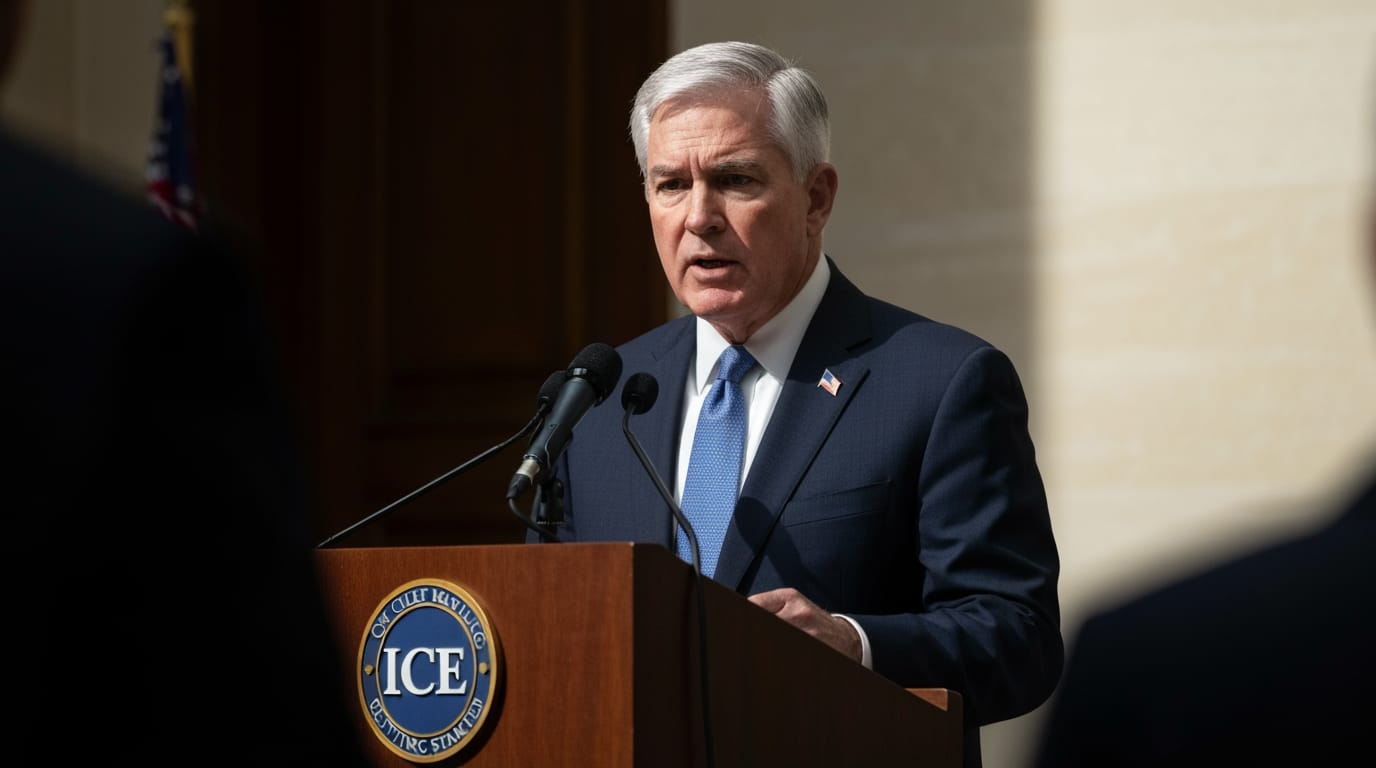
Washington D.C. — The acting director of U.S. Immigration and Customs Enforcement (ICE), Todd Lyons, delivered a defiant message to the U.S. House of Representatives this week, asserting that his agency is "only getting started" in its mission to enforce the nation's immigration laws. His pronouncement came during a contentious congressional hearing Tuesday before the House Committee on Homeland Security, a session dominated by fierce questioning from Democratic lawmakers and heightened scrutiny following recent fatal shootings involving federal officers.
Lyons, alongside other top immigration officials, staunchly defended ICE's tactics and an aggressive enforcement agenda that has become a centerpiece of President Donald Trump's second term. The hearing unfolded against a backdrop of plummeting public support for current immigration policies and a looming federal funding deadline that could disrupt the Department of Homeland Security's operations.
Unwavering Resolve in the Face of Intimidation
Acting Director Lyons' testimony was marked by an unyielding stance, as he vowed that ICE officers would not be intimidated or deterred from their duties. "Let me send a message to anyone who thinks they can intimidate us. You will fail," Lyons declared, citing alleged harassment faced by his own family and other ICE personnel. He underscored the agency's commitment to what he termed its "mass deportation" mandate, revealing that ICE conducted approximately 379,000 arrests and removed over 475,000 individuals from the country in 2025. These figures, he stated, demonstrate the agency's effectiveness in fulfilling its directive.
Lyons attributed the agency's escalating operational capacity to increased congressional funding, which he noted has facilitated a boost in detention capabilities and a higher frequency of removal flights. This expansion, he suggested, enables ICE to intensify its enforcement efforts nationwide. The agency has reportedly undergone a significant hiring surge, deploying a larger force of immigration officers across the country. Lyons also addressed the training of new recruits, stating that while the "meat of the training" remains consistent, the schedule has been condensed to six days a week for 12 hours daily, a notable increase from the previous five-day, eight-hour schedule.
Controversial Policies and Broadened Enforcement Scope
The acting director's assertion of expanded operations resonated with critics who point to a series of policy shifts and a significant increase in enforcement activity under the current administration. A key point of contention has been a May 2025 internal memorandum, signed by Lyons, which authorized ICE officers to enter private residences for civil immigration arrests using only an administrative warrant. Critics argue this measure bypasses Fourth Amendment protections against unlawful searches and seizures.
The Trump administration's intensified focus on immigration enforcement has led to a marked increase in workplace actions, including audits, raids, and compliance checks, often conducted by ICE's Homeland Security Investigations (HSI) arm or in coordination with Customs and Border Protection. Furthermore, a 120% increase in ICE's workforce, adding over 12,000 officers and agents, has enabled broader and more aggressive enforcement, including community-based operations. This surge in manpower has been supported by incentives such as $50,000 signing bonuses and student loan forgiveness, with the ambitious goal of doubling the agency's workforce and achieving one million deportations annually. This aggressive recruitment has also seen the hiring age lowered to 18, a departure from traditional federal law enforcement age limits.
Adding to the controversy, the administration has ended the "sensitive locations" policy, which previously restricted ICE operations in places like hospitals, schools, and places of worship. This policy change exposes sectors such as healthcare and education to surprise inspections and enforcement actions.
Congressional Confrontation and Calls for Accountability
The congressional hearing itself was a vivid demonstration of the deep divisions surrounding ICE's mandate and methods. Democratic lawmakers launched pointed criticisms, particularly in the wake of the recent incidents in Minneapolis where two U.S. citizens, Alex Pretti and Renee Good, were fatally shot by federal officers. Ranking Democratic Member of the committee, Bennie Thompson of Mississippi, called the hearing the "start of a reckoning," demanding accountability for Homeland Security Secretary Kristi Noem and criticizing the department for allegedly blocking lawmakers from visiting detention facilities.
A heated exchange occurred between Lyons and Rep. Dan Goldman (D-N.Y.), who drew parallels between masked ICE agents and "fascist regimes" or "secret police." Goldman retorted, "If you don't want to be called a fascist regime or secret police, then stop acting like one," after Lyons claimed that such comparisons encouraged threats against agents. Other representatives questioned the agency's hiring practices, particularly regarding individuals potentially involved in the January 6th Capitol assault, and the appropriateness of tactics like deploying pepper spray into moving vehicles. Lyons, for his part, stated his commitment to "full transparency" and welcomed body cameras, promising the release of footage from Minneapolis.
While Lyons defended his officers' actions and stated that standard operating procedures were followed in the Minneapolis shootings, the incidents have amplified public outcry and calls for independent investigations. Critics argue that the agency's expansion has far outpaced its accountability mechanisms.
Funding Deadlines and Future Implications
The intense debate surrounding ICE's operations is further complicated by an impending deadline for Department of Homeland Security funding. With Congress having funded DHS only through February 13th, Democrats are leveraging the spending bill negotiations to demand significant reforms within ICE. A potential government shutdown looms if an agreement on new limits for immigration agents cannot be reached.
Despite the political tensions, Lyons affirmed ICE's broader role in national security, highlighting Homeland Security Investigations' (HSI) involvement in securing the upcoming World Cup, ensuring a "safe and secure event." This points to the dual nature of ICE's responsibilities, encompassing both criminal investigations and immigration enforcement, though the latter has increasingly dominated public discourse.
A Deeply Divided Path Forward
The congressional testimony of Acting Director Todd Lyons underscores the administration's unwavering commitment to an aggressive immigration enforcement agenda, signaling a continuation, and even intensification, of current policies. His declaration that ICE is "just getting started" serves as a clear indication of the agency's intent to press forward despite mounting criticism and deep political divisions.
However, the confrontational tone of the House hearing and the demands from Democratic lawmakers for significant reforms suggest a long and arduous path ahead. The ongoing debate over DHS funding, coupled with increased public scrutiny and allegations of lack of accountability, ensures that immigration enforcement will remain a central and contentious issue in national politics. The implications of ICE's expanded operations, particularly regarding civil liberties and community relations, will continue to be a subject of intense public and legislative focus.


