Vance Forges South Caucasus Deals, Heralding New Era of U.S. Engagement
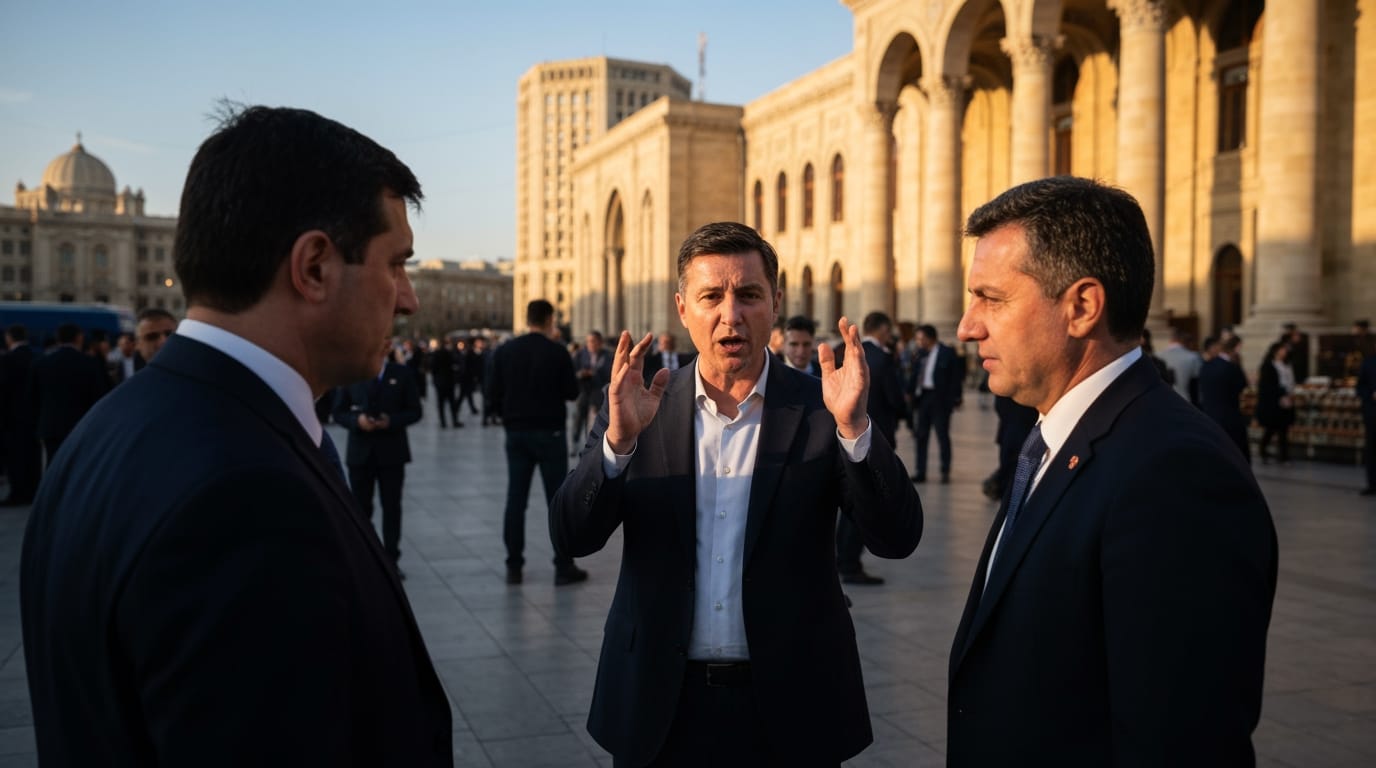
YEREVAN, Armenia – Vice President JD Vance has concluded a historic two-day diplomatic mission to Armenia and Azerbaijan, culminating in a series of strategic agreements aimed at solidifying a U.S.-brokered peace deal and reshaping the economic and geopolitical landscape of the South Caucasus. His visit, the first by a sitting U.S. Vice President to Armenia, underscored Washington's intensified focus on a region long considered a complex nexus of Russian, Turkish, and Iranian influence. The high-stakes negotiations resulted in commitments to significant U.S. investments in infrastructure, civil nuclear energy, and advanced technology, alongside efforts to establish a crucial new East-West transit corridor designed to foster regional stability and economic integration.
Diplomatic Overtures and Economic Commitments
Vice President Vance's itinerary began in Yerevan, Armenia, on February 9, where he held extensive discussions with Prime Minister Nikol Pashinyan. The visit, marked by ceremonial greetings including a red carpet and honor guard, quickly transitioned to substantive policy dialogues. A cornerstone achievement of the Armenian leg of the trip was the signing of an agreement on civil nuclear cooperation. This landmark deal is poised to enable the United States to license nuclear technology exports to Armenia, potentially unlocking up to $5 billion in initial U.S. exports and an additional $4 billion in longer-term fuel and maintenance contracts. This move signals Armenia's strategic intent to diversify its energy sources, traditionally reliant on Russia and Iran, and strengthens its ties with the West.
Beyond energy, Vance outlined a broader vision for technological and infrastructural development in Armenia. The U.S. expressed readiness to facilitate the export of advanced computer chips and surveillance drones, along with investments in the nation's burgeoning infrastructure. Initiatives include supporting a large-scale artificial intelligence (AI) data center and cloud infrastructure project, positioning Armenia as a potential regional technology hub. Prime Minister Pashinyan lauded the visit as "historic and symbolic," expressing gratitude for the U.S. administration's efforts toward peace and development in the region. Vance, a self-identified devout Christian, also paid respects at the Tsitsernakaberd Armenian Genocide Memorial in Yerevan, acknowledging the nation's profound historical and cultural significance.
Forging a Strategic Partnership in Azerbaijan
Following his engagements in Armenia, Vice President Vance traveled to Baku, Azerbaijan, on February 10 for meetings with President Ilham Aliyev. This leg of the visit further cemented Washington's strategic pivot in the South Caucasus. A significant outcome was the signing of a strategic partnership agreement, signaling a new chapter in economic and security cooperation between the two nations. Discussions between Vance and Aliyev spanned a range of critical areas, including enhanced collaboration in defense sales, artificial intelligence, energy security, and counter-terrorism initiatives.
A tangible commitment from the U.S. includes the delivery of new boats to bolster Azerbaijan's territorial water protection. President Aliyev reciprocated the sentiment of strengthening ties, stating that Baku and Washington were embarking on "an entirely new phase" of cooperation. Vance publicly commended the leadership of President Aliyev, Prime Minister Pashinyan, and U.S. President Donald Trump for bringing about what he described as peace in the South Caucasus, aiming to establish enduring stability in a region long plagued by conflict.
The "Trump Route" and Regional Transformation
Central to Vance's diplomatic push in both Yerevan and Baku is the advancement of the "Trump Route for International Peace and Prosperity" (TRIPP). This ambitious initiative, a U.S.-brokered framework agreed upon in August 2025, proposes a 43-kilometer (27-mile) road and rail corridor through southern Armenian territory. Its primary objective is to connect Azerbaijan to its Nakhchivan exclave and onward to Turkey, establishing a vital East-West trade artery.
The corridor, envisioned to include rail lines, oil and gas pipelines, and fiber optic infrastructure, aims to facilitate the movement of goods, people, and data, thereby circumventing existing routes through Russia and Iran. The U.S. has secured leasing rights for its development, with a private U.S. firm, the TRIPP Development Company, granted exclusive development rights, while Armenia maintains full sovereignty over its borders and customs. This project is viewed by Washington as a pragmatic "business proposition" to stabilize the South Caucasus, intertwining peace with economic integration and diminishing Russia's long-standing role as the sole regional mediator. While the peace treaty between Armenia and Azerbaijan has been initialed by foreign ministers, its full ratification by both countries' parliaments and leaders remains a critical final step.
Geopolitical Realignments and Regional Implications
Vance's intensive diplomatic efforts underscore a strategic recalibration of U.S. foreign policy in the South Caucasus. The region's increasing strategic importance is driven by several factors, including its critical mineral reserves and the broader objective of diversifying global energy and trade routes away from adversaries. The timing of this renewed U.S. engagement is particularly significant, coinciding with Russia's perceived diminished influence as it reallocates military assets from the Caucasus to Ukraine. This shift creates a vacuum that Washington appears eager to fill with economic and security partnerships.
The decision to bypass Tbilisi, Georgia, during Vance's tour further highlights a targeted U.S. approach, prioritizing the direct resolution of the Armenia-Azerbaijan conflict and specific corridor arrangements over broader, symbolic diplomacy. However, the expanding U.S. footprint and the TRIPP initiative are not without complex regional implications. Neighboring powers like Turkey and Iran are closely monitoring these developments, expressing concerns about potential shifts in regional power balances and the transformation of a commercial route into a geopolitical pressure point. Despite these complexities, the U.S. views this moment as an opportune time for the South Caucasus to move towards greater interconnectedness, cooperation, and lasting peace, resisting future attempts by external powers to reassert dominance.
A New Chapter for the South Caucasus
Vice President Vance's diplomatic spree in Armenia and Azerbaijan marks a decisive turning point in U.S. engagement with the South Caucasus. By intertwining a historic peace accord with substantial economic and strategic partnerships, the Trump administration aims to forge a new regional architecture defined by stability, connectivity, and prosperity. The civil nuclear deal with Armenia, the strategic partnership with Azerbaijan, and the ambitious TRIPP corridor collectively represent a comprehensive strategy to integrate these nations more deeply into Western economic and security spheres. While significant challenges remain, particularly the full ratification of the peace treaty and managing regional sensitivities, Vance's visit signals a robust commitment from Washington to solidify peace and foster enduring development in this strategically vital region. The outcomes of these "deal-making" efforts could well define the trajectory of the South Caucasus for decades to come, offering a clear alternative to past cycles of conflict and external dependence.


