Iceland Poised for Pivotal EU Referendum Amid Deepening Unease Over U.S. Reliability
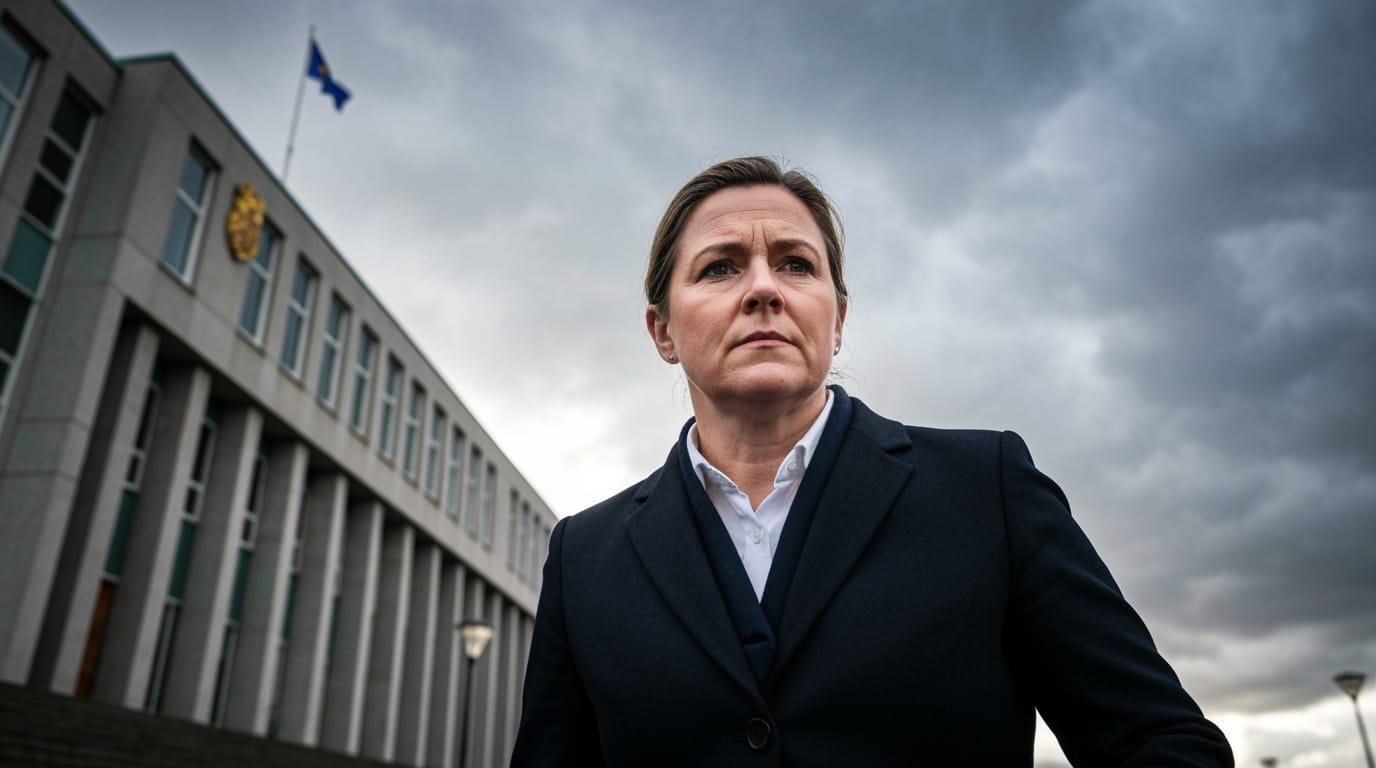
REYKJAVÍK – Iceland is on the cusp of a landmark decision regarding its international alignment, with Prime Minister Kristrún Frostadóttir announcing a national referendum in the coming months on whether to resume accession talks with the European Union. The accelerated timeline for a vote, initially anticipated by 2027, reflects a profound shift in Reykjavík’s strategic calculus, largely driven by escalating geopolitical volatility and a growing apprehension about the reliability of its long-standing security guarantor, the United States. This potential pivot from its traditional transatlantic partnership toward deeper European integration underscores a broader re-evaluation of national interests in a rapidly changing global landscape.
A Shifting Geopolitical Compass in the North Atlantic
The prospect of Iceland re-engaging with the European Union marks a significant turn in its foreign policy trajectory. Public sentiment appears to be leaning towards closer ties with the bloc, with recent polls indicating an uptick in support for EU membership. A Gallup poll in March 2025 showed 44.3% of Icelanders in favor of joining the EU, compared to 35.6% opposed, signaling a notable shift in mood. Similarly, a December 2024 survey by Prósent found 45% backing membership, with 58% supporting a referendum on initiating negotiations. This growing interest is less about immediate economic gains and more about seeking stability amidst an unpredictable international environment. Political scientist Eiríkur Bergmann noted that while economic and regulatory concerns historically dominated EU discussions, security considerations are now playing an increasingly central role.
Iceland, a founding member of NATO but without a standing military, has traditionally relied heavily on the United States for its defense through a 1951 bilateral agreement. However, a series of developments, particularly under the current U.S. administration, has prompted a critical re-examination of this foundational security pillar. The coalition government, which includes pro-EU parties like the Social Democratic Alliance and the Reform Party, has made the referendum a key part of its agenda, reflecting the urgency of the debate.
Strains with Washington and the 'Greenland Shadow'
The primary catalyst for Iceland's strategic re-evaluation stems from perceived inconsistencies and assertive policies emanating from Washington. Former U.S. President Donald Trump's repeated expressions of interest in acquiring Greenland have resonated deeply in Reykjavík, triggering anxieties about how larger powers treat smaller nations when strategic interests are at stake. Icelandic officials and experts have warned that the arguments used by the U.S. regarding Greenland could logically extend to Iceland, given its analogous strategic position in the North Atlantic. Political scientist Eiríkur Bergmann highlighted that such remarks created "deep-lying anxiety" about U.S. intentions in the North Atlantic.
Further exacerbating these security concerns, the U.S. imposed a 15% tariff on Icelandic goods in August 2025. This move was widely interpreted in Iceland as a "serious economic attack" and a clear demonstration of the "America First" policy prioritizing domestic interests over allied relations. Foreign Minister Þorgerður Katrín Gunnarsdóttir noted that the U.S. was prioritizing countries with higher tariffs, making it evident that Iceland was not high on Washington's priority list for trade discussions.
These economic and diplomatic frictions have led many Icelanders to question the enduring value of the 1951 defense agreement and the broader NATO commitment. Some observers, including former Icelandic Prime Minister Þorsteinn Pálsson, argue that the U.S. "attack on Iceland's vital interests changes matters fundamentally" and makes full EU membership "hardly avoidable" for long-term defense of interests. The inherent uncertainty surrounding U.S. foreign policy, particularly given the unpredictability of presidential administrations, has created a compelling case for Iceland to diversify its security and economic partnerships.
Europe as a New Anchor of Stability
In response to these transatlantic strains, the European Union is increasingly being viewed as a potential new anchor for Iceland's security and economic stability. While Iceland is already deeply integrated with Europe through its membership in the European Economic Area (EEA) and the Schengen Area, which means it adopts a significant portion of EU laws, full membership offers a seat at the decision-making table and enhanced collective security. European officials have openly welcomed Iceland's renewed interest, with EU Enlargement Commissioner Marta Kos emphasizing that the expansion debate is increasingly focused on "security and belonging within a world defined by great-power competition." European Commission President Ursula von der Leyen has underscored the strategic value of such a partnership, noting that it "offers stability and predictability in a volatile world."
The shift in rhetoric in Reykjavík frames EU membership less as an economic choice and more as a "question of long-term defense and geopolitical alignment." This perspective is gaining traction, especially given Iceland's lack of a standing army and its critical strategic location in the GIUK (Greenland-Iceland-United Kingdom) gap, a vital maritime choke point for NATO. Recent U.S. military maneuvers, such as the deployment of a nuclear-powered attack submarine to Iceland in February 2026, underscore the Arctic's growing strategic importance and the region's mounting military pressure, further highlighting Iceland's vulnerability and its need for robust alliances.
Enduring Hurdles to Full EU Accession
Despite the compelling new geopolitical arguments, the path to full EU membership for Iceland remains fraught with historical and economic challenges. The most significant and persistent hurdle lies in the European Union's Common Fisheries Policy. Iceland's economy is profoundly reliant on its fishing industry, and maintaining national control over its rich fishing waters is a deeply ingrained matter of sovereignty and economic survival. Concerns about relinquishing control over these vital resources were a primary reason why Iceland's initial application, submitted in 2009 following its financial crisis, was suspended in 2013 and subsequently withdrawn in 2015.
Other considerations include the potential loss of currency sovereignty, as joining the EU would likely entail adopting the Euro, and the financial contributions Iceland would be required to make to the EU budget. While EU membership could bring economic benefits through full access to the single market and increased trade stability, the trade-off with national autonomy, particularly in such a critical sector as fishing, continues to be a contentious issue for many Icelanders. Prime Minister Frostadóttir herself has emphasized that Iceland is "not ready to join the European Union on any terms" and stressed the importance of preserving Icelandic identity and resource management in any potential talks.
Iceland's Pivotal Choice
The upcoming referendum will undoubtedly be a pivotal moment in Iceland's post-independence history. It will force the nation of less than 400,000 people to confront fundamental questions about its security, economic future, and national identity. The debate encapsulates a complex interplay of internal aspirations for sovereignty and external pressures from a shifting global order. As the North Atlantic takes on renewed strategic importance and established alliances face unprecedented strains, Iceland's choice will reverberate far beyond its shores, shaping the geopolitical dynamics of the Arctic and signaling its preferred path in a world demanding clear alignments. The decision, whether for deeper European integration or continued navigation of an increasingly unpredictable global landscape, will ultimately be made by the Icelandic people, balancing the imperatives of security and autonomy in an uncertain future.


