War Erupts: Israel Faces Multifaceted Threat as Conflict with Iran Intensifies
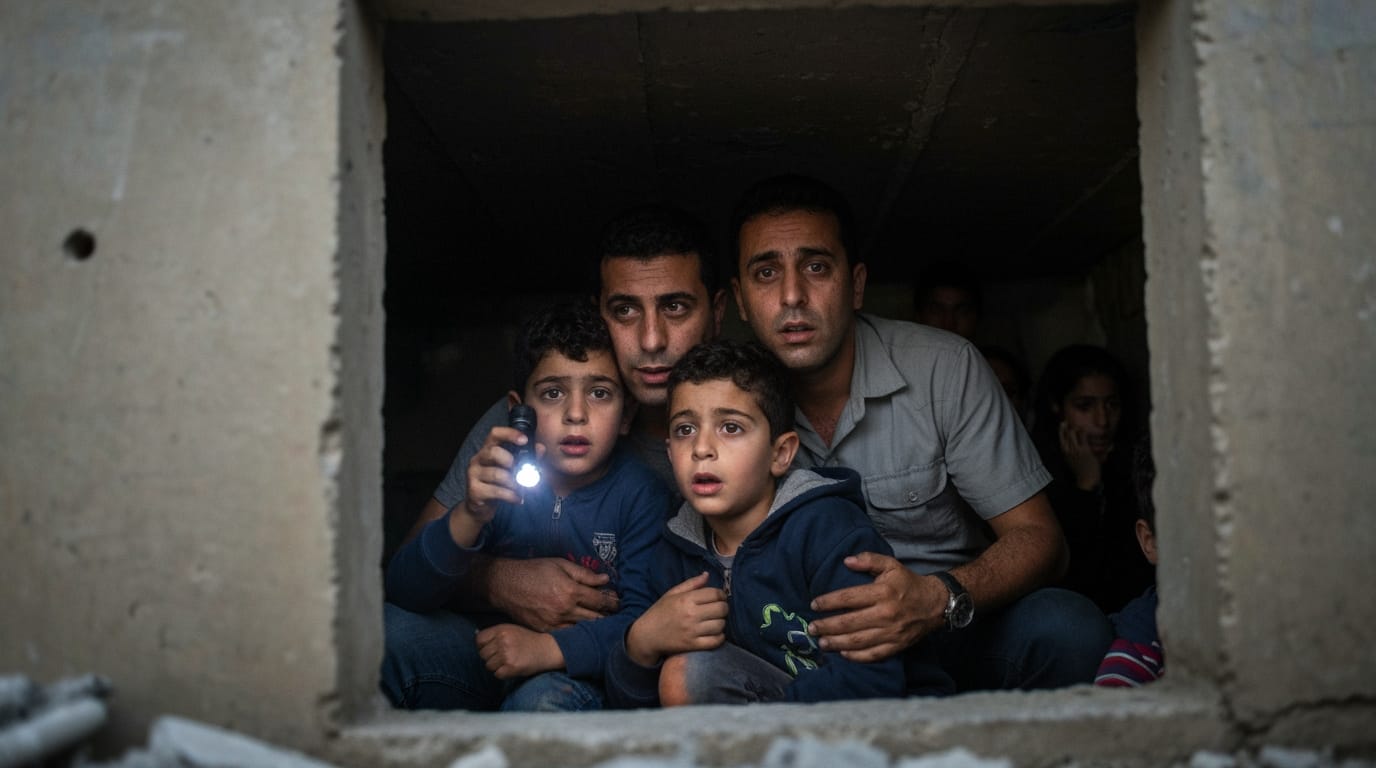
The Middle East has plunged into a new era of profound instability as a major military conflict between Israel, backed by the United States, and Iran has erupted, igniting a volatile situation with far-reaching consequences for the region and specifically for Israel. Following pre-emptive strikes by U.S. and Israeli forces against Iranian targets, Tehran has launched retaliatory missile attacks against Israel and American military installations across the Gulf, signaling a dangerous escalation that experts warn could reshape regional dynamics and carry significant human and economic costs. This burgeoning war presents Israel with immediate and complex challenges, ranging from direct missile threats and the activation of Iranian proxies to severe economic disruption and intricate diplomatic fallout.
Direct Military Confrontation and the Looming Missile Threat
The initial phase of the conflict saw U.S. and Israeli forces launch extensive strikes across Iran, targeting nuclear facilities, ballistic missile infrastructure, radar installations, and leadership compounds, including an effort to neutralize Iran's Supreme Leader Ali Khamenei. The Israeli military reportedly employed approximately 200 fighter jets, striking around 500 targets in what it described as the largest aerial attack in its history. These actions aimed to degrade Iran's military capabilities and potentially foster regime change, a high-risk strategy.
In response, Iran quickly retaliated, firing dozens of ballistic missiles and drones towards Israel, with some reaching Israeli airspace and triggering alarms across the country. Iran possesses the largest ballistic missile stockpile in the Middle East, with many types capable of reaching Israel, including the Sejil, Emad, Ghadr, Shahab-3, Khorramshahr, and Hoveyzeh, some with ranges up to 2,500 kilometers. While Israel maintains one of the world's most sophisticated multi-layered air defense systems, including the Iron Dome and David's Sling, which have historically boasted a high interception rate of around 90%, recent Iranian attacks have exposed vulnerabilities. The development of advanced and potentially harder-to-intercept hypersonic missiles by Iran, coupled with upgrades to existing systems to evade defenses, indicates a persistent and evolving threat. A saturation attack, where numerous missiles overwhelm defensive capabilities, remains a critical concern for Israeli strategists.
Escalation Through Proxies and Regional Instability
Beyond direct confrontation, a significant threat to Israel stems from Iranian-backed proxy groups, primarily Hezbollah in Lebanon. Hezbollah shares a deep, "symbiotic relationship" with Iran, effectively operating as "part and parcel" of the Iranian regime. While Hezbollah's capabilities were severely degraded by Israeli military actions in 2024, which reportedly resulted in the death of its leader Hassan Nasrallah and significant damage to its infrastructure, the group's intervention in the current conflict is now considered highly probable. Hezbollah had previously refrained from full-scale engagement during the 12-day Israel-Iran war in June 2025 when the objective was not regime change. However, the explicitly stated goal of the current U.S.-Israeli campaign to encourage regime change in Iran, and the targeting of Iran's Supreme Leader, crosses what Hezbollah has previously defined as a "red line".
Such an intervention by Hezbollah would likely open a second, northern front for Israel, intensifying the conflict dramatically. Although weakened, Hezbollah still possesses long-range weaponry and could launch attacks from central and northern Lebanon, potentially targeting Israeli assets and civilians. Furthermore, other Iranian-aligned groups, such as Hamas in Gaza and the Houthis in Yemen, could be drawn into the conflict, expanding the theater of operations and raising the economic and security costs for both Israel and its allies. Houthi rebels have already demonstrated their capacity to launch missile attacks towards Israel.
Economic and Societal Repercussions
The previous hostilities in mid-2025 exacted a heavy toll on Israel, resulting in 29 fatalities, thousands injured, and widespread displacement, with the economic burden estimated at US$6 billion. The current, potentially more expansive conflict threatens similar or even greater societal and economic disruption. Israeli civilian infrastructure and populated areas are directly in Iran's missile range, and while defensive systems intercept many threats, some projectiles have already caused damage. The ongoing missile barrages necessitate strict adherence to safety instructions and continuous vigilance from the Israeli public.
Economically, the war is expected to strain national resources significantly. The closure of Israeli airspace and airports, a consequence of the security situation, isolates the country and impacts trade and travel. Furthermore, the conflict carries substantial risks for global energy markets, which directly impacts Israel's economy through potentially higher oil prices. Although direct targeting of energy infrastructure has been limited in past skirmishes, a prolonged or intensified conflict could lead to disruptions in oil production or choke points like the Strait of Hormuz, with inflationary pressures felt globally. The cost of sustained military operations, civil defense, and potential reconstruction efforts will place immense pressure on Israel's budget and economy.
International Dynamics and the Path Forward
The international community's response to the escalating conflict is sharply divided, highlighting the complex geopolitical landscape. The United States is a direct partner in the military campaign alongside Israel, with President Donald Trump asserting the operations aim to eliminate threats from the Iranian regime. Countries like Canada, Australia, and Ukraine have expressed support for the U.S. and Israeli actions.
However, Russia and China have condemned the strikes, with Russia labeling them a "preplanned and unprovoked act of armed aggression". The European Union views Iran as a serious threat to global security due to its nuclear and ballistic missile programs and support for terror groups. Regional Arab states, including Morocco, Jordan, and the United Arab Emirates, have condemned Iran's retaliatory strikes against their territories and U.S. bases, while remaining silent on the initial U.S.-Israeli attacks. The U.N. Secretary-General has condemned both the U.S.-Israeli strikes and Iran's retaliation, calling for an immediate cessation of hostilities and a return to diplomacy, warning of a wider regional conflict with grave consequences.
The stated objective of the U.S. and Israel to dismantle Iran's nuclear program and ballistic missile capabilities, and to potentially bring about regime change, introduces an element of unpredictability to the conflict's duration and scope. This is not a "contained round of escalation," but an "existential" conflict for Iran, suggesting it will not end quickly. The immediate implications for Israel are profound, requiring not only robust defensive capabilities but also navigating complex international relations to manage the crisis and its aftermath.
Conclusion
The outbreak of hostilities between Israel and Iran marks a critical juncture for regional stability, placing Israel at the forefront of a multifaceted conflict. The direct threat from Iran's formidable missile arsenal, coupled with the high probability of an activated proxy network led by Hezbollah, presents unprecedented security challenges. The economic and societal reverberations, from civilian casualties and infrastructure damage to significant financial strain and potential energy market disruptions, underscore the severe implications for the Israeli populace. As international reactions remain varied, the path forward for Israel involves sustained military vigilance, strategic diplomatic engagement, and resilience in the face of a conflict whose full scope and consequences are yet to unfold. The current war, described by some as an attempt to decisively redefine a decades-long conflict, signals a period of enduring uncertainty and heightened danger for Israel and the broader Middle East.


