Venezuela Navigates Uncharted Waters: Delcy Rodríguez Marks 100 Days as Acting President Amidst Constitutional Quandary
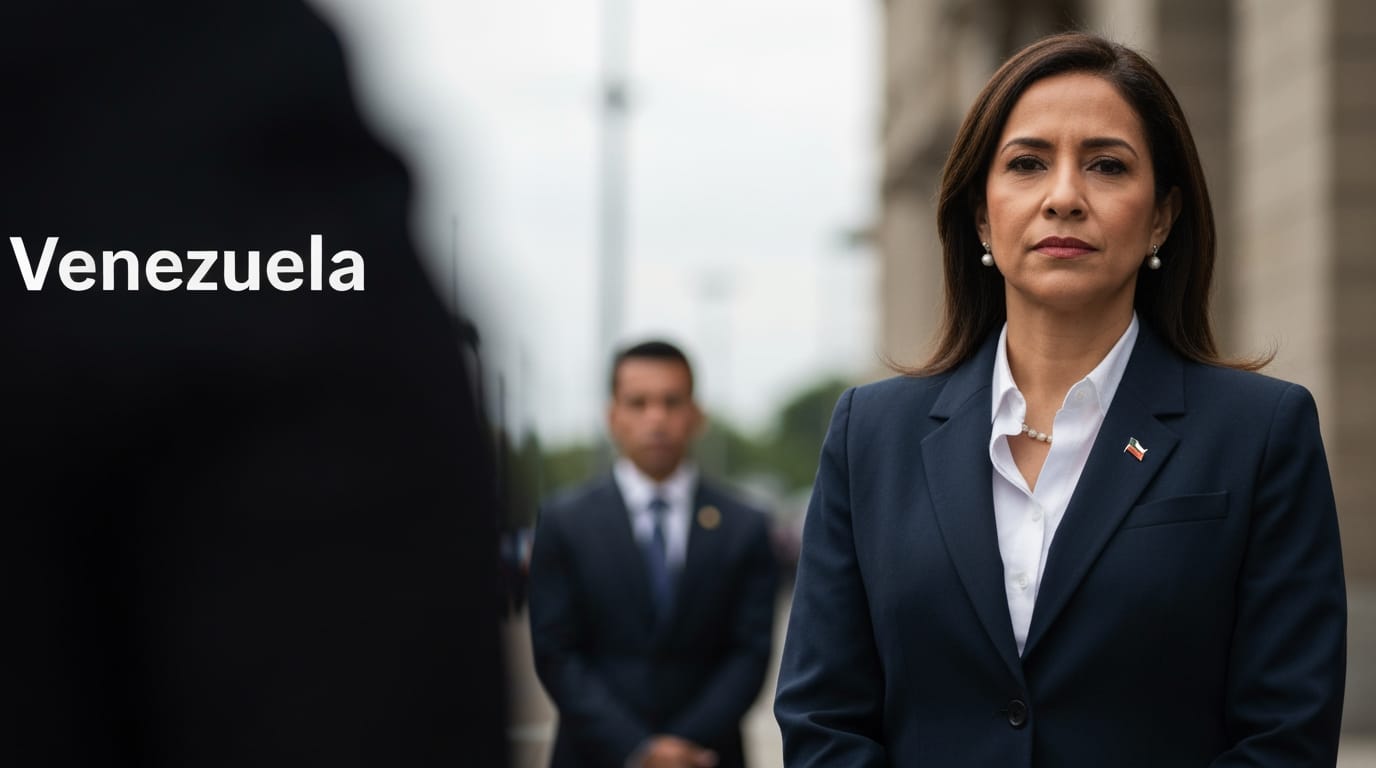
CARACAS, VENEZUELA – One hundred days have passed since Delcy Rodríguez assumed the mantle of acting president of Venezuela, an unprecedented transition triggered by the dramatic capture of Nicolás Maduro by U.S. forces on January 3, 2026. Her tenure, now extending beyond the initial 90-day constitutional limit for temporary presidential absences, has been marked by significant political maneuvering, a delicate rapprochement with the United States, and a persistent struggle to stabilize a beleaguered economy. This period of provisional leadership has plunged Venezuela further into constitutional ambiguity, raising profound questions about the nation's political future and the legitimacy of its current governance.
The Seismic Shift: Maduro's Capture and Rodríguez's Rise
The events of early January sent shockwaves through Venezuela and across the globe. U.S. forces executed a daring operation on January 3, 2026, capturing President Nicolás Maduro and his wife, Cilia Flores, in Caracas. They were subsequently transported to the United States to face narcoterrorism charges, an outcome that Maduro, in a New York court, defiantly declared made him a "prisoner of war". In the immediate aftermath, a state of confusion reigned regarding Venezuela's leadership. Delcy Rodríguez, who served as Maduro's vice president since 2018, initially affirmed Maduro as Venezuela's "only president". However, the Venezuelan Supreme Court, in an "urgent and preventive" injunction on the same day, ordered her to assume the role of acting president, interpreting Maduro's capture as a "forced absence" – a classification not explicitly outlined in the Venezuelan Constitution. Rodríguez was officially sworn in on January 5, 2026, becoming the first woman in Venezuelan history to exercise the powers of the presidency.
Her ascension was swiftly recognized by the Venezuelan military, with Defense Minister Vladimir Padrino Lopez issuing a statement endorsing the Supreme Court's ruling. This critical military backing, coupled with the support of Chavismo, provided a crucial, albeit legally contested, foundation for her administration. The Supreme Court's ruling deliberately avoided classifying the situation as a "permanent or temporary vacancy," a move critics argue was designed to circumvent constitutional deadlines that would mandate elections within 30 days in the event of a permanent vacancy, or trigger a maximum 180-day interim period for a temporary absence. This legal tightrope walk has positioned Rodríguez at the helm of a nation grappling with the fundamental legality of its highest office.
Strategic Realignments and Policy Shifts
In her initial 100 days, acting President Rodríguez has orchestrated notable policy shifts and personnel changes, signaling a potential departure from some of her predecessor's hardline stances. One of her administration's early moves was the reshuffling of more than half of the cabinet she inherited from Maduro, alongside significant changes within the military leadership, including the dismissal of the defense minister and commanders of the armed forces. These actions appear aimed at consolidating her authority and projecting a new leadership image.
Perhaps the most striking development has been the restart of diplomatic relations with the United States, a dramatic turnaround given the circumstances of Maduro's capture. The U.S. Embassy in Caracas, closed since 2019, was officially reopened, and U.S. sanctions against Rodríguez herself were lifted. President Donald Trump reportedly praised Rodríguez's work and his administration expressed a willingness to cooperate, signaling a pragmatic, if controversial, engagement with the new Venezuelan leadership. This diplomatic thawing has been accompanied by a significant amnesty law, approved in February, leading to the release of hundreds of political prisoners. Rodríguez's administration has also explored opening Venezuela's energy sector to private capital and international arbitration, and discussed the privatization of oil, a significant pivot for the historically state-dominated industry.
Economic Headwinds and Public Discontent
Despite these political and diplomatic overtures, Rodríguez's acting presidency has not quelled the deep-seated economic anxieties of the Venezuelan populace. The hope for an immediate economic recovery, sparked by the U.S. intervention, has largely failed to materialize in the pockets of ordinary Venezuelans. The country continues to grapple with hyperinflation and widespread shortages, challenges that have driven nearly eight million Venezuelans to emigrate.
In a notable shift in rhetoric, Rodríguez publicly acknowledged "mistaken policy on wage increases" and the administration's responsibility for the country's economic woes – a rare admission from a Chavista leader. In early April, she announced a "responsible" minimum wage increase, the first in a decade, aiming to alleviate growing discontent and address demands for economic relief. She also established a Presidential Commission for Labor Dialogue, intended to foster a new model for labor relations. However, the effectiveness of these measures in truly improving the daily lives of Venezuelans remains to be seen amidst the ongoing economic instability.
A Presidency Beyond Legal Limits
As April 14, 2026, marks well over 90 days since her swearing-in, Delcy Rodríguez's acting presidency finds itself in an increasingly precarious constitutional position. The initial 90-day period for a temporary absence, which can be extended for another 90 days by the National Assembly, expired without a clear public vote to extend her term. Venezuelan constitutional scholars, like Juan Carlos Apitz, argue that the Supreme Court's use of "forced absence" deliberately sidesteps constitutional mechanisms that would otherwise trigger deadlines for elections. Under the constitution, if a temporary vacancy exceeds 90 days and is not extended, or if it becomes permanent, the National Assembly could declare a permanent vacancy, necessitating a presidential election within 30 days.
The ruling party, however, with the Supreme Court's backing, continues to cling to power, emphasizing that Maduro is still officially the president despite his detention. This legal ambiguity underscores the ongoing crisis of legitimacy facing the Venezuelan government. The path forward remains unclear, with no election date in sight and the Chavista movement intent on maintaining its grip on power.
Delcy Rodríguez's first 100 days as acting president have been a whirlwind of unexpected power, strategic recalculations, and persistent challenges. Inheriting a nation in deep crisis, she has navigated a complex landscape of international relations and domestic discontent. While her administration has initiated significant policy shifts and opened channels of dialogue, the constitutional underpinnings of her power remain tenuous, and the long-term implications of this unprecedented period for Venezuela's democracy and its people are yet to unfold. The fragility of the institutional framework and the ongoing political maneuvering suggest a future fraught with uncertainty for the Bolivarian Republic.


