India Achieves Major Nuclear Milestone as Kalpakkam Fast Breeder Reactor Attains Criticality
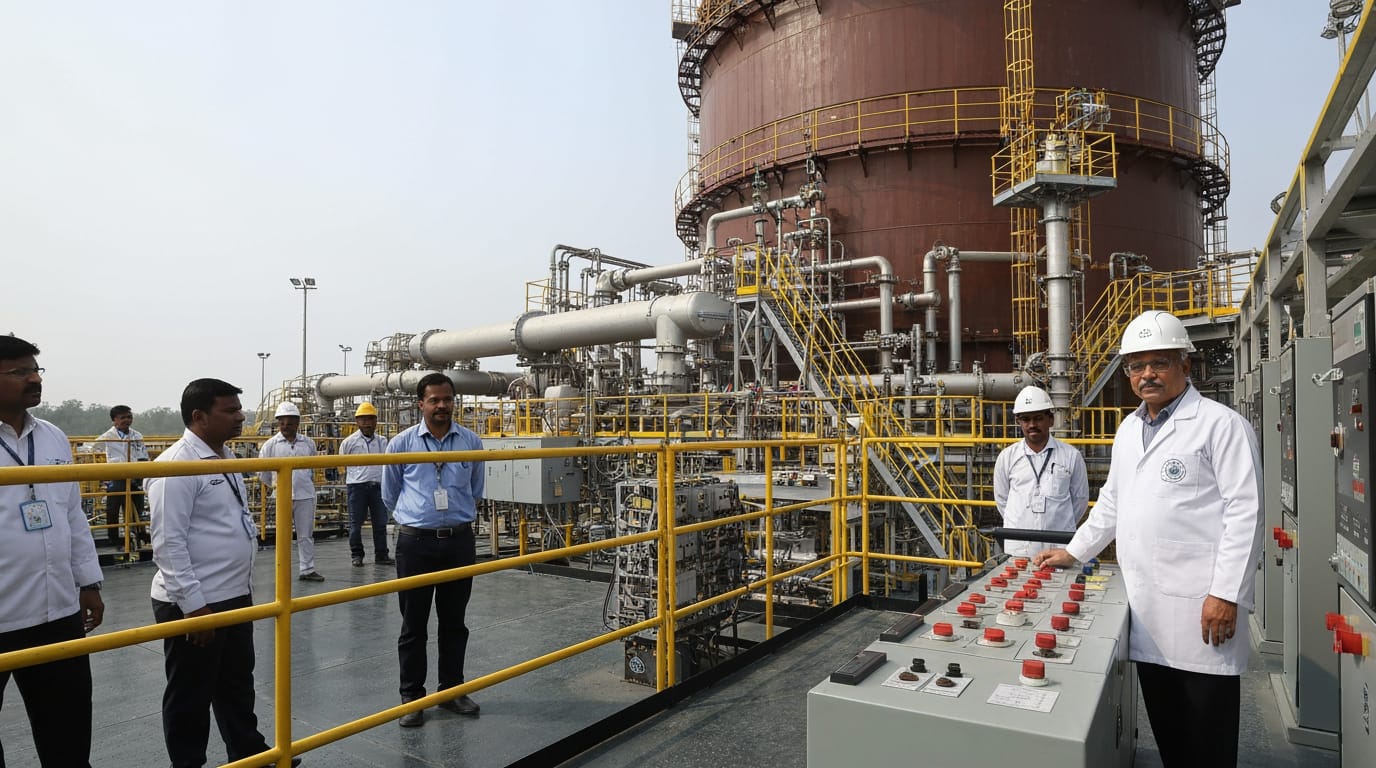
Kalpakkam, Tamil Nadu, India – India has achieved a significant milestone in its ambitious nuclear energy program with the Prototype Fast Breeder Reactor (PFBR) at Kalpakkam attaining criticality on Monday, April 6, 2026, at 8:25 PM. This pivotal moment, where the nuclear chain reaction became self-sustaining, marks a decisive step forward in the nation's quest for energy independence and reinforces its position as a leader in advanced nuclear technology. The indigenously designed and built 500 MWe reactor is a cornerstone of India's long-term strategy to harness its vast thorium reserves, ushering in the critical second stage of its unique three-stage nuclear power program.
A Leap Towards Energy Self-Sufficiency
The attainment of criticality at the Kalpakkam PFBR signifies more than just a technical achievement; it represents a profound leap in India's strategic pursuit of energy security. Unlike conventional reactors, this fast breeder reactor is designed to produce more fissile fuel than it consumes, effectively "breeding" new fuel. Prime Minister Narendra Modi lauded the achievement, calling it a "proud moment for the country" and highlighting its role in advancing India's civil nuclear journey. This advanced reactor, developed by the Indira Gandhi Centre for Atomic Research (IGCAR) and built by Bharatiya Nabhikiya Vidyut Nigam Ltd (BHAVINI), showcases the depth of Indian scientific capability and engineering prowess. Once fully operational, India will join Russia as only the second nation globally to operate a commercial fast breeder reactor, an elite status that underscores its technological advancement.
Unpacking Criticality and Breeder Technology
Criticality is the precise state in a nuclear reactor where a controlled, self-sustaining nuclear chain reaction is initiated. It signifies that the reactor core is functioning as designed and each fission event produces enough neutrons to trigger subsequent ones at a steady rate. While criticality does not immediately imply full electricity generation, it is a crucial prerequisite to full power operations, which are projected to begin by September 2026.
The PFBR is a 500 Megawatt electric (MWe) sodium-cooled, pool-type fast breeder reactor. It utilizes Uranium-Plutonium Mixed Oxide (MOX) fuel. A key feature of breeder reactors like the PFBR is their ability to transmute fertile material into fissile material. The core of the Kalpakkam PFBR is surrounded by a blanket of Uranium-238, which, through neutron absorption, is converted into Plutonium-239. This process allows the reactor to generate new fuel, thereby significantly enhancing fuel efficiency and reducing dependency on imported uranium.
India's Three-Stage Nuclear Vision: The Second Act
The PFBR plays a central role in India's unique three-stage nuclear power program, a long-term strategy conceived by physicist Homi Bhabha in the 1950s. The program aims to achieve energy independence by optimally utilizing the nation's limited uranium resources and its vast reserves of thorium, which are among the largest globally.
- Stage 1: Involves Pressurized Heavy Water Reactors (PHWRs) fueled by natural uranium. These reactors produce plutonium as a byproduct, which is then used in the second stage.
- Stage 2 (PFBR's Role): This stage employs Fast Breeder Reactors (FBRs) like the one at Kalpakkam. FBRs use the plutonium generated in Stage 1 to produce more plutonium and also begin the process of converting Thorium-232 into Uranium-233. The PFBR's design specifically allows for the eventual use of Thorium-232 in its blanket, leading to the creation of Uranium-233, which will fuel the third stage.
- Stage 3: Envisions thorium-based reactors using Uranium-233 as fuel. This final stage will fully capitalize on India's abundant thorium reserves, ensuring a sustainable and self-reliant nuclear fuel cycle for centuries.
The successful criticality of the PFBR is thus a critical bridge to unlocking the immense potential of India's thorium wealth, a resource that conventional reactors cannot directly utilize.
Economic and Strategic Impact
The Kalpakkam PFBR project has been a testament to India's commitment to self-reliance, with its design and construction involving significant contributions from over 200 Indian industries, including many Micro, Small, and Medium Enterprises (MSMEs), aligning with the "Aatmanirbhar Bharat" initiative. The project, while facing delays and seeing its cost escalate from ₹3,500 crore to ₹7,700 crore, represents a long-term investment in the nation's future.
The operationalization of the PFBR will have far-reaching implications for India's clean energy goals, including its target of achieving net-zero emissions by 2070. By efficiently recycling nuclear fuel and potentially reducing nuclear waste, fast breeder reactors offer a pathway to sustainable energy production. India's nuclear energy mission aims to achieve 100 GW of electricity from nuclear power, with the PFBR serving as a model for future reactors and significantly contributing to this target.
The achievement strengthens India's position in advanced nuclear technology and paves the way for further expansion of its nuclear power capacity. The Department of Atomic Energy has plans for additional fast breeder reactors at Kalpakkam after a year of successful PFBR operation, with more planned beyond 2030.
Conclusion: A Vision Realized
The attainment of criticality by the Prototype Fast Breeder Reactor at Kalpakkam is a crowning achievement for India's scientific and engineering community and a momentous occasion for the nation's energy future. It validates decades of painstaking research, development, and perseverance in a complex and cutting-edge field. By transitioning to the second stage of its unique nuclear power program, India is not only bolstering its energy security and reducing its reliance on imported fossil fuels but also demonstrating a viable, sustainable pathway to harnessing its abundant thorium reserves. This milestone is a powerful declaration of India's commitment to indigenous technological development and its vision for a cleaner, more energy-independent future.


