India and Germany Forge Submarine Deal: Implications for Russia's Defense Ties
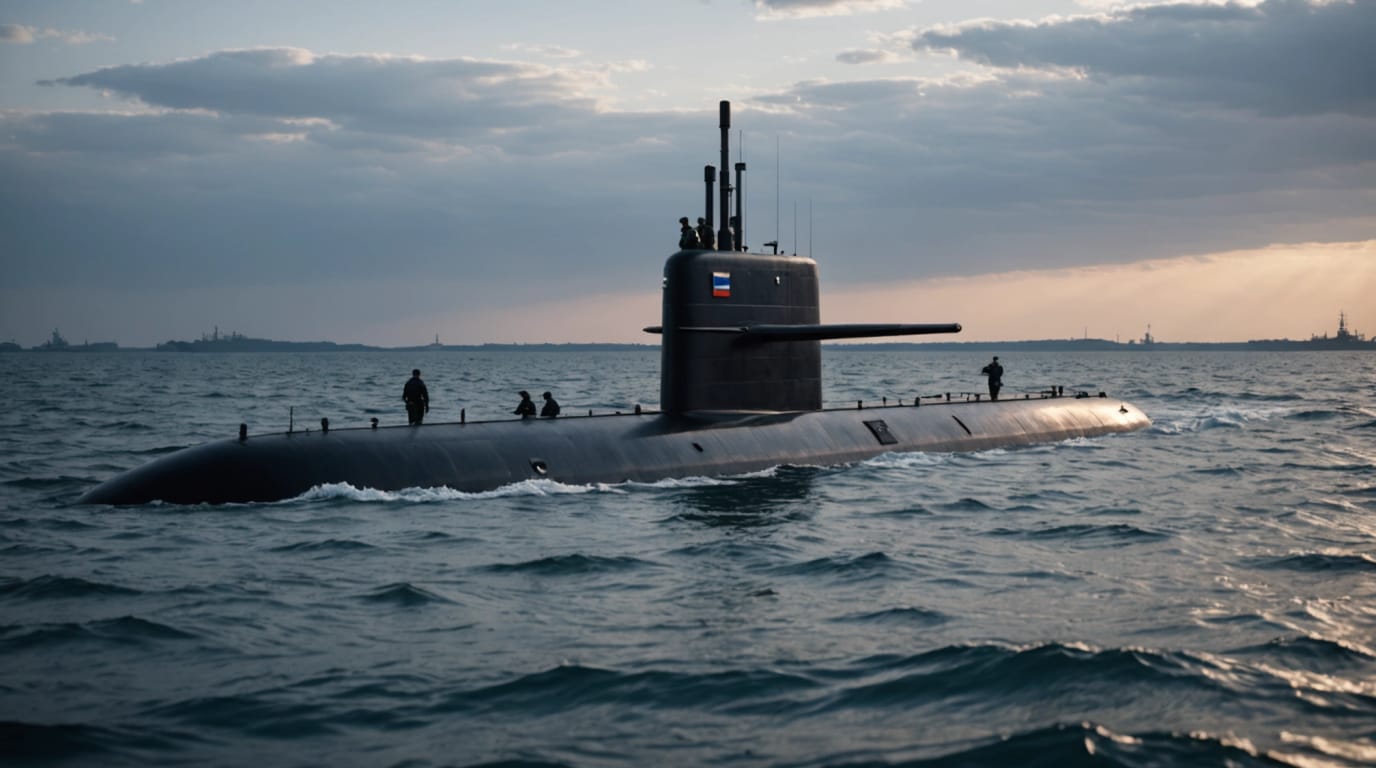
India is poised to significantly enhance its naval capabilities through a landmark agreement with Germany, a move that could gradually reshape its long-standing defense relationship with Russia. The deal, which involves German conglomerate Thyssenkrupp Marine Systems (TKMS) building six submarines for the Indian Navy in collaboration with India's Mazagon Dock Shipbuilders (MDS), signals a diversification of India's arms procurement and a boost to its domestic manufacturing ambitions.
Details of the India-Germany Submarine Deal
Thyssenkrupp, a German engineering and steel production giant, is set to construct six submarines for the Indian navy in a multi-billion-dollar deal after a bid with its Indian partner was approved. TKMS will partner with India’s state-owned Mazagon Dock Shipbuilders (MDS) for the contract. The Indian Ministry of Defense has invited MDS for commercial negotiations. Media reports estimate the project's value at around $5.2 billion (€5 billion), but the final figure could be higher. The submarines will be constructed in India, aligning with Prime Minister Modi's "Make in India" initiative to promote domestic manufacturing.
Oliver Burkhard, CEO of TKMS, stated that the partnership between MDL and Thyssenkrupp Marine Systems, with the support of both governments, would set standards for a sustainable and safe maritime future.
India's Balancing Act: Russia Still a Key Partner
Despite the agreement with Germany, experts caution against interpreting it as an immediate severing of India's dependence on Russian military imports. According to the Stockholm International Peace Research Institute (SIPRI), Russia was the largest arms supplier to India between 2019 and 2023, accounting for 36% of its defense imports.
Sushant Singh, a lecturer in South Asian studies at Yale University, told DW that India's reliance on Russian military platforms continues, and there is little indication of a substantial reduction in this dependence.
However, data from SIPRI indicates a gradual decline in India's reliance on Russian arms. While Russia accounted for 36% of Indian arms imports from 2019-2023, the figure was 46% for 2017-2021 and 69% for 2012-2016. This suggests a diversification trend, with India exploring alternative defense partners.
Russia's Perspective and Continued Engagement
Despite the submarine deal with Germany, Russia remains a key defense partner for India. In February 2025, reports surfaced of a deal between the two countries for India to procure Club-S anti-ship cruise missiles from Russia, intended to bolster India's naval arsenal. The deal involves the procurement of at least 20 Club-S anti-ship cruise missiles valued at nearly $200 million. These missiles, designed for submarines, possess a 400 kg warhead and can strike naval and land targets up to 300 kilometers away.
Furthermore, historical ties between India and Russia in defense technology are strong. As of May 2015, there were reports that Russia may help India build nuclear submarines and stealth warships. India's Economic Times reported that Reliance Infrastructure was seeking Russian assistance for programs to locally produce nuclear submarines and other stealth warships. A Russian official at the embassy in Delhi stated that Russia is open to negotiations with Indian partners on various projects, including joint ventures to manufacture modern defense equipment.
Implications for India's Defense Strategy
The submarine deal with Germany, coupled with continued engagement with Russia, reflects India's strategic approach to diversifying its defense procurement and fostering indigenous manufacturing capabilities. By partnering with multiple countries, India aims to reduce its dependence on any single supplier and enhance its strategic autonomy.
S.L. Narasimhan, a retired member of the Indian defense forces and an expert in Indian security issues, anticipates increased collaboration between India and Europe on defense, contingent on matching requirements, price expectations, and availability.
Challenges and Future Outlook
India's pursuit of defense diversification is not without its challenges. Integrating new technologies and platforms from different countries can be complex, requiring significant investments in training, maintenance, and logistics.
Additionally, India's existing submarine programs, including Project 75 (license-built French Scorpene submarines) and Project 75I (the upcoming deal with Germany), present logistical and operational complexities.
Despite these challenges, the India-Germany submarine deal represents a significant step in India's efforts to modernize its navy and strengthen its defense industrial base. The deal is not necessarily a sign that India's dependence on Russian military imports will be reduced anytime soon. However, it underscores India's commitment to diversifying its defense partnerships and promoting domestic manufacturing, which could have long-term implications for its relationship with Russia and other arms suppliers.