India and US on Cusp of Landmark Trade Agreement Amidst Shifting Tariff Dynamics
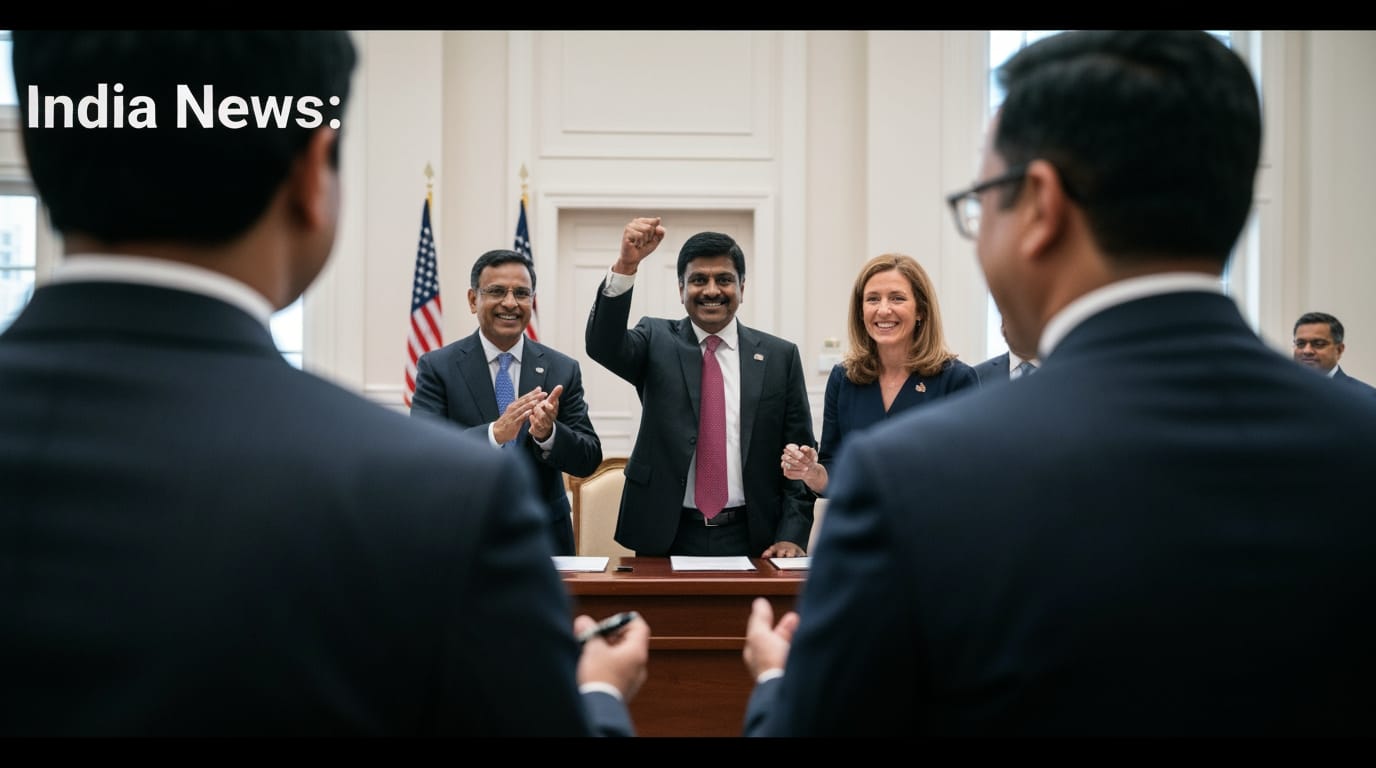
Washington D.C. – Negotiations between India and the United States are reportedly on the verge of concluding a significant bilateral trade agreement, with officials from both nations expressing strong optimism that a deal is "almost done." A fresh round of high-level discussions, held this week in Washington D.C. from April 20-22, has seen negotiators iron out the remaining sticking points, paving the way for what could be a pivotal moment in the economic relationship between the world's largest and fastest-growing major economies.
On the Brink of a Breakthrough
The current round of negotiations has been characterized as "positive and productive" by senior US officials, underscoring the considerable progress made towards finalizing the long-awaited trade pact. Sources familiar with the discussions indicate that the bulk of the agreement is already settled, with only a few minor issues remaining to be resolved. This advanced stage of talks has fueled expectations of a formal announcement in the near future. Leading the Indian delegation is Darpan Jain, Additional Secretary in the Department of Commerce, while the US side is spearheaded by Brendan Lynch from the Office of the US Trade Representative (USTR). Their concerted efforts reflect a mutual desire to deepen economic cooperation and enhance market access for goods and services from both nations. The proposed agreement, if finalized, stands to mark a substantial milestone in India-US economic ties, bolstering trade collaboration and potentially setting a new precedent for future engagements.
Navigating a Shifting Tariff Landscape
The path to this imminent trade deal has not been without its complexities, particularly in light of recent shifts in the US tariff regime. A key development that has necessitated a recalibration of earlier understandings is a recent US Supreme Court ruling against sweeping tariffs imposed under emergency powers. Following this ruling, the United States introduced a temporary 10% tariff on imports from all countries, effective for 150 days starting February 24, 2026. This blanket tariff replaced a more nuanced preferential structure that had been previously negotiated, which included the US agreeing to reduce tariffs on Indian goods from as high as 50% to 18%.
Furthermore, a 25% penalty tariff previously linked to India's purchase of Russian oil was also to be removed under the earlier framework. The introduction of a uniform 10% tariff across all trading partners has, in effect, eroded the preferential cost advantage that Indian exporters had secured under the prior arrangement. Consequently, these ongoing negotiations have been critical for both sides to revisit and potentially redraft certain provisions to ensure the deal remains mutually beneficial under the altered global tariff framework. The original framework, outlined in February 2026 following discussions between President Donald Trump and Prime Minister Narendra Modi, had envisioned significant concessions, including India's elimination or reduction of tariffs on a wide range of US industrial goods and agricultural products such as tree nuts, fruits, soybean oil, wine, and spirits. Many of these commitments are now subject to reevaluation as negotiators work to adapt to the new economic realities.
Recalibrating for Mutual Benefit
A primary objective for New Delhi in the current discussions is to restore and secure a competitive cost advantage for its exports in the US market, which was impacted by the new uniform tariff regime. India's Commerce Minister, Piyush Goyal, has affirmed that the first tranche of the bilateral trade agreement is "almost finalised," with India actively seeking preferential market access in the US compared to its competitors. The aim is to ensure that the agreement continues to provide tangible benefits for Indian industries and consumers. Similarly, the United States is seeking to expand market access for American products in India, a market of over 1.4 billion people. Previously, India had expressed intentions to purchase up to $500 billion worth of US goods over five years, encompassing sectors like energy, information and communication technology, and coal. These negotiations also address non-tariff barriers that have historically affected bilateral trade, aiming to create a more streamlined and efficient trading environment. The shared commitment to reducing tariffs and expanding bilateral trade underscores the strategic importance both nations place on this economic partnership.
A Strategic Partnership Deepens
Beyond the immediate economic gains, the potential trade agreement carries significant geopolitical weight. Both the United States and India view each other as crucial strategic partners, aligning on common interests both regionally and globally. The deepening of economic ties through such a comprehensive trade deal is expected to reinforce this strategic alignment. US Ambassador to India Sergio Gor has publicly described the prospective agreement as a "win-win" for both nations, highlighting its broader significance beyond mere tariff adjustments. Historically, the US has been a critical trading partner for India, with bilateral trade in goods and services totaling an estimated $212.3 billion in 2024. While differences on specific trade and energy issues have occasionally emerged, the overall trajectory of the relationship has been one of growing cooperation across defense, technology, education, and people-to-people ties. This agreement is a testament to the ongoing efforts to foster a robust and resilient economic partnership that contributes to stability and prosperity in the Indo-Pacific region and beyond.
As the final discussions conclude in Washington, anticipation is high for an agreement that promises to usher in a new era of enhanced trade and economic collaboration between India and the United States. While the complexities of a dynamic global trade environment have required negotiators to adapt and recalibrate, the prevailing sentiment is that a comprehensive and mutually beneficial deal is within reach. This agreement, once finalized, is poised to strengthen the economic foundations of an increasingly vital strategic partnership, offering expanded opportunities and fostering deeper integration between two of the world's most influential democracies.


