India-EU Alliance Forged at Republic Day Amidst Historic Trade Deal Momentum
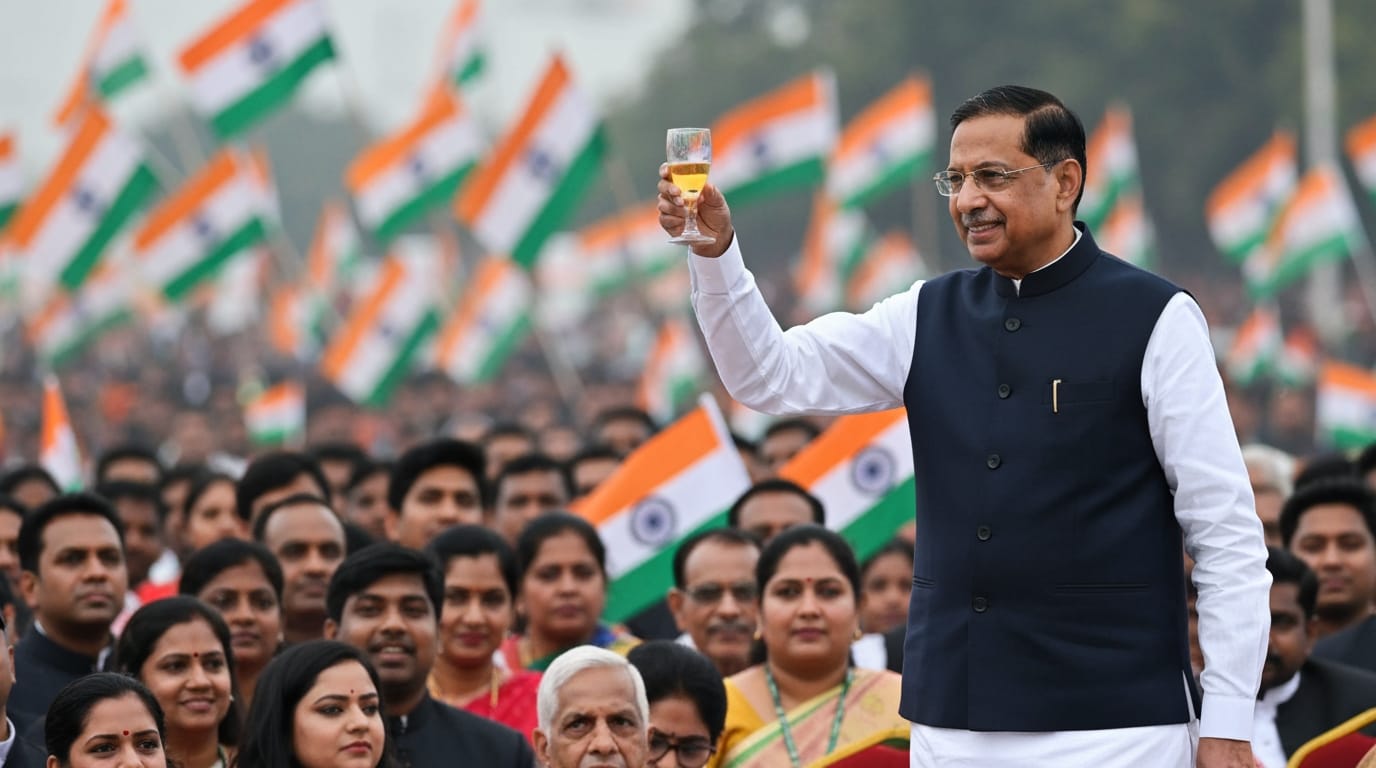
NEW DELHI – In a powerful display of burgeoning diplomatic and economic ties, leaders from the European Union graced India's 77th Republic Day parade on Monday, January 26, 2026, setting the stage for the anticipated finalization of a monumental Free Trade Agreement (FTA). The presence of European Commission President Ursula von der Leyen and European Council President Antonio Costa as chief guests underscored a profound convergence of strategic interests, symbolizing a new chapter in global partnerships for both the world's largest democracy and its most influential economic bloc. This unprecedented diplomatic gesture, marking the first time top EU offices have been represented together at India's Republic Day, signals a deliberate and strategic pivot by New Delhi in its foreign policy, asserting its position in an increasingly multipolar world.
Diplomacy on Display: Republic Day as a Strategic Platform
The vibrant spectacle of India's Republic Day parade on Kartavya Path served as more than just a celebration of national pride; it was a carefully choreographed diplomatic platform. The attendance of President Ursula von der Leyen and President Antonio Costa, who are on a state visit to India from January 25 to 27, highlighted the growing importance India places on its relationship with the European Union. The diplomatic significance was further amplified by the historic participation of a European Union military contingent in the parade. This contingent, carrying the EU flag alongside flags of naval operations Atalanta and Aspides, visibly symbolized the institutional unity of the 27 EU member states and the bloc's operational presence in support of international maritime security.
The symbolism of the EU leaders' presence resonated deeply within diplomatic circles. It is a clear indication of India's evolving foreign policy priorities, consciously utilizing high-profile national events to project its strategic confidence and engage with key global actors on an equal footing. President von der Leyen herself articulated the mutual benefit of this deepened relationship, stating that "A successful India makes the world more stable, prosperous and secure." This high-level engagement sets the tone for subsequent discussions, most notably the India-EU summit scheduled for Tuesday, January 27, where the long-awaited trade agreement is expected to reach its conclusion.
The "Mother of All Deals": A Decade in the Making
The impending Free Trade Agreement between India and the European Union, frequently dubbed the "mother of all deals," represents the culmination of more than a decade of complex negotiations. Initial talks commenced in 2007 but faced suspension in 2013 due to persistent differences over crucial issues such as market access, tariffs, and regulatory frameworks. However, a renewed impetus saw negotiations revived in 2022, propelled by shifts in global supply chains and geopolitical uncertainties. The expected finalization of this comprehensive pact on January 27 marks a significant milestone, promising to reshape the economic landscape for both regions.
The scope of the proposed FTA is extensive, aiming to foster a more integrated and streamlined trade environment. Key provisions are anticipated to include the reduction or elimination of customs duties on a wide array of goods, thereby making cross-border commerce more cost-effective. Moreover, the agreement is set to facilitate easier access for services, encompassing vital sectors such as information technology, consulting, and finance. Clearer rules for foreign investment and smoother pathways for the movement of professionals and skilled workers are also integral components designed to enhance economic collaboration.
A particularly noteworthy concession from India involves a significant reduction in import duties on cars from the European Union. Tariffs, which currently range between 70% and 110%, are slated to drop to 40% immediately for a limited number of combustion-engine cars with an import price exceeding 15,000 euros. This figure is projected to be further lowered to 10% over time, providing European automakers like Volkswagen, Mercedes-Benz, and BMW with unprecedented access to India's vast and rapidly expanding automotive market. To protect domestic investments, battery electric vehicles will be exempt from import duty reductions for the initial five years. Beyond the automotive sector, the pact is expected to significantly boost Indian exports, particularly in labor-intensive goods such as textiles and jewelry, which have faced challenges like U.S. tariffs.
Economic and Geopolitical Imperatives
The drive to secure this comprehensive trade agreement is rooted in compelling economic and geopolitical imperatives for both India and the EU. The European Union currently stands as India's largest trading partner for goods, with bilateral trade reaching approximately €120 billion ($139 billion) in 2024, representing a nearly 90% increase over the past decade. Trade in services added another €60 billion ($69 billion) to this impressive figure. For India, which is on track to become the world's fourth-largest economy this year, the EU represents a crucial source of advanced technology, vital investment, and employment generation for its burgeoning infrastructure.
From the European perspective, the agreement offers a strategic opportunity to diversify supply chains and reduce existing dependencies, particularly on China, in an era of increasing global trade disruptions. Both New Delhi and Brussels are actively seeking new markets and strategic partnerships to mitigate the impact of external pressures, including the challenges posed by U.S. tariffs and Chinese export controls. Analysts project that the FTA could substantially boost India's trade surplus with the European Union by over $50 billion by Fiscal Year 2031, while also increasing the EU's share in India's total exports from an estimated 17.3% in FY25 to around 22-23%.
Beyond the purely economic realm, the discussions surrounding the FTA are intertwined with a broader strategic agenda. Alongside the trade pact, both sides are expected to unveil a defense framework agreement and a comprehensive security and defense strategic partnership. This marks a significant elevation in their collaborative efforts, as it would be only the third such comprehensive agreement the EU has signed with an Asian nation. This partnership is poised to establish a structured framework for cooperation in critical areas such as maritime security, cyber and hybrid threats, the protection of vital infrastructure, counter-terrorism, organized crime, space security, and collaboration within multilateral forums including the United Nations and peacekeeping operations.
A New Chapter in Global Partnerships
The diplomatic choreography witnessed at India's Republic Day, culminating in the imminent signing of a Free Trade Agreement and enhanced security cooperation, underscores a pivotal moment in India-EU relations. This intensified engagement is not merely transactional; it signifies a robust and deepening strategic partnership built on shared values and mutual interests in a complex global environment. The "mother of all deals" has the potential to unlock significant economic opportunities, foster technological exchange, and strengthen geopolitical alignment, contributing to a more stable, prosperous, and secure international order. As India continues its ascent as a global power, and the EU seeks to assert its strategic autonomy, this alliance promises to be a defining feature of 21st-century diplomacy.