India Grapples with Fuel Anxiety as Modi Urges Austerity Amid Global Energy Crisis
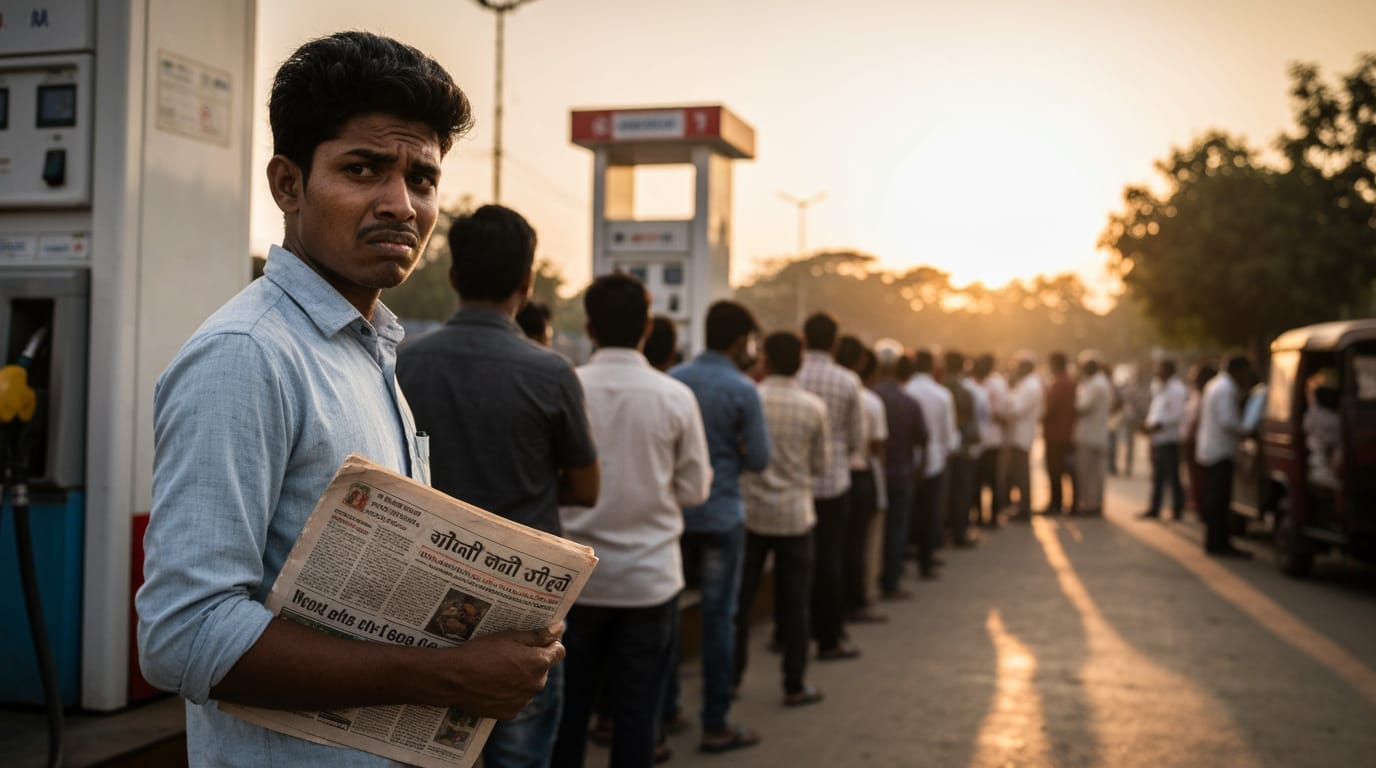
New Delhi, India – Prime Minister Narendra Modi has issued a stark call for national austerity, urging Indian citizens to drastically cut fuel consumption, re-embrace work-from-home practices, and curb non-essential foreign travel. The appeal comes as India, the world's third-largest oil consumer, faces intensifying economic headwinds from the ongoing conflict in West Asia, which has driven global crude oil prices skyward and threatened energy supply chains. This unprecedented plea underscores the growing anxiety within the nation over energy security and the potential for an imminent hike in domestic fuel prices, which could further strain household budgets and economic stability.
The prime minister's message, delivered repeatedly over the past week, emphasizes a collective national responsibility to conserve precious foreign exchange reserves and minimize the economic fallout from geopolitical instability. While the government and state-run oil marketing companies have thus far absorbed significant losses to shield consumers, the sustainability of this strategy is now under severe question, hinting at an inevitable pass-through of costs to the public.
The Geopolitical Storm and India's Vulnerability
The catalyst for Modi's urgent appeal is the escalating US-Israel war on Iran, frequently referred to as the "West Asia conflict" or "Iran war" in official communications. This protracted geopolitical standoff has significantly disrupted global energy markets, pushing Brent crude prices to over $109 per barrel. A critical choke point, the Strait of Hormuz, through which a substantial portion of global oil trade passes, faces potential disruptions, exacerbating supply concerns.
India's economy is particularly vulnerable to these external shocks due to its profound reliance on imported crude oil. The nation imports more than 85% of its crude oil requirements, a figure that climbed to 89.4% in the fiscal year 2024-25. This heavy dependency means that global price fluctuations and supply disruptions directly impact India's foreign exchange reserves, fuel inflation, and can significantly impede economic growth. The Reserve Bank of India (RBI) has previously warned that a mere 10% increase in crude prices could shave 15 basis points off economic growth and elevate inflation by 30 basis points. The ongoing crisis is projected to slow India's economic growth from 7.4% in FY26 to 6.5% in FY27, while nearly doubling inflation.
Modi's Urgent Plea for Conservation
In response to the deepening crisis, Prime Minister Modi has outlined a comprehensive set of measures, appealing directly to citizens to adopt a more frugal and energy-conscious lifestyle. His directives include a resurgence of work-from-home models, drawing parallels to the widespread adoption during the COVID-19 pandemic. Citizens are encouraged to prioritize public transportation, such as metros and electric buses, and embrace carpooling to reduce individual fuel consumption. The transition to electric vehicles (EVs) has also been highlighted as a critical step toward reducing reliance on fossil fuels.
Beyond transportation, Modi's call extends to broader economic prudence. He has urged Indians to avoid non-essential foreign travel and to postpone buying gold for at least a year, aiming to conserve the nation's precious foreign exchange reserves. This emphasis on "national interest" and "collective participation" signifies the government's attempt to frame the economic challenges as a shared national endeavor. Several union ministers and state governments have swiftly responded, with leaders like Himachal Pradesh Governor Kavinder Gupta declaring "Petrol-Free Sundays" at official premises and reducing convoy sizes, aiming to lead by example. The Delhi government is also considering measures such as minimizing official vehicle use, promoting carpooling during inspections, and accelerating the electrification of departmental fleets.
The Economic Tightrope: Government's Dilemma and Public Burden
The immediate economic reality facing India is stark. State-run oil marketing companies (OMCs) have been absorbing substantial losses, estimated at approximately ₹1,000 crore (about $120 million USD) daily, to maintain retail petrol and diesel prices at stable levels. This cushioning effect, however, is unsustainable in the long run. RBI Governor Sanjay Malhotra has indicated that a prolonged Middle East conflict would make it inevitable for the government to pass on some of these increased costs to consumers. Industry experts anticipate a modest increase of around 5 rupees per liter for diesel and gasoline in the coming days, a move that, while politically sensitive, is deemed necessary to mitigate OMC losses.
The prospect of rising fuel prices is a significant concern for the average Indian, as fuel costs intricately link to nearly every sector of the economy. An increase directly translates to higher transportation and logistics costs, contributing to food inflation and impacting manufacturing expenses, small and medium enterprises, and overall consumer purchasing power. Reports suggest that the prime minister's appeal has already triggered some anxiety, with unverified messages leading to queues at fuel stations in certain areas, underscoring public sensitivity to price changes. Opposition parties have also seized on the issue, criticizing the government's energy policies. The government, however, asserts its intent to keep fuel prices stable, emphasizing that Modi's call is for long-term resilience rather than immediate price hikes.
Beyond Immediate Measures: India's Long-Term Energy Transition
While navigating the immediate crisis, India remains committed to its long-term energy transition goals. The nation has ambitious targets to achieve 500 gigawatts of non-fossil fuel-based power capacity and source 50% of its energy requirements from renewables by 2030. Existing government initiatives, such as the UJALA scheme for LED bulbs, the National Electric Mobility Mission Plan (NEMMP) promoting electric vehicles, and the National Mission for Enhanced Energy Efficiency (NMEEE), are designed to foster greater energy efficiency and reduce fossil fuel dependence.
India is actively diversifying its crude oil import sources, significantly increasing purchases from Russia, which now accounts for 36% of imports in FY2024-25, up from just 2% prior to 2022. The government is also exploring the expansion of strategic petroleum reserves to enhance its capacity to withstand future supply shocks. However, these efforts are challenged by persistently low and stagnant domestic crude oil production, which continues to necessitate high import volumes.
As the West Asia conflict persists, India faces a delicate balancing act. The call for national conservation, while aimed at mitigating immediate economic strain, also serves as a potent reminder of the country's inherent vulnerabilities to global energy dynamics. The nation's path forward will depend on both the collective action of its citizens in conserving energy and the government's strategic investments in a sustainable, resilient energy future, all while managing the immediate anxieties and economic pressures on its populace.


