India Navigates Diplomatic Fault Lines to Keep BRICS From Becoming Anti-Western Front
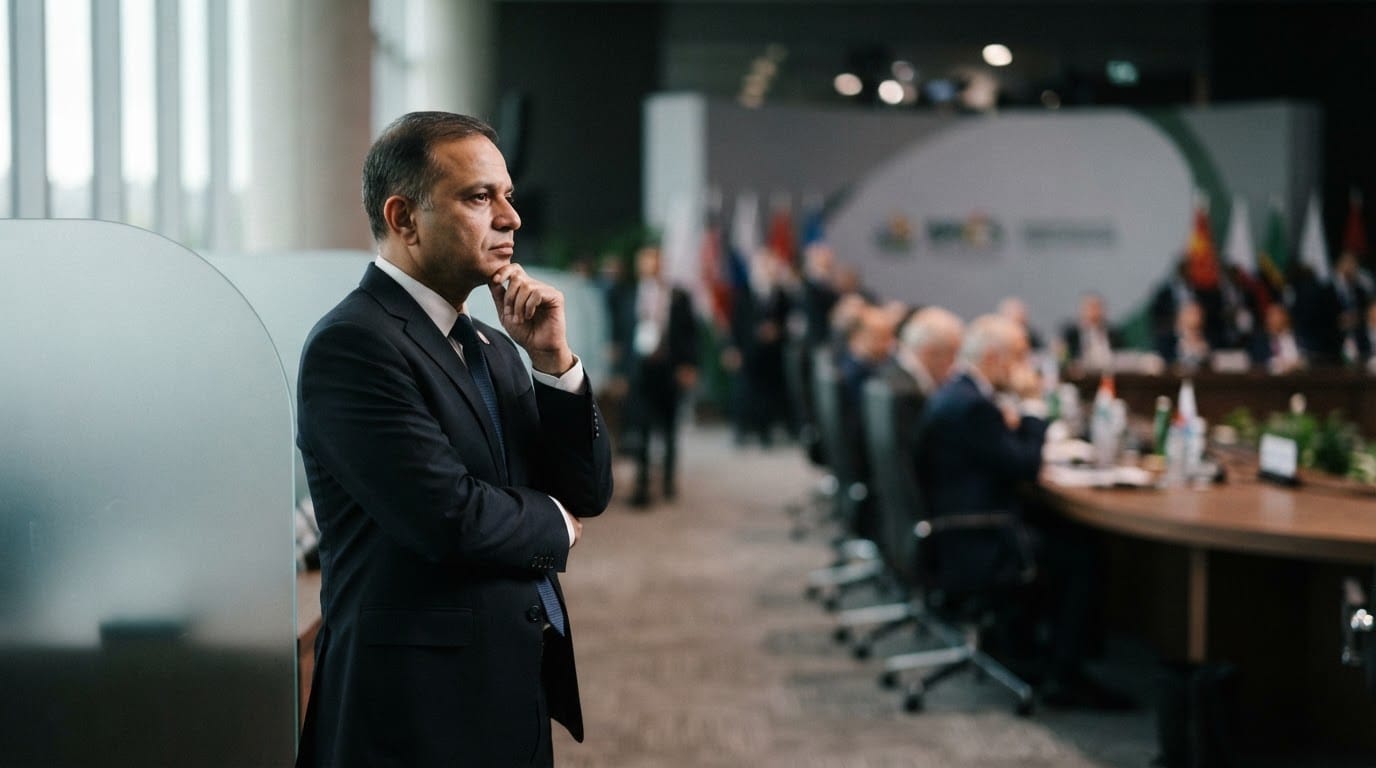
NEW DELHI — As diplomatic leaders gathered in India’s capital to chart the future of an expanded BRICS alliance, New Delhi carried out an intensive effort to steer the emerging market coalition toward practical global reforms and away from open confrontation with the West.
The diplomatic drive highlights India’s delicate geopolitical tightrope. While founding members Moscow and Beijing have frequently framed the grouping as a counterweight to American and European influence, Indian policymakers have consistently championed a distinct philosophy: that BRICS should be non-Western, but never explicitly anti-Western. As the bloc incorporates new members across the Middle East, Africa, and Southeast Asia, India is leveraging its growing economic clout to ensure the partnership focuses on development, trade equity, and institutional reform rather than ideological polarization.
Balancing Competing Agendas in an Expanded Bloc
The challenge before Indian diplomats has grown considerably following the historic expansion of the bloc. What began two decades ago as an investment acronym encompassing Brazil, Russia, India, and China has transformed into a sprawling assembly representing more than 40 percent of the world’s gross domestic product and nearly half of its population. The recent additions of nations such as Egypt, Ethiopia, Iran, the United Arab Emirates, and Indonesia have broadened the group's economic weight. At the same time, the accession of countries with disparate diplomatic loyalties has complicated consensus-building.
Inside negotiation rooms, divergent perspectives quickly surfaced. Representatives from Russia, facing heavy international sanctions, and Iran sought aggressive language condemning Western financial restrictions and unilateral sanctions. Chinese delegates similarly pressed for deeper integration of alternative trade architectures that bypass Western oversight.
In response, Indian negotiators, working alongside partners like Brazil, acted as a moderating force. New Delhi insisted on drafting joint communiqués that emphasize constructive reform of existing international bodies rather than their dismantling. For India, turning BRICS into a hard ideological adversary would run directly counter to its core foreign policy tenets: strategic autonomy, economic diversification, and maintaining functional partnerships with the United States, Japan, and the European Union.
Financial Autonomy Over Anti-Dollar Campaigns
Economic and financial strategy remains the primary testing ground for this diplomatic tug-of-war. Moscow and Tehran have repeatedly urged the creation of a unified BRICS currency and an explicit campaign to end reliance on the United States dollar. Indian officials have pushed back firmly against these sweeping proposals, viewing an artificial common currency as both economically unworkable and strategically counterproductive.
Instead, India has directed the conversation toward practical financial tools, such as bilateral trade settlements conducted in local currencies and the interoperability of domestic digital payment systems. This approach aims to reduce transaction costs and mitigate foreign exchange vulnerabilities for emerging economies without triggering systemic financial isolation.
The strategy extends to multilateral institutions like the New Development Bank (NDB). Headquartered in Shanghai, the bank was established by the original BRICS nations with an initial authorized capital of $100 billion to finance infrastructure and sustainable development. Indian representatives have emphasized that the NDB must maintain strict governance standards, expand local currency lending, and protect its credit rating across international capital markets, rather than transforming into a vehicle designed solely to shield sanctioned economies.
A Bridge Between Competing Global Worlds
India’s moderation within BRICS directly mirrors its complex international footprint. While New Delhi shares the BRICS platform with strategic rival China and long-time defense partner Russia, it also remains an active member of the Quad security partnership alongside the United States, Australia, and Japan. Furthermore, India has deepened strategic, technology, and commercial ties with European capitals in recent years.
For emerging economies in Asia, Africa, and Latin America, India positions itself as an indispensable bridge power. Indian diplomats argue that the concerns of the Global South—such as access to affordable energy, climate transition funding, food security, and technology transfers—are urgent human development priorities that require cooperation across political divides.
Pushing BRICS toward a rigid anti-Western stance risks alienating the international capital and advanced technologies that developing countries need to lift millions out of poverty. By resisting a zero-sum Cold War mentality, New Delhi seeks to ensure that emerging nations can demand greater representation at the United Nations, the International Monetary Fund, and the World Bank without burning bridges to Western markets.
Charting the Path Forward for Emerging Multipolarity
The final outcomes of recent high-level BRICS deliberations demonstrate that India's pragmatic diplomacy continues to carry significant weight. Joint summit declarations have largely steered clear of radical anti-Western rhetoric, focusing instead on resilient supply chains, multilateral trade stability, fair access to critical minerals, and international law.
The path ahead remains fraught with structural tensions. Unresolved border disputes between India and China continue to cast a shadow over intra-bloc unity, while ongoing crises in Eastern Europe and the Middle East keep geopolitical friction high among member states.
Nevertheless, New Delhi has demonstrated that emerging multipolarity does not have to result in direct confrontation. By firmly resisting the creation of a polarized geopolitical camp, India has preserved its own strategic autonomy while keeping BRICS anchored as an inclusive negotiating platform designed to reform the international system from within.