India Secures Landmark Uranium Deal with Australia, Boosting Clean Energy Ambitions
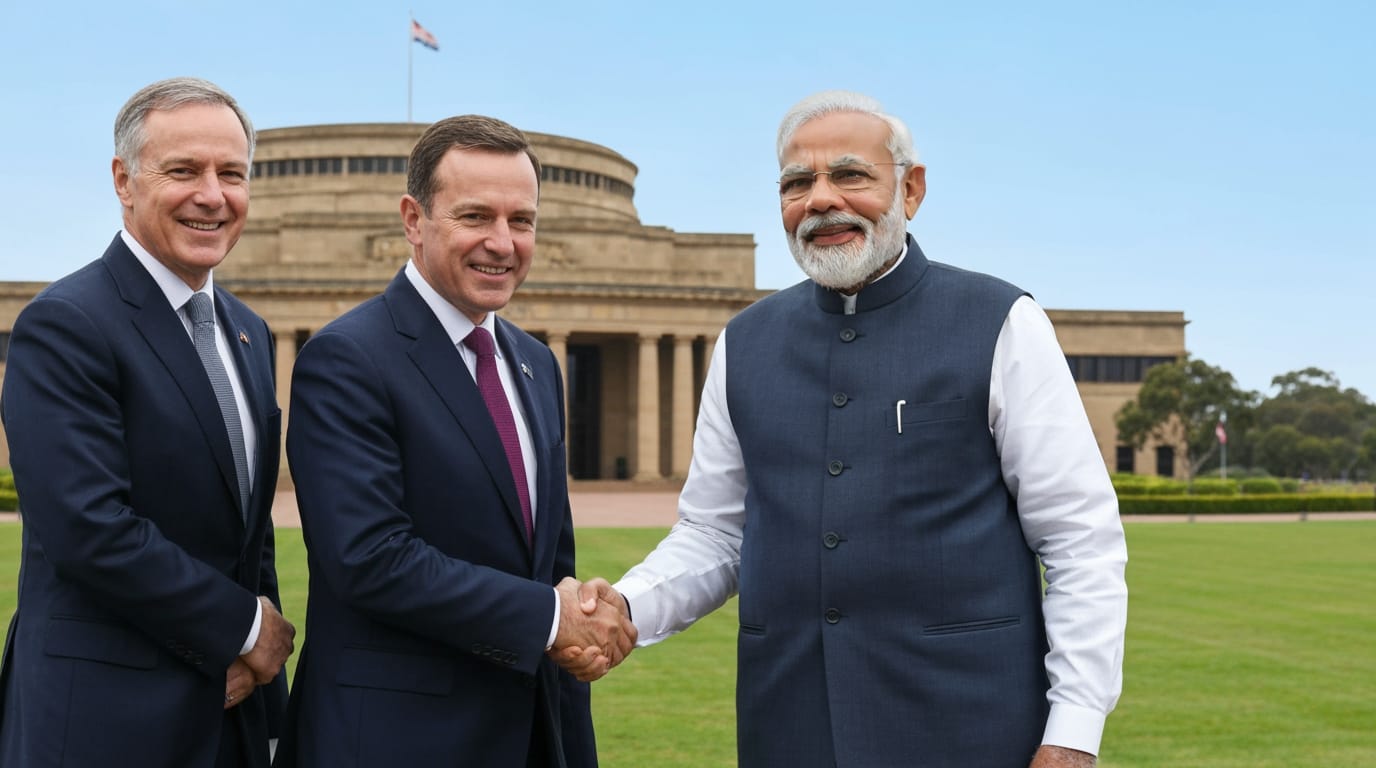
Melbourne, Australia – In a significant diplomatic and economic stride, India has finalized administrative arrangements with Australia to facilitate the long-awaited supply of Australian uranium for its civilian nuclear energy program. The landmark agreement, announced by Indian Prime Minister Narendra Modi and Australian Prime Minister Anthony Albanese in Melbourne, marks a pivotal moment in deepening bilateral ties and underpins India’s ambitious drive towards energy security and decarbonization.
The formalization of these arrangements on Thursday clears the way for commercial uranium exports, a critical step for India which aims to drastically expand its nuclear power capacity in the coming decades. Prime Minister Modi hailed the agreement as a catalyst for India's clean energy objectives, while Prime Minister Albanese emphasized Australia's role as a reliable supplier and the diversification benefits for its resource sector.
A Decade in the Making: Overcoming Historical Hurdles
The journey to this agreement has spanned more than a decade, navigating complex geopolitical landscapes and Australia's stringent nuclear non-proliferation policies. Australia, holding approximately 28% of the world's known uranium resources and ranking as the fourth-largest producer in 2023, historically maintained a ban on selling uranium to countries not signatory to the Nuclear Non-Proliferation Treaty (NPT). India, a nuclear-armed nation outside the NPT, presented a unique challenge to this policy.
A crucial turning point came in 2008 when the Nuclear Suppliers Group (NSG), a consortium of nuclear material exporting countries, granted India a waiver from its guidelines, allowing member states to engage in civilian nuclear trade with India despite its non-NPT status. This exception recognized India's responsible nuclear stewardship and opened the door for bilateral agreements. Following this, in 2011, then-Australian Prime Minister Julia Gillard proposed lifting Australia's long-standing ban on uranium sales to India, a policy shift that was formally endorsed by the Australian Labor Party in December 2011.
The initial Civil Nuclear Cooperation Agreement between India and Australia was signed in September 2014 during a visit by then-Australian Prime Minister Tony Abbott to India, and it officially came into force in 2015. However, despite this overarching framework, commercial exports faced delays due to technical safeguards and the need to finalize administrative and legal arrangements ensuring the uranium would be used exclusively for peaceful purposes and under International Atomic Energy Agency (IAEA) safeguards. The successful finalization of these arrangements now removes a major obstacle, paving the way for consistent uranium shipments.
Fuelling India's Nuclear Ambitions and Clean Energy Transition
For India, securing a reliable and long-term supply of uranium is paramount to its ambitious energy agenda. The nation is experiencing rapidly increasing electricity demand driven by industrial growth, expanding digital infrastructure, and a growing population. To meet this demand and achieve its net-zero carbon emissions targets, India has committed to a significant expansion of its nuclear power capacity.
India currently operates 23 nuclear reactors with a total capacity of approximately 7.48 Gigawatts electrical (GWe), contributing about 3% to its national electricity generation. However, the country has set an aggressive target to reach 100 GWe of nuclear power by 2047, a more than tenfold increase from current levels. This expansion involves 12 reactors currently under construction (9.4 GWe), eight with financial approval (5.6 GWe), and another 18 with preliminary government approval (24 GWe), creating a substantial pipeline of 46.48 GWe. The agreement with Australia provides a crucial raw material for this ambitious plan, diversifying India's fuel supply chain and reducing its dependence on fossil fuels.
Prime Minister Modi emphasized that the uranium supply would give "fresh momentum" to India's clean energy goals. This strategic partnership will not only help India achieve its energy security objectives but also supports long-term industrial growth by providing reliable baseload power.
Bolstering Strategic and Economic Ties
The uranium deal is more than a commercial transaction; it signifies a deepening of the comprehensive strategic partnership between India and Australia, particularly in the Indo-Pacific region. Both nations are increasingly aligning their interests in areas such as clean energy, critical minerals, trade, and defense cooperation.
For Australia, the deal diversifies its uranium export markets beyond its traditional customers and strengthens economic resilience by reducing reliance on any single trading partner. Australian Prime Minister Albanese noted that the arrangement provides an "additional market for the Australian resources sector" and solidifies Australia's role as a trusted supplier. Australia's uranium is exported under strict safeguards, ensuring its use solely for peaceful, non-explosive purposes, with mechanisms for IAEA oversight and fallback safeguards.
Beyond uranium, the leaders agreed to strengthen collaboration across several emerging sectors, including renewable energy, green hydrogen, and low-carbon industrial development. This comprehensive cooperation also extends to defense and maritime security, critical minerals, and resilient supply chains, underscoring a shared vision for a stable, peaceful, and prosperous Indo-Pacific. The burgeoning people-to-people links, with a substantial Indian diaspora in Australia, further reinforce this evolving relationship.
A New Era of Cooperation
The finalization of administrative arrangements for Australian uranium supply to India marks a new chapter in the bilateral relationship, transitioning a foundational agreement into practical cooperation. This pivotal development not only addresses India's growing energy needs and supports its transition to cleaner power sources but also solidifies a strategic alliance between two key Indo-Pacific nations. The deal underscores a mutual commitment to economic security, environmental sustainability, and regional stability, setting a precedent for further collaboration in critical sectors.