Ukraine Vehemently Denies State Role in Nord Stream Blasts Amidst German Indictment
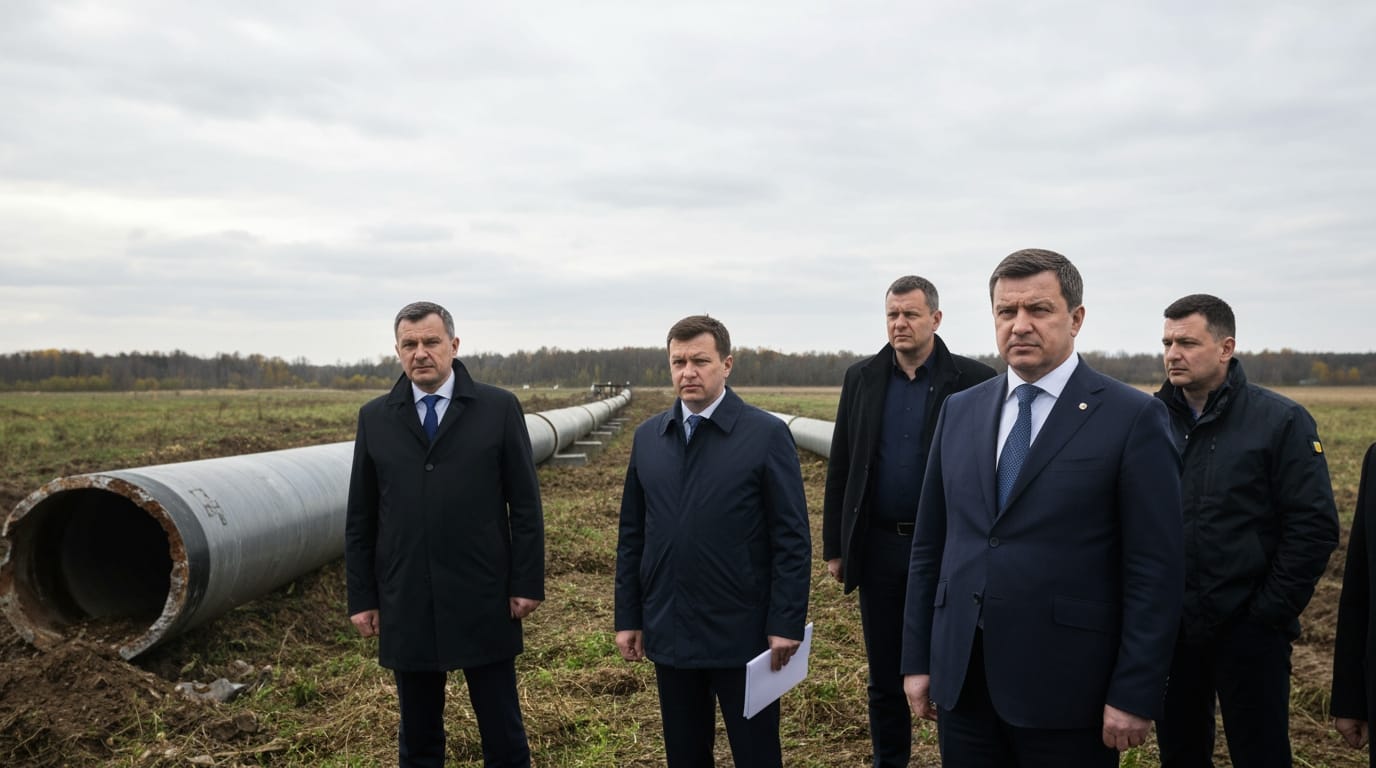
Kyiv has strongly refuted accusations of state involvement in the 2022 sabotage of the Nord Stream gas pipelines, following a recent indictment by German federal prosecutors against a Ukrainian national. The denials come as Germany’s ongoing investigation points towards a pro-Ukrainian group, allegedly acting under orders from Ukrainian state authorities, marking a critical juncture in the long-unfolding mystery surrounding the Baltic Sea explosions. Ukraine's Prosecutor General's Office has asserted a lack of evidence linking the Ukrainian state, its institutions, or officials to the incident, while simultaneously offering to establish a joint investigation team with German authorities to ensure a comprehensive and transparent inquiry.
The Baltic Sea Sabotage: A Catastrophic Event and Lingering Mystery
On September 26, 2022, a series of powerful underwater explosions rocked the Nord Stream 1 and Nord Stream 2 pipelines in the Baltic Sea, causing massive gas leaks and rendering three of the four major pipelines inoperable. The incidents, occurring in international waters within the exclusive economic zones of Denmark and Sweden, were swiftly classified as acts of "gross sabotage" by investigating authorities. The Nord Stream pipelines, majority-owned by Russia's Gazprom, were designed to transport natural gas from Russia to Germany. Nord Stream 1 was a vital route for Russian gas exports to Europe, though its supply had been significantly reduced prior to the explosions. Nord Stream 2, completed but never operational due to Germany's suspension of its certification process following Russia's full-scale invasion of Ukraine in February 2022, also suffered extensive damage.
In the immediate aftermath, a flurry of international speculation and accusations emerged. Russia, which had previously been accused of "weaponizing" gas supplies to Europe, pointed fingers at "Anglo-Saxon" actors, an allegation vehemently denied by the United States and its allies. Many Western observers initially suspected Moscow, though evidence to definitively attribute the attack remained elusive. The explosions sent shockwaves across Europe, exacerbating energy security concerns and deepening geopolitical tensions already inflamed by the conflict in Ukraine.
Ukraine's Resolute Denials and Offer of Cooperation
From the outset, Ukraine has consistently and emphatically denied any involvement in the Nord Stream sabotage. Ukrainian presidential aides and government officials have labeled suggestions of Kyiv's role as "absolute nonsense," arguing that such actions would provide no practical or strategic benefit to the nation. Mykhailo Podolyak, a presidential advisor, stated that Ukraine gained no tactical or strategic advantage from the destruction, suggesting that Russia, possessing extensive technical and financial resources, was the more likely perpetrator.
More recently, in response to the latest developments from the German investigation, Ukraine's Prosecutor General's Office reiterated its stance on July 9. The office declared that "at present, no evidence has been established indicating the involvement of the Ukrainian state, its authorized institutions, or officials in these unlawful acts, or that they issued, on behalf of Ukraine, any orders, directives, instructions, or other commands to carry out the sabotage of the pipelines." President Volodymyr Zelensky, when asked about the German charges, stated he had not yet received all the details of the investigation, indicating a cautious approach. Emphasizing its commitment to uncovering the truth, Ukraine has expressed readiness to assist in establishing the full circumstances of the incident and proposed forming a joint investigation team with Germany to facilitate the prompt exchange of information.
German Investigation Progresses: The "Andromeda" and a Ukrainian Suspect
While Denmark and Sweden closed their respective investigations into the Nord Stream blasts in February 2024, citing insufficient grounds for criminal charges or lack of jurisdiction, the German inquiry has pressed forward. Swedish authorities did confirm "gross sabotage" and shared evidence with their German counterparts.
The German investigation has progressively focused on a "pro-Ukrainian group" theory, which gained traction in March 2023. Central to this theory is the sailing yacht "Andromeda," reportedly chartered from Rostock, Germany, by individuals using fake passports. Traces of explosives were allegedly found on a table inside the yacht's cabin. The charter was reportedly paid for by a Polish company owned by two Ukrainians.
In a significant breakthrough, German federal prosecutors recently charged Serhii Kuznietsov, a Ukrainian national and former soldier, in connection with the sabotage. Kuznietsov was arrested in Italy in August 2025 and extradited to Germany in November of the same year. German prosecutors allege that Kuznietsov coordinated a group that planted military-grade explosives on the pipelines from the "Andromeda" near the Danish island of Bornholm in September 2022. They further claim that Kuznietsov, then an officer in the Ukrainian army, along with other military personnel, devised the plan to destroy the pipelines "on the orders of state authorities in Ukraine" to deprive Russia of gas revenues. Evidence cited by German officials includes incriminating phone calls made by Kuznietsov and data found on his cell phone. Despite these charges, Kuznietsov denies any involvement, and Ukrainian authorities have stressed that "a person's guilt can only be established by a court verdict."
Geopolitical Undercurrents and Unresolved Tensions
The Nord Stream pipelines were, from their inception, a focal point of geopolitical contention, with critics arguing they increased European reliance on Russian energy and undermined Ukraine's role as a gas transit country. The explosions irrevocably altered the European energy landscape, removing a key conduit for Russian gas and solidifying Europe's move away from Russian energy dependence.
The German prosecutors' direct accusation of Ukrainian state involvement, despite Kyiv's denials, introduces a delicate diplomatic challenge between Germany and Ukraine. Germany has been a significant military backer of Ukraine in its defense against Russian aggression, making these allegations particularly sensitive. The assertion that Ukrainian state entities ordered an attack on critical European energy infrastructure, even if non-operational at the time, carries substantial political weight and could complicate ongoing international cooperation.
The legal proceedings against Serhii Kuznietsov in Hamburg will undoubtedly draw intense international scrutiny. While Germany's investigation has provided the most detailed narrative to date, Ukraine's unwavering denials mean the full truth, and definitive international consensus on responsibility, remains elusive. The Nord Stream sabotage continues to cast a long shadow over European energy policy and international relations, underscoring the complex and often clandestine nature of modern geopolitical conflicts. The mystery persists, with significant implications for how nations perceive threats to critical infrastructure and the attribution of blame in an increasingly volatile global environment.


