Syria's Voting Rights Restored at Chemical Weapons Watchdog in Landmark Shift
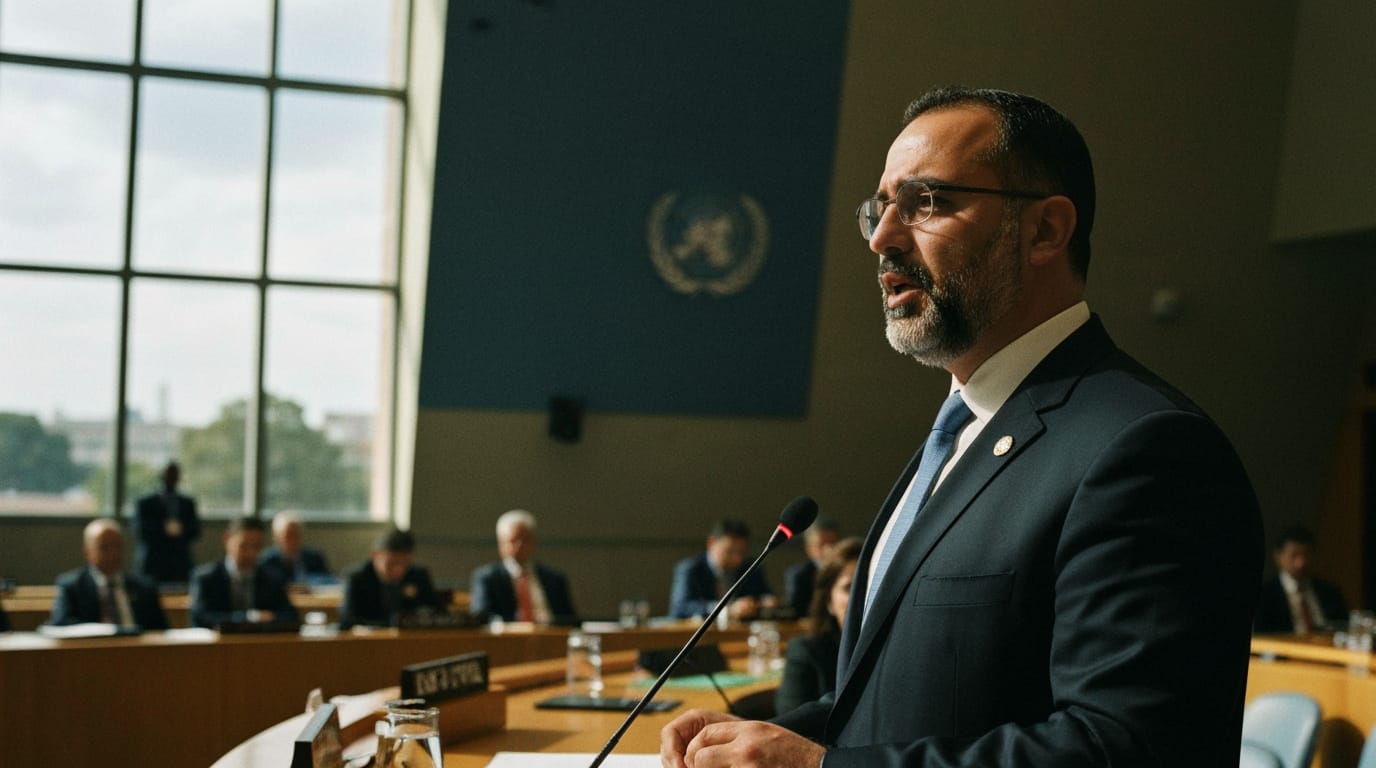
The Hague, Netherlands – Syria's voting rights at the global chemical weapons watchdog, the Organisation for the Prohibition of Chemical Weapons (OPCW), have been formally reinstated, marking a significant diplomatic turning point following a "significant change in circumstances" within the nation. The decision by the OPCW Executive Council on Thursday, July 9, 2026, culminates years of international pressure and represents a new chapter in Syria's relationship with global non-proliferation efforts after the fall of the former Assad regime. This move comes as the new Syrian leadership pledges full cooperation in dismantling its remaining chemical weapons program and opens previously undisclosed sites to international inspectors.
A New Era of Engagement Following Political Upheaval
The OPCW Executive Council, at its 112th session, adopted the decision to restore Syria's rights and privileges, which had been suspended since April 2021. This unanimous decision, co-sponsored by 67 States Parties from diverse regional groups, underscores a broad international consensus regarding the positive shifts in Damascus. OPCW Director-General Fernando Arias highlighted the "tangible progress achieved through continued cooperation and constructive engagement" between the Technical Secretariat and the Syrian Arab Republic, supported by the wider community of Member States.
The catalyst for this reinstatement is directly linked to the profound political changes in Syria, specifically the ouster of former President Bashar al-Assad in December 2024. The new Syrian authorities, led by President Ahmad al-Sharaa, have swiftly moved to address the long-standing issues of non-compliance that plagued the previous administration. President al-Sharaa, a former insurgent who led the offensive against Assad, has publicly committed to destroying any remaining chemical weapons from the Assad era and to rebuilding Syria's international ties. This diplomatic breakthrough also aligns with an announcement by U.S. authorities the day prior, indicating Washington's intent to remove Syria from its list of state sponsors of terrorism, signaling a potential broader re-engagement with the international community.
The Road to Suspension: A History of Chemical Weapons Use
Syria's journey to losing its voting rights was a protracted and deeply concerning one, rooted in numerous confirmed instances of chemical weapons use against its own population during the civil war. The nation initially acceded to the Chemical Weapons Convention (CWC) in September 2013, under immense international pressure following the devastating sarin attack in Ghouta, which killed over 1,400 people. At the time, Syria pledged to declare and dismantle its chemical weapons program, with the OPCW and a joint UN mission overseeing the initial destruction efforts.
Despite these initial steps, reports of chemical weapons attacks continued. The OPCW's Investigation and Identification Team (IIT) and the UN-OPCW Joint Investigative Mechanism (JIM) repeatedly found the Syrian government responsible for the use of banned substances, including sarin and chlorine barrel bombs. Notable incidents included sarin attacks in Khan Shaykhun in 2017 and Douma in 2018, as well as multiple chlorine attacks. The United States alone assessed that the Assad regime had used chemical weapons at least 50 times since acceding to the CWC in 2013.
These findings directly contradicted Syria's declarations of its chemical arsenal and its commitment to the CWC. Russia, a key ally of the Assad regime, consistently denied these allegations and used its veto power in the UN Security Council to block efforts, including the renewal of JIM's mandate in 2017. Consequently, on April 21, 2021, in an unprecedented move, OPCW Member States voted to suspend Syria's voting rights and other privileges. The decision passed with 87 votes in favor, 15 against, and 34 abstentions, marking the first time a member state faced such a sanction for non-compliance. The suspension aimed to hold Damascus accountable for its repeated violations and its failure to declare all chemical weapons and production facilities, as requested by the OPCW Executive Council in July 2020.
The Path to Compliance: Concrete Steps and Openness
The reinstatement of Syria's voting rights is not merely a symbolic gesture but reflects concrete actions taken by the new Syrian government. To regain these privileges, Syria was required to comply with OPCW Council decision EC-94/DEC.2, which mandated the declaration of all chemical weapons, stockpiles, and production facilities, and the resolution of outstanding discrepancies in its initial declarations.
Since the change in leadership in December 2024, the new Syrian authorities have demonstrated a willingness to engage constructively with the OPCW. In February 2025, the OPCW Director-General visited Syria, holding meetings with President al-Sharaa and the Foreign Minister, where the Syrian leadership recognized all OPCW mandates, including the identification of perpetrators of chemical weapons use. This was followed by a visit from the Syrian Foreign Minister to the OPCW in March 2025, further reaffirming the country's commitment.
Crucially, this newfound openness has yielded tangible results. In May, the OPCW announced the discovery of remnants of the former Assad regime's clandestine chemical weapons program, including raw materials and munitions similar to those used in past deadly gas attacks. These discoveries came as previously undeclared weapon sites were opened to inspectors, demonstrating a level of transparency unseen under the previous government. The OPCW's Executive Council has also approved detailed plans for destroying some of these recently declared stockpiles, including materials for nerve agents, at a designated site in Al Qutayfah, north of the capital.
Global Implications and Future Outlook
The restoration of Syria's voting rights at the OPCW carries significant global implications. It sends a strong signal that breaches of the 1997 Chemical Weapons Convention will not be tolerated, but also that genuine commitment to compliance and transparency can lead to reintegration into the international fold. The OPCW will continue its crucial role in monitoring Syria's progress and overseeing the destruction of discovered stockpiles, ensuring an ongoing verification process.
While the reinstatement is a major step forward, the process of fully accounting for and destroying all remnants of Syria's chemical weapons program remains a complex undertaking. The OPCW's mandate to identify perpetrators of past chemical attacks also continues, as the international community seeks accountability for the suffering inflicted during the civil war. The commitment of the new Syrian government to cooperate fully with these investigations will be a critical test of its sincerity. This development, coupled with the potential removal of Syria from the U.S. list of state sponsors of terrorism, suggests a cautious re-engagement of Syria with the wider world, contingent on continued adherence to international norms and obligations. The coming months will be crucial in demonstrating whether this new era of cooperation translates into the verified, complete, and irreversible elimination of chemical weapons from Syrian soil.


