India Sends High-Level Delegation to Khamenei's Funeral Amidst Geopolitical Tensions
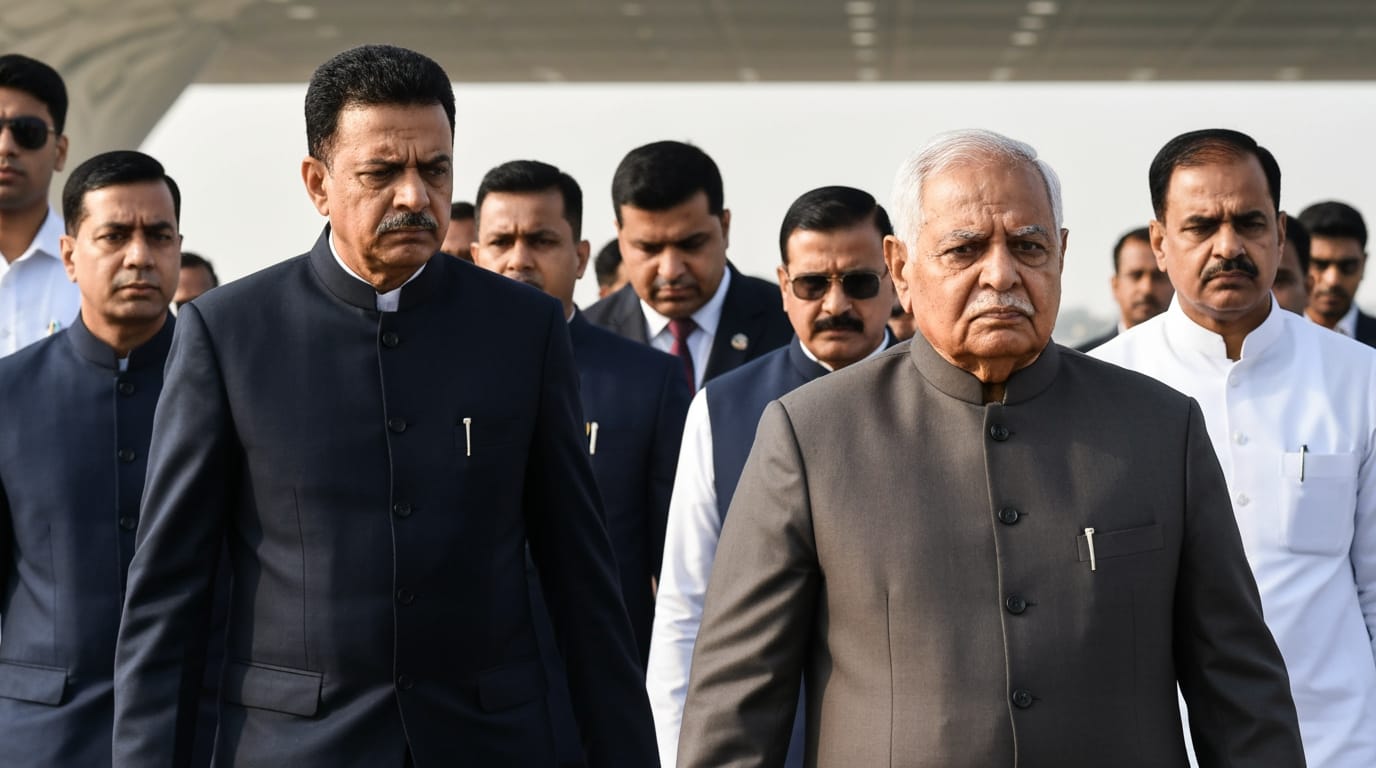
Tehran, Iran – As millions of mourners gather across Iran for the multi-day funeral ceremonies of Supreme Leader Ayatollah Ali Khamenei, who was killed in a US-Israeli airstrike in February, a high-level Indian delegation has arrived in Tehran to pay its respects. The Indian government's decision to send two senior officials, rather than Prime Minister Narendra Modi, has sparked considerable discussion regarding India's evolving diplomatic posture in the Middle East amidst a fragile ceasefire and ongoing regional conflict.
The funeral, delayed for months due to escalating hostilities, marks a pivotal moment for Iran and the wider West Asia region. Ayatollah Ali Khamenei, who led Iran for nearly four decades, died on February 28, 2026, in a joint US-Israeli military strike that also claimed the lives of several family members. His body arrived at Tehran's Grand Mosalla on Friday, July 3, ahead of the official ceremonies that are expected to draw dignitaries from approximately 100 countries and millions of Iranian citizens. The extended mourning period, lasting from July 3 to July 9, will see Khamenei's body travel through several key cities, including Tehran, Qom, and Mashhad, where he will ultimately be laid to rest at the Imam Reza shrine.
India's Representation: A Diplomatic Calculus
Leading the Indian delegation are Bihar Governor Lt. Gen. (Retd.) Syed Ata Hasnain and Minister of State for External Affairs Pabitra Margherita. Their presence signifies India's diplomatic engagement with Iran during a critical period of national mourning and regional transition. While Iranian President Masoud Pezeshkian extended a personal invitation to Prime Minister Modi, New Delhi cited a scheduling conflict, noting the Prime Minister's pre-planned multi-nation tour to Indonesia, Australia, and New Zealand.
The selection of Lt. Gen. (Retd.) Syed Ata Hasnain, a prominent Shia figure and former commander of the Indian Army's strategic 15 Corps in Kashmir, carries significant symbolic weight. His inclusion, alongside Minister of State Margherita, underscores the multifaceted nature of India's relationship with Iran, encompassing both strategic and cultural dimensions. Beyond the official governmental representatives, a diverse group of Indian political figures, including former External Affairs Minister Salman Khurshid and leaders from Jammu and Kashmir, are also attending, further highlighting the breadth of Indian interest in the proceedings.
The composition of the Indian delegation has not been without scrutiny. Some observers have debated whether the choice of representatives indicates a shift in India's Middle East policy, particularly when compared to India's representation at the 2024 funeral of Iranian President Ebrahim Raisi, which was led by Vice President Jagdeep Dhankhar. Critics have questioned if the delegation adequately signals the depth of India's engagement with Tehran, with some suggesting it might be aimed at avoiding antagonizing ties with the United States and Israel. However, others note that India did not send its Prime Minister, President, or Vice President to Ayatollah Ruhollah Khomeini's funeral in 1989 either, suggesting a consistent approach to such high-profile, yet sensitive, diplomatic events.
Funeral Preparations and Regional Significance
The multi-day funeral program is a carefully orchestrated event designed to honor the late Supreme Leader and project national solidarity. Starting with public farewells at the Imam Khomeini Grand Mosalla Complex in Tehran, the ceremonies will include an official commemoration for foreign dignitaries and multi-city processions. The movement of Khamenei's body through Tehran and the holy city of Qom before its final interment in Mashhad connects the political heart of Iran with its profound religious traditions. Mashhad, as Iran's holiest city and the birthplace of Khamenei, holds immense personal and religious significance for his final resting place near the Imam Reza shrine.
Security concerns remain paramount during these events, especially given the circumstances of Khamenei's death. Reports suggest that the new Supreme Leader, Mojtaba Khamenei, may not make a public appearance at his father's funeral due to ongoing security concerns and health speculation following the February airstrikes. This absence further underscores the delicate geopolitical climate in which the funeral is taking place.
International Presence and Future Implications
Alongside the Indian delegation, representatives from numerous other countries, including China, Russia, Qatar, France, and Pakistan, are expected to attend the ceremonies. Pakistan's Prime Minister Shehbaz Sharif has confirmed his attendance. The gathering of such a diverse array of international leaders highlights Iran's continued geopolitical significance, particularly its influence over global energy markets and the strategic Strait of Hormuz.
The funeral takes place amidst a fragile ceasefire between Iran and the United States, following a preliminary agreement to halt the conflict. The global attention on these proceedings emphasizes the ongoing complexities of West Asian politics and the intricate web of alliances and rivalries that define the region. The event is not merely a somber occasion for mourning but also a significant diplomatic stage, where nations calibrate their relationships with a key regional player undergoing a profound leadership transition.
The coming days will offer a clearer picture of the international response to Iran's leadership change and the potential shifts in regional dynamics. India's careful diplomatic balancing act, as reflected in its choice of delegation, signals its intent to maintain strategic ties with Iran while navigating the broader geopolitical landscape shaped by recent conflicts and evolving alliances. The world watches closely as Iran bids farewell to its long-serving Supreme Leader and prepares for an uncertain future under new leadership.


