India Urges Reopening of Critical Hormuz Strait Amid Escalating Regional Tensions
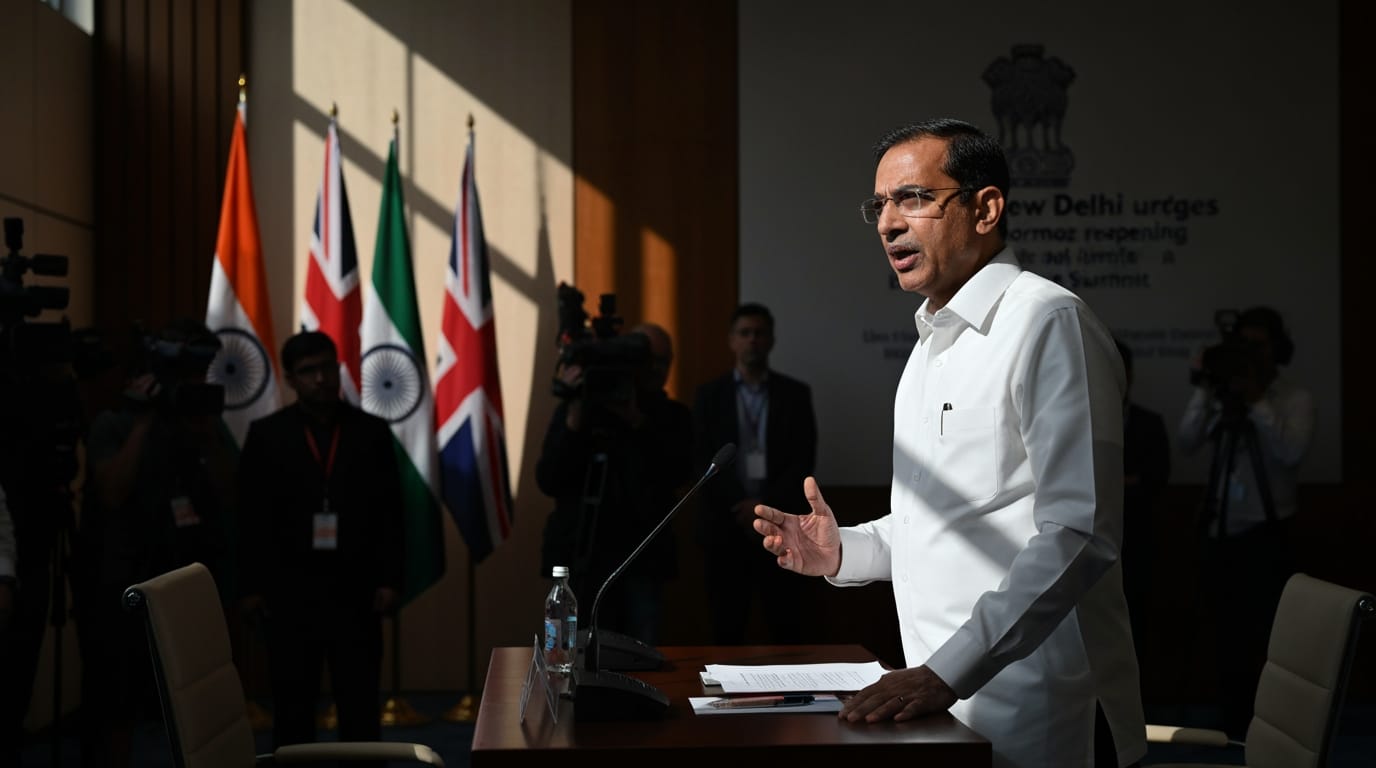
New Delhi has issued an urgent and unequivocal call for the immediate reopening of the Strait of Hormuz, a vital global maritime artery currently facing significant disruptions. The plea was delivered at a high-level summit hosted by the United Kingdom, where India highlighted not only the profound impact on its own energy security but also the tragic human cost, noting that Indian mariners have been among the casualties in recent attacks on shipping in the Gulf region.
The recent virtual summit, convened by UK Foreign Secretary Yvette Cooper and attended by representatives from over 60 nations, underscored the growing international concern over the precarious situation in the Strait of Hormuz. India’s Foreign Secretary, Vikram Misri, articulated New Delhi's firm commitment to "free and open commercial shipping" and "maritime security in keeping with international law," emphasizing that diplomatic solutions are paramount to de-escalate tensions and restore stability in the region. The discussions come at a critical juncture, as an intensifying conflict in West Asia, particularly following a reported US-Israeli strike on Iran in late February, has led to a partial blockade of the strategic waterway, causing widespread concern over global oil and gas supplies.
The Geopolitical Imperative: A Call for De-escalation
India's appeal for the reopening of the Strait of Hormuz is rooted in both economic necessity and a deep concern for regional stability. Foreign Secretary Misri stressed that diplomacy and dialogue among all concerned parties represent the "only sustainable route toward cooling regional tensions." The Indian government has maintained active communication with Iran and other regional stakeholders, with efforts focused on ensuring "unimpeded and safe transit" for its commercial vessels. These diplomatic overtures have yielded some success, with reports indicating that at least six Indian-flagged vessels have been able to navigate the Strait safely in recent days. However, the broader situation remains fraught, with the UK Prime Minister, Keir Starmer, describing Iran's actions as a "direct threat to global economic security" and emphasizing the "urgent need" to restore freedom of navigation. The summit itself represented a concerted effort to explore viable diplomatic and political measures to achieve this objective. The absence of the United States from these discussions, with President Trump reportedly indicating that securing the strait is not America's responsibility, highlights the complex and often divergent international responses to the crisis.
The Jugular Vein of Global Energy Trade: Why Hormuz Matters
The Strait of Hormuz, a narrow waterway nestled between Oman and Iran, serves as the undisputed "jugular vein" of the global energy trade. Connecting the Persian Gulf with the Gulf of Oman and the Arabian Sea, this chokepoint is arguably the most critical maritime passage for oil transit worldwide. Annually, an staggering volume of approximately 20 to 21 million barrels of oil traverses this strait daily, accounting for roughly 20-21% of the world's total petroleum liquids consumption. Beyond crude oil, it is also a pivotal conduit for liquefied natural gas (LNG), with about one-fifth of global LNG trade relying on this route.
Its strategic importance is amplified by its role as the primary export channel for major oil and gas producers in the Persian Gulf, including Saudi Arabia, the United Arab Emirates, Kuwait, Qatar, Iraq, and Bahrain. For nations like India, China, Japan, and South Korea, which collectively constitute the top destinations for crude oil passing through Hormuz to Asia (accounting for 67% in 2022-2023), any disruption has immediate and far-reaching economic consequences. The strait's geographical narrowness, approximately 21 miles (33 kilometers) at its most constricted point, makes it particularly vulnerable to geopolitical tensions, where even the threat of closure can trigger significant spikes in global oil prices and maritime insurance premiums. Unlike many other maritime chokepoints, the Strait of Hormuz offers virtually no practical alternative routes for the vast majority of its traffic, making sustained disruption a direct pathway to substantial supply delays and elevated energy costs worldwide.
India's Vulnerability and Proactive Measures
For India, a rapidly growing economy with substantial energy demands, the situation in the Strait of Hormuz represents a profound and immediate threat to its energy security. India ranks as the world's third-largest importer of crude oil, the fourth-largest importer of LNG, and the second-largest consumer of liquefied petroleum gas (LPG). A staggering 90% of its crude oil and nearly 50% of its natural gas imports typically transit through this volatile region. The vulnerability is particularly acute for LPG, a crucial household fuel, with 50-60% of India's imports, and nearly 90% as of March 2026, passing through the Strait.
The ongoing disruptions have already led to Indian-flagged vessels carrying crude oil, LPG, and LNG becoming stranded, underscoring the tangible impact on the nation's supply chains. The potential for prolonged shortages, particularly in the politically sensitive LPG market, is a significant concern, necessitating governmental intervention. In response, New Delhi has invoked provisions under the Essential Commodities Act, 1955, enabling it to regulate and redistribute natural gas resources. Additionally, domestic refineries have been directed to maximize LPG output by diverting hydrocarbon streams, reportedly leading to a 40% increase in domestic production.
While India has consciously pursued a strategy of diversifying its crude sourcing over the past decade, expanding its import base from 27 to approximately 40 countries and rerouting about 70% of its energy imports away from Hormuz, the structural dependence on Gulf supplies remains considerable. This diversification, however strategic, does not entirely negate the critical role the Strait plays in India's energy ecosystem, especially for immediate supplies and specific products like LPG.
Broader Implications and the Path Forward
The crisis in the Strait of Hormuz extends beyond immediate energy price fluctuations; it presents a severe challenge to global economic stability and underscores the fragile nature of international supply chains. The blockage, caused by heightened geopolitical tensions, has already impacted maritime traffic, with reports of attacks on commercial vessels resulting in fatalities, including Indian mariners. The cumulative impact has prompted dire warnings from international bodies, with the International Energy Agency's Executive Director stating that the combined effects amount to "the greatest threat to global energy security in history" in 2025 due to ongoing regional conflicts and disruptions.
The UK-hosted summit, where India made its strong appeal, represents part of a wider international effort to navigate this perilous situation. While some nations, including Bahrain and the UAE, joined the UK's initiative, several key regional players like Saudi Arabia, Oman, and Qatar did not, highlighting the complexities of forging a unified international front. The discussions at the summit focused on diplomatic and political measures to restore freedom of navigation and ensure the safety of ships and their crews. As the world watches the unfolding events, the collective call for de-escalation and the reopening of this indispensable waterway reflects a shared recognition of its critical importance to global commerce and energy stability. The coming weeks will test the resolve of international diplomacy and the resilience of global supply networks as efforts continue to restore unimpeded passage through the Strait of Hormuz.


