Myanmar's Coup Leader Min Aung Hlaing Assumes Presidency Amidst Widespread Condemnation
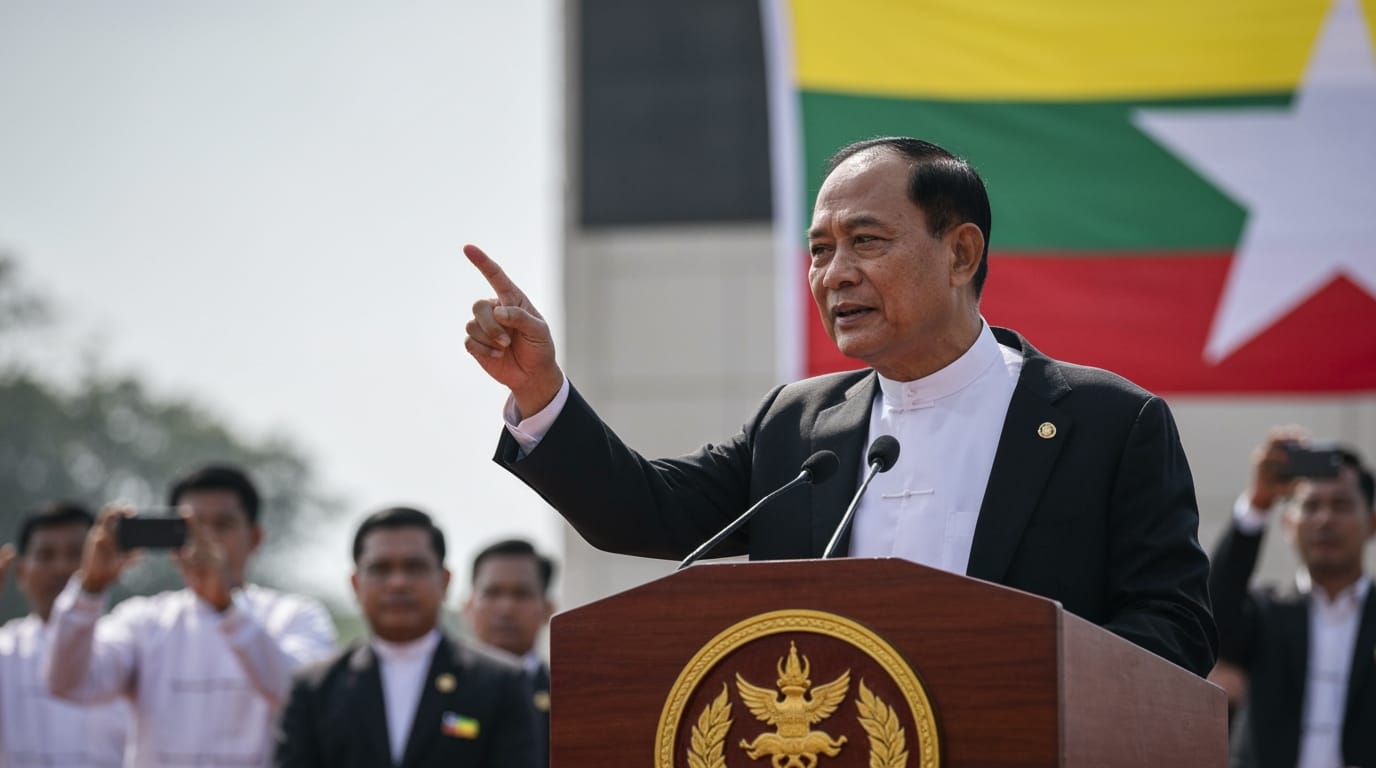
NAYPYITAW, MYANMAR – Senior General Min Aung Hlaing, the architect of the February 2021 military coup, has formally assumed the presidency of Myanmar, a move widely decried by the international community and domestic opposition as a thinly veiled attempt to legitimize military rule. His "election" by a military-stacked parliament on Friday, April 3, 2026, marks a significant, yet highly contested, shift in the country's political landscape, five years after the military overthrew the democratically elected government. Critics argue that the process, which followed heavily restricted elections, is designed to perpetuate the military's iron grip on power under a civilian facade.
The Coup and the Engineered Ascent to Power
The path to Min Aung Hlaing's presidency began on February 1, 2021, when Myanmar's military, known as the Tatmadaw, seized power, detaining State Counsellor Aung San Suu Kyi and other leaders of the National League for Democracy (NLD). The coup occurred just hours before a newly elected parliament was set to convene, following the NLD's landslide victory in the November 2020 general election. The military justified its takeover by alleging widespread electoral fraud, claims that were largely dismissed by both domestic and international observers.
In the immediate aftermath of the coup, a year-long state of emergency was declared, and Min Aung Hlaing, then Commander-in-Chief of Defence Services, assumed control, establishing the State Administration Council (SAC) with himself as chairman. He later took on the role of Prime Minister of a caretaker government. The junta subsequently annulled the results of the 2020 election, dissolved the NLD, and arrested thousands of democracy activists. To pave the way for his presidential bid, Min Aung Hlaing relinquished his powerful post as Commander-in-Chief, as the military-imposed constitution prohibits the president from simultaneously holding the top military position. His close aide, General Ye Win Oo, assumed the role, ensuring continued military alignment. The recent "election" saw parliament members chosen in a staggered process in December 2025 and January 2026. Major opposition parties, including the NLD, were either blocked from participating or refused to compete under conditions they deemed unfair, rendering the outcome largely predetermined. Min Aung Hlaing secured 429 out of 584 votes, virtually guaranteeing his ascent given the military-backed parties' commanding majority.
International Outcry and Deepening Internal Conflict
The military takeover and Min Aung Hlaing's subsequent rule have been met with widespread international condemnation, particularly from Western powers that have imposed sanctions. Organizations like ASEAN have barred him from their summits for five consecutive years, signaling a clear rejection of the legitimacy of his regime. However, China and Russia have notably offered support to the military administration.
Domestically, the coup ignited a fierce and ongoing resistance movement. Peaceful protests and acts of civil disobedience erupted across the country, which the military brutally suppressed with lethal force, resulting in thousands of civilian deaths and arbitrary detentions. This crackdown fueled a nationwide armed resistance, escalating into a bloody civil war that continues to engulf much of the country. A shadow government, the National Unity Government (NUG), was formed in April 2021 in opposition to the military's administration, further highlighting the deep internal divisions. Min Aung Hlaing faces accusations of war crimes and crimes against humanity, with international human rights organizations and UN bodies documenting widespread airstrikes, mass killings, and systemic torture of civilians and resistance forces under his command. Arrest warrants for him have been sought by the International Criminal Court (ICC) for alleged involvement in the Rohingya genocide.
A Nation in Humanitarian and Economic Crisis
Five years of military rule have plunged Myanmar into an unprecedented humanitarian and economic polycrisis. An estimated 3.6 million people have been displaced by conflict and the lingering effects of a devastating earthquake that struck central Myanmar in March 2025. The humanitarian situation continues to worsen, with millions in need of assistance, while aid efforts are severely underfunded and frequently obstructed by the military. Attacks on healthcare are widespread, and essential services remain severely disrupted.
The economy has suffered significantly, reversing a decade of progress. Myanmar's Gross Domestic Product (GDP) contracted by nine percent between 2020 and 2024, with high inflation reaching 25.4 percent in 2024, eroding household purchasing power. The currency has plummeted, making imports unaffordable, and foreign investment has drastically declined. The ongoing conflict, economic mismanagement, and international isolation have led to a thriving illicit economy, while nearly half the population now lives below the poverty line.
The Ramifications of a Contested Presidency
Min Aung Hlaing's assumption of the presidency, while presented as a return to an elected government, is widely viewed as a maneuver to consolidate the military's power and improve its international standing, particularly with regional neighbors. However, this "civilian" title is unlikely to shield him from ongoing calls for accountability for alleged international crimes. Human rights advocates emphasize that the change in attire from military fatigues to civilian clothing does not alter his suspected responsibility for grave violations of international law.
The move signifies the military's entrenched determination to maintain control over Myanmar, even as the country faces a deepening civil war, humanitarian catastrophe, and economic collapse. The international community, including ASEAN, the UN, and various human rights groups, has been urged to reject the legitimacy of this transition and continue supporting the democratic forces in Myanmar, emphasizing that true reform requires genuine adherence to democratic principles and accountability for past abuses. The future of Myanmar remains precarious, marked by persistent conflict and the profound suffering of its people, as the military seeks to normalize its grip on power under a veneer of legitimacy.


