Kharkiv Endures Relentless Assault as Ukraine Marks 1,500 Days of Full-Scale War
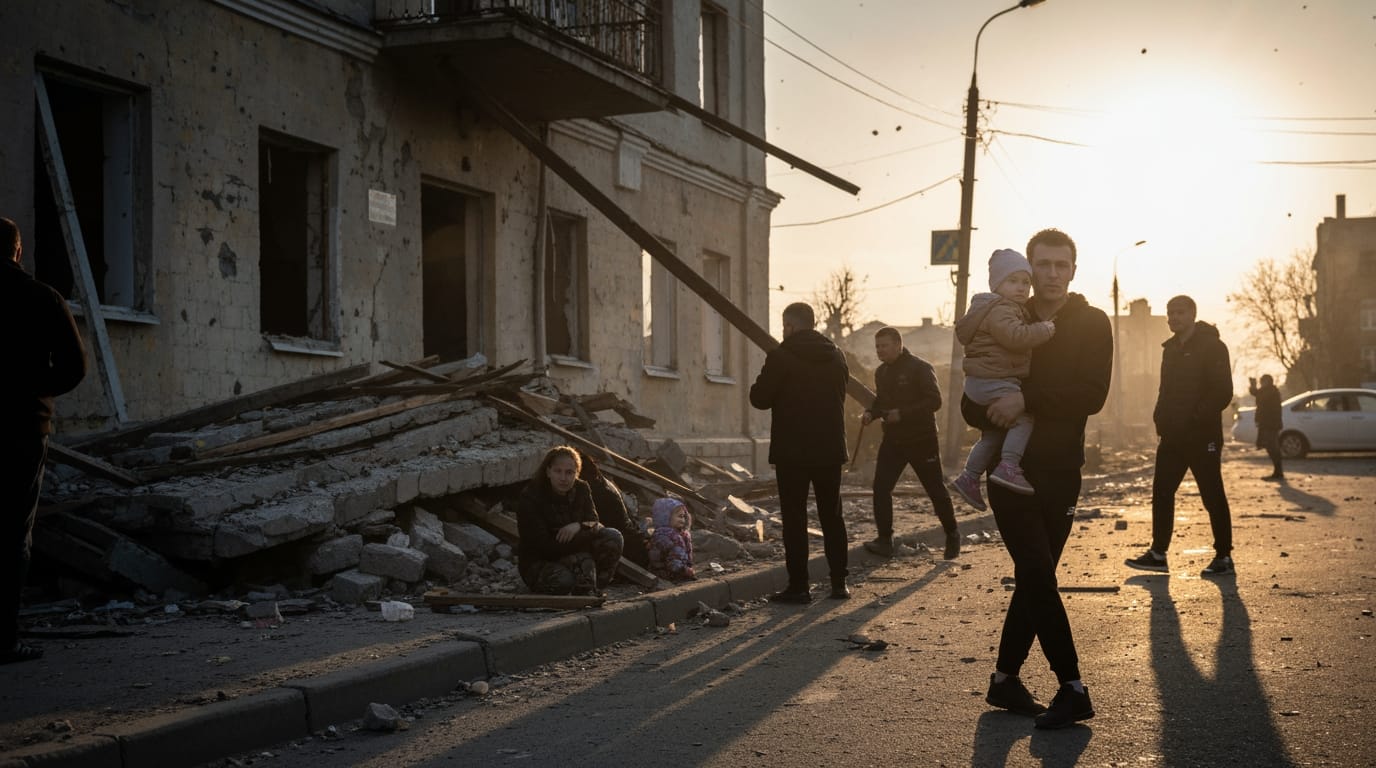
Kharkiv, Ukraine – As Good Friday, April 3, 2026, dawned, Ukraine marked a grim milestone: 1,500 days since Russia launched its full-scale invasion. On this somber anniversary, the eastern city of Kharkiv, Ukraine's second-largest metropolis, found itself once again under a relentless barrage of Russian air strikes, a stark reminder of the enduring and escalating conflict. The continuous attacks, involving missiles and advanced drones, underscore the acute and persistent threat faced by civilians in frontline regions.
The Relentless Assault on Ukraine's Second City
For more than 24 hours leading up to the 1,500-day mark, Kharkiv has been subjected to constant Russian aerial attacks, according to local authorities. The city's governor, Oleh Synyehubov, reported four missile attacks on Friday night alone, in addition to the deployment of drones. These strikes resulted in at least five injuries, including a baby and a 70-year-old security guard, with residential and office buildings sustaining significant damage. Police reported that a 27-year-old woman and her infant son experienced acute stress reactions following the overnight attacks that targeted three city districts: Osnovyanskyi, Kyivskyi, and Shevchenkivskyi.
The onslaught on Kharkiv has intensified, with Russian forces employing what Ukrainian authorities describe as "new tactics," including rolling aerial assaults from ballistic missiles and drones equipped with jet engines. On Thursday, the city experienced an almost round-the-clock air alert as Russian combat drones, identified as Iranian-type Shahed models with jet propulsion, repeatedly struck the city. Ukrainian rescue workers highlighted the challenge in defending against these drones due to their short flight time from the Russian border, which is merely 40 kilometers away. On April 2, Russian forces launched 11 drone strikes on Kharkiv, with one hitting near an apartment block, causing injuries. Across the broader Kharkiv region on the same day, strikes targeted the regional center and 24 other settlements, leading to one fatality—a 65-year-old man in Polova village—and 25 injuries, including eight children. Damage reports indicate destruction to apartment buildings, private homes, civilian enterprises, and infrastructure.
A War's Grim 1,500-Day Milestone
The 1,500th day of Russia's full-scale invasion is a stark and somber moment for Ukraine. The conflict, which began on February 24, 2022, has been characterized by "nearly 1500 days of death, destruction, and despair," with the United Nations noting that the violence is now "worse than ever." The Office of the High Commissioner for Human Rights (OHCHR) has verified a staggering 15,364 civilian deaths, including 775 children, and 42,144 injuries, affecting 2,588 children, since the start of the full-scale invasion. February alone saw a 45% increase in casualties compared to the previous year, with 188 civilians killed and 757 injured.
This prolonged conflict has forced millions from their homes, creating an enduring humanitarian crisis. Despite the evident dangers, more than 1.6 million people have returned to frontline areas in Ukraine, including Kharkiv, Donetsk, Kherson, and Sumy regions. This trend is largely driven by financial hardship and a profound sense of loneliness and isolation experienced in safer host communities.
Civilian Resilience Amidst Perpetual Threat
Kharkiv, a city of immense historical and cultural significance, continues to demonstrate remarkable resilience. Described as "unbreakable," the city has faced almost daily shelling since the war began, enduring aerial bombs, missiles, and drones that have destroyed infrastructure and residential areas. Despite the constant threat and emergency blackout schedules, many residents have steadfastly refused to leave. Furthermore, Kharkiv has become a sanctuary for thousands fleeing other parts of the region affected by Russian aggression, underscoring the enduring spirit of mutual support.
The decisions to return to dangerous frontline areas highlight the severe toll of displacement. A survey by Save the Children found that 74% of parents and caregivers cited missing their homes and communities, along with feeling isolated, as reasons for their return. Financial strain also plays a significant role, with 55% mentioning the high cost of housing or difficulties finding work in host communities, where rental costs can consume an entire household's income. Moreover, 45% of those who returned did so because their children were experiencing unhappiness, stress, or loneliness away from their familiar surroundings. Humanitarian organizations like the European Union and the Czech NGO 'People in Need' (PIN) are actively assisting Kharkiv residents, providing aid for home repairs and refurbishing school bomb shelters to mitigate the immediate dangers.
Strategic Significance and Evolving Warfare
Kharkiv's proximity to the Russian border makes it a critical strategic target, subjected to a continuous onslaught of diverse weaponry. Ukrainian air force spokesman Yurii Ihnat observed that Russia is "constantly modernising" its drones and employing "new routes, new drones... and new tactics" to penetrate Ukrainian air defenses. In the past 24 hours across Ukraine, more than 400 long-range drones and ten ballistic missiles were launched, primarily targeting frontline areas. The introduction of weapons like the FAB-1500 air-dropped bomb, a 1.5-tonne weapon fitted with a glide module, was noted in Kharkiv Oblast in May 2024, signaling Russia's continued efforts to overcome Ukrainian defenses.
The ongoing attacks are not merely aimed at military targets but also at civilian infrastructure, causing widespread disruption and aiming to exert pressure on the Ukrainian population. This sustained campaign illustrates an evolving tactical landscape where cities like Kharkiv bear the brunt of sophisticated and destructive aerial warfare.
As Ukraine endures its 1,500th day of the full-scale invasion, the resilience of Kharkiv's residents, coupled with the persistent and evolving nature of Russian attacks, paints a grim picture of a protracted conflict. The international community continues to grapple with the multifaceted humanitarian and strategic challenges posed by the war, with urgent calls for sustained support and protection for civilians caught in the crossfire.


