India-US Trade Deal on the Brink of Breakthrough, Envoy Declares
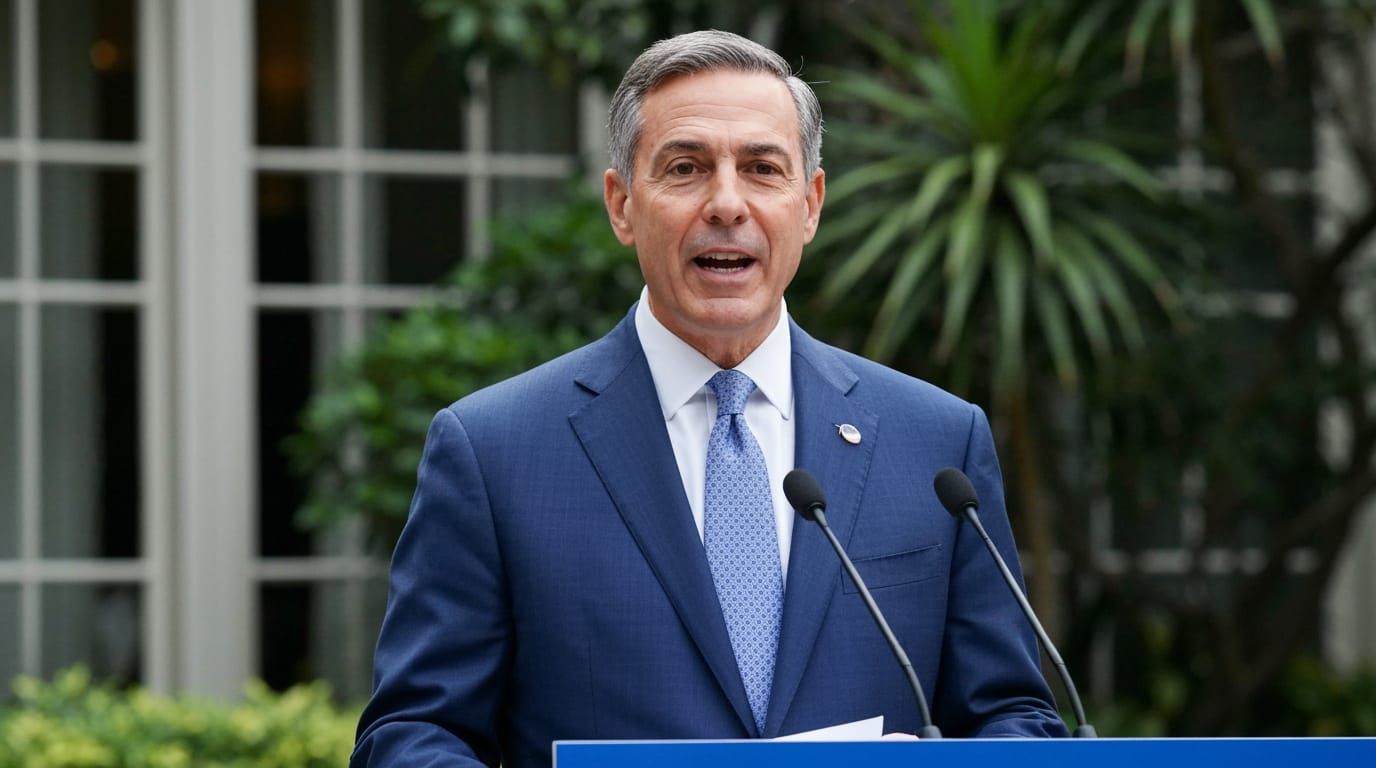
Washington, D.C. - A significant trade agreement between the United States and India is reportedly on the cusp of completion, with a breakthrough potentially just days away, according to the US Ambassador to India, Sergio Gor. The announcement signals substantial progress in negotiations that have spanned nearly 18 months, raising expectations for intensified economic ties, reduced tariffs, and increased bilateral trade and investment between the world's two largest democracies.
The optimistic declaration from Ambassador Gor, delivered at the US-India Strategic Partnership Forum Leadership Summit in Washington, underscores a renewed determination from both nations to finalize the long-anticipated pact. Discussions have reportedly reached their conclusive phase, with only a "last one or two percent" of issues remaining unresolved. This potential deal is anticipated to expand market access, facilitate investment, and address lingering trade impediments that have affected businesses in both countries.
A History of Complex Trade Relations
The trade relationship between India and the United States has a long and often complex history, dating back to India's independence in 1947. While initially marked by US development assistance and India's protectionist policies, the landscape began to shift significantly with India's economic liberalization in 1991, which spurred foreign direct investment (FDI) from US companies and growth in the IT outsourcing sector. Over the decades, the relationship has evolved into a broad strategic partnership encompassing defense, technology, and cultural ties.
Despite this evolving partnership, trade negotiations have frequently encountered hurdles. Prior to the current push, several attempts at comprehensive trade agreements faced delays due to various sticking points. For instance, in February 2025, a framework agreement for an interim trade deal was signed, intended for implementation by April-May 2026, but it ultimately did not materialize as planned. Key areas of contention have historically included India's reluctance to fully open its agricultural and dairy sectors, as well as disagreements over tariffs on industrial goods and intellectual property rights. The US had previously imposed tariffs on Indian goods, citing issues such as India's trade surplus and barriers to American products.
The Drive Towards a Breakthrough
Ambassador Gor’s recent statements highlight a strong commitment from both the US and Indian administrations to overcome these past challenges. He indicated that US Trade Representative Jamieson Greer recently visited New Delhi for two days, engaging in high-level discussions with India’s Union Commerce and Industry Minister Piyush Goyal, further solidifying the robust economic ties. These meetings focused on accelerating momentum in bilateral trade negotiations and identifying new strategic avenues for deeper economic partnership.
A crucial element in the current optimism appears to be a willingness to address outstanding issues. While specific details of the remaining "1-2 percent" are not fully disclosed, the ongoing discussions include aspects like enhanced market access, digital trade, supply chain resilience, and the reduction of non-tariff barriers. One point of emphasis from India's side has been the need for a legal framework that grants Indian exports a competitive tariff advantage over those from other manufacturing nations. This is especially relevant given that the US Supreme Court had previously struck down certain reciprocal tariffs, which led to a re-evaluation of the framework for a deal.
Potential Economic and Strategic Implications
A successful trade deal is projected to yield significant economic benefits for both nations. For India, it could mean enhanced access to the lucrative US market, boosting exports in sectors like textiles, automotive components, and pharmaceuticals, and providing a fillip to small and medium enterprises (SMEs). The deal anticipates reducing US tariffs on Indian goods from approximately 50% to 18%, which could significantly improve the competitiveness of Indian products. Similarly, American companies would gain improved entry into India's rapidly expanding consumer market, increasing demand for agricultural products, technology, machinery, and financial services.
The proposed agreement also aims to foster greater investment, with commitments from India to import over $500 billion from the US over five years, including energy, information and communication technology, and other products. The US, for its part, has seen substantial new investments flowing into its economy from India, with the US Embassy in New Delhi facilitating $20.5 billion in fresh inbound investments this year alone. This financial infusion significantly surpasses the investments facilitated by European counterparts.
Beyond the immediate economic gains, the trade agreement carries profound strategic implications. It is seen as a crucial component of the broader US-India strategic partnership, which focuses on shared democratic values and converging geopolitical interests. The deal is expected to solidify cooperation in emerging domains like artificial intelligence, semiconductors, defense manufacturing, and quantum technologies, aligning with efforts to build resilient supply chains and counter geopolitical challenges, including those posed by China. The US Ambassador specifically highlighted that the strong personal relationship between US President Donald Trump and Prime Minister Narendra Modi continues to drive momentum in bilateral cooperation across various sectors.
Looking Ahead
With negotiations reportedly down to the wire, the prospect of a finalized US-India trade deal represents a pivotal moment for both economies. The agreement, if concluded, is expected to provide stability and certainty for businesses, encouraging expanded trade and investment. While the net impact on India's GDP is estimated to be measurable, though perhaps not immediately transformative, the long-term benefits of deeper structural integration across logistics, investments, and industrial manufacturing are considerable.
The path to this agreement has been protracted, marked by complex discussions and evolving global trade dynamics. However, the current expressions of confidence from high-ranking officials suggest that the two nations are closer than ever to charting a new course for their economic relationship. The completion of this deal would not only unlock new horizons for trade and investment but also underscore the strengthening strategic alliance between India and the United States on the global stage.


