Vatican on Brink of Schism as Pope Leo XIV Issues Final Plea to Breakaway Traditionalists
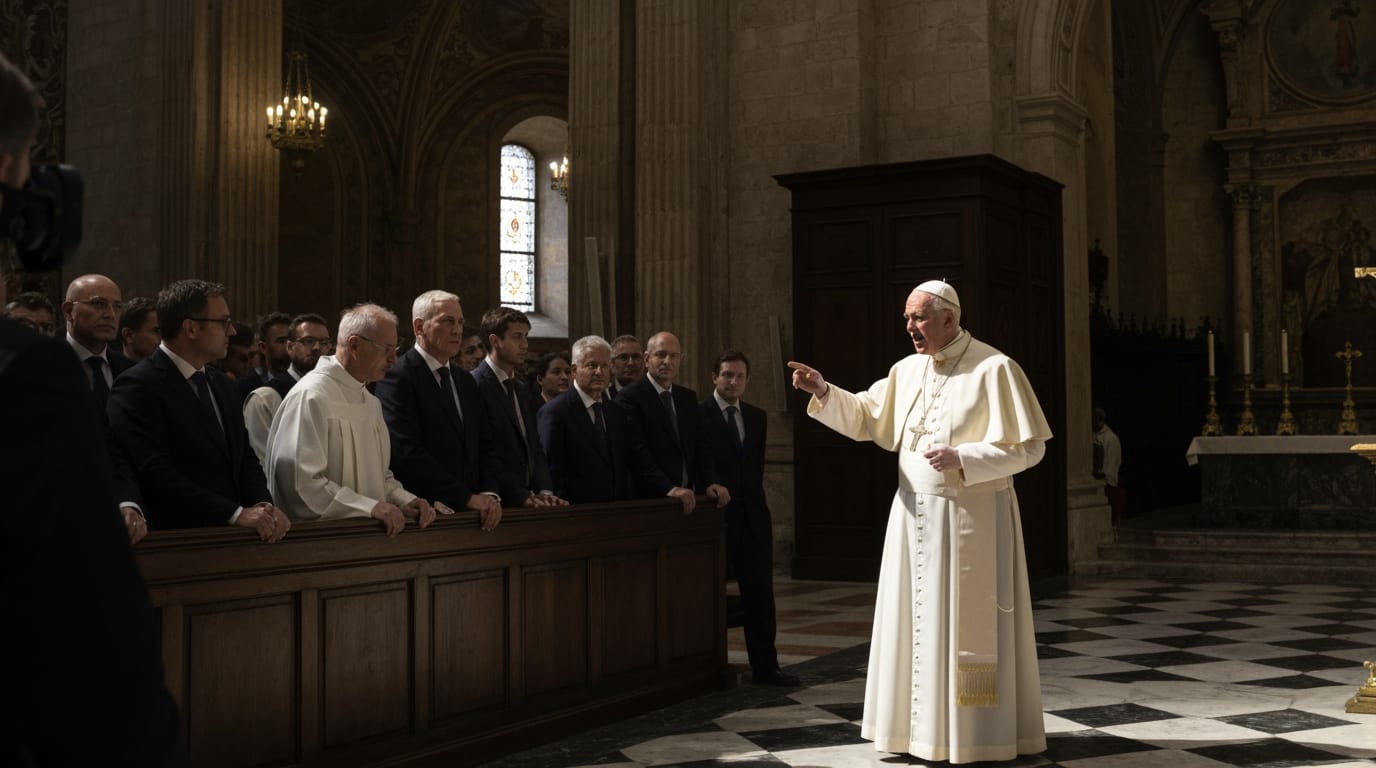
VATICAN CITY – The Catholic Church stands at a critical juncture as Pope Leo XIV has issued a final, urgent appeal to the traditionalist Society of Saint Pius X (SSPX) to halt its planned consecration of four new bishops on July 1. The Vatican has warned that proceeding with the ordinations without papal mandate will result in automatic excommunication for all involved and constitute a formal act of schism, marking the first major doctrinal crisis of Pope Leo XIV's nascent pontificate.
The impending consecrations threaten to deepen a decades-long rift between the Holy See and the SSPX, a group that rejects many of the modernizing reforms of the Second Vatican Council. Despite numerous attempts at reconciliation by successive pontiffs, the society's decision to act unilaterally on such a fundamental matter challenges the very authority of the papacy and the unity of the global Catholic Church.
The Looming July 1 Consecrations and Vatican's Stern Warning
In a move described by Vatican officials as a direct defiance of papal authority, the Society of Saint Pius X is poised to consecrate four priests—Pascal Schreiber of Switzerland, Michael Goldade of the United States, Michel Poinsinet de Sivry of France, and Marc Hanappier, also of France—as bishops on July 1. This action mirrors the 1988 event where the SSPX's founder, Archbishop Marcel Lefebvre, consecrated four bishops against Rome's explicit wishes, leading to his excommunication and that of the newly ordained bishops.
Cardinal Víctor Manuel Fernández, head of the Vatican's Dicastery for the Doctrine of the Faith, has delivered the Holy See's unequivocal message: any episcopal consecration without a pontifical mandate is a "schismatic act" that triggers automatic excommunication under canon law. This penalty applies not only to the four priests being consecrated but also to the bishops performing the rite. The Vatican's warnings have been consistent, emphasizing that such an act is a "grave offense against God" and a severe breach of ecclesial communion.
The SSPX, however, has remained steadfast in its intentions. Reverend Davide Pagliarani, the superior general of the society, rejected the Vatican's offer of dialogue, stating that discussions under the threat of sanctions were incompatible with genuine fraternal exchange. The society contends that the consecrations are essential for its survival, citing the aging of its current bishops and the need to ordain more priests to minister to its growing number of adherents worldwide.
The Deep Roots of Dissent: Vatican II and the Traditionalist Movement
The ideological origins of the current standoff trace back to the Second Vatican Council (1962-1965), a pivotal event that introduced sweeping modernizing reforms to the Catholic Church. These changes included the shift from Latin to vernacular languages in the Mass, new approaches to ecumenism, and declarations on religious freedom. For many traditionalists, these reforms represented a radical departure from established Catholic tradition.
Archbishop Marcel Lefebvre emerged as a prominent critic of Vatican II, founding the Priestly Society of Saint Pius X in Écône, Switzerland, in 1970, specifically to uphold what he considered the authentic traditions of the Church. The SSPX's core grievances revolve around the perceived theological errors of Vatican II, particularly regarding religious liberty, ecumenism, and the collegiality of bishops. They also strongly advocate for the exclusive use of the Tridentine Latin Mass (also known as the Traditional Latin Mass, or TLM), which was largely replaced by the Novus Ordo (new order) Mass after the Council. Concerns over specific liturgical changes, such as the alteration of phrases like "mysterium fidei" and "pro multis" in the consecration, further fuel their rejection of the post-conciliar liturgy.
From the SSPX perspective, the changes implemented after Vatican II constitute a crisis of faith within the Church, arguing that an ecumenical council cannot contradict previous infallible teachings. This conviction forms the bedrock of their continued resistance to full integration with the mainstream Church.
A Protracted History of Reconciliation Attempts and Lingering Irregularity
The relationship between the Holy See and the SSPX has been characterized by a complex series of negotiations, gestures of outreach, and periods of renewed tension. The initial schism in 1988, triggered by Archbishop Lefebvre's unauthorized episcopal consecrations, resulted in the automatic excommunication of Lefebvre and the four bishops he ordained. Pope John Paul II subsequently appealed for their return to full communion, emphasizing the gravity of the schismatic act.
Decades later, Pope Benedict XVI, who himself participated in Vatican II, made significant efforts to heal the rift. In 2007, he issued the motu proprio Summorum Pontificum, which broadly relaxed restrictions on the celebration of the Traditional Latin Mass, aiming to foster "internal reconciliation" within the Church. In 2009, Benedict XVI went further by lifting the excommunications of the four surviving SSPX bishops as an act of mercy, though he clarified that the society still lacked "canonical status within the Catholic Church" and its ministers' authority remained illegitimate in the eyes of Rome.
Pope Francis continued this pastoral approach, granting SSPX priests the faculties to validly hear confessions and witness marriages in 2016 and 2017, respectively. These concessions were seen as significant olive branches, enabling SSPX faithful to receive essential sacraments validly, even while the group's canonical irregularity persisted. However, Pope Francis later took a harder line against traditionalist communities with his 2021 motu proprio Traditionis Custodes, which reimposed restrictions on the Traditional Latin Mass, asserting that Benedict's earlier reform had become a source of division. This move alienated many traditionalist Catholics, with some arguing it inadvertently pushed more faithful towards groups like the SSPX.
Now, under Pope Leo XIV, the cycle of attempted dialogue and looming division appears to be repeating itself. The current Pope has also made efforts to bridge the gap with the SSPX, offering dialogue on doctrinal disagreements. However, the society's unwavering commitment to the July 1 consecrations, coupled with its rejection of dialogue under threat of ecclesiastical penalties, suggests that past reconciliatory efforts have failed to resolve the fundamental disagreements at play.
The Implications of Schism: A Parallel Church and Enduring Divisions
Should the SSPX proceed with the episcopal consecrations, the Vatican's pronouncement of automatic excommunication would formalize a deeper schism. This act would signify a definitive break in communion, meaning those involved are no longer considered part of the Catholic Church. The theological and canonical implications are profound: bishops, chosen by the Pope, are central to the Church's apostolic succession—the unbroken line of authority tracing back to the apostles. Consecrating bishops without papal consent fundamentally undermines this structure and the unity it represents.
The continued growth of the SSPX, with its network of schools, seminaries, and parishes globally, effectively represents a "parallel church" operating outside the direct authority of Rome. While the SSPX maintains that it is not leaving the Catholic Church but rather preserving its authentic traditions, its actions are perceived by the Holy See as direct acts of disobedience that threaten the very fabric of Catholic unity.
The current crisis highlights the persistent tension between the desire for unity within the Church and the strong convictions of traditionalist groups regarding liturgical and doctrinal fidelity. The historical precedent of schism, such as the Great Schism of 1054 which divided the East and West, underscores the lasting impact such breaks can have on the Christian world. While the current situation involves a smaller segment of Catholicism, its symbolic weight is immense.
An Uncertain Future for Catholic Unity
As the Catholic Church approaches the July 1 deadline, the plea from Pope Leo XIV underscores the gravity of the moment. The anticipated consecrations, if they proceed, will undoubtedly solidify the SSPX's irregular status and formalize a break that has been decades in the making. This situation forces a renewed examination of fundamental questions about authority, tradition, and the interpretation of Church teaching in the modern era.
The outcome of this confrontation will have lasting implications not only for the Society of Saint Pius X but also for the broader landscape of traditionalist Catholicism and the Holy See's ongoing efforts to foster unity amidst diverse theological perspectives. While the Vatican has expressed its willingness for dialogue, it has also drawn a firm line against actions that directly challenge papal authority and the unity of the Church. The looming deadline leaves little room for maneuver, and the Catholic world watches as Pope Leo XIV navigates this critical challenge to the very heart of ecclesial communion.


