Supreme Court Upholds Birthright Citizenship, Rebuffing Trump's Executive Order
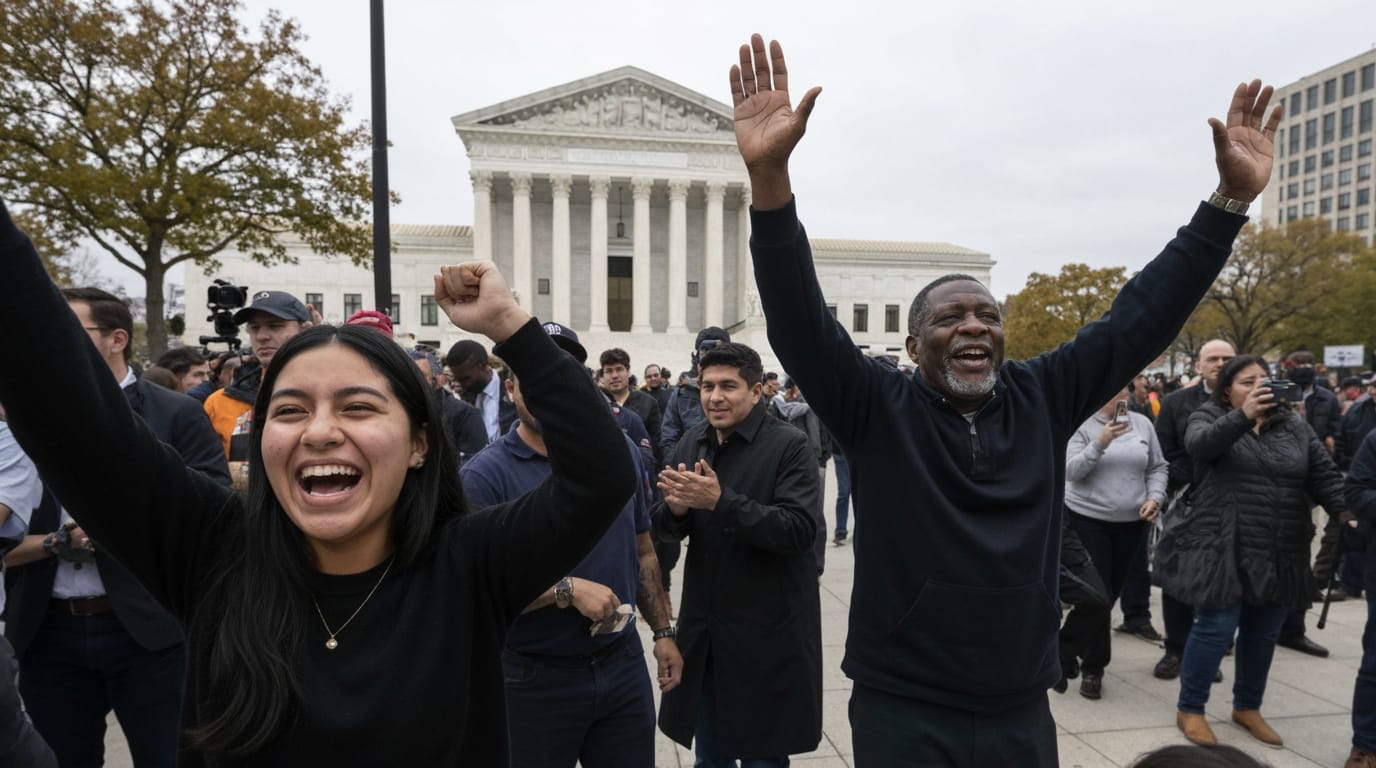
WASHINGTON D.C. – In a resounding affirmation of a cornerstone constitutional principle, the U.S. Supreme Court on Tuesday upheld birthright citizenship, delivering a significant defeat to former President Donald Trump's efforts to curtail the long-standing interpretation of the 14th Amendment. The 6-3 decision rejected an executive order issued by Trump that sought to deny automatic citizenship to children born in the United States to undocumented immigrants or those with temporary legal status. This ruling reinforces over a century of legal precedent and constitutional understanding, ensuring that the principle of jus soli remains a bedrock of American law.
The Court's Decisive Affirmation
The nation's highest court, in a 6-3 vote, struck down President Trump's Executive Order 14160, effectively preserving the right to birthright citizenship for nearly all individuals born on U.S. soil. Chief Justice John Roberts authored the majority opinion, joined by Justices Sonia Sotomayor, Elena Kagan, Amy Coney Barrett, and Ketanji Brown Jackson. Justice Brett Kavanaugh concurred separately, grounding his decision on federal law rather than the specific interpretation of the 14th Amendment's Citizenship Clause. Justices Clarence Thomas, Samuel Alito, and Neil Gorsuch dissented. The Supreme Court's decision directly addressed the constitutionality of Executive Order 14160, which had been signed by Trump on his first day in office in January 2025. The order, titled "Protecting the Meaning and Value of American Citizenship," aimed to redefine how the 14th Amendment's clause "and subject to the jurisdiction thereof" should be interpreted, seeking to exclude children whose parents lacked permanent legal status in the U.S. from automatic citizenship.
Trump's Challenge to Established Law
The executive order issued by former President Trump represented a direct challenge to a legal framework that has been consistently applied for over 150 years. The order specifically sought to prevent children from acquiring U.S. citizenship at birth if their mother was unlawfully present in the U.S., and their father was neither a U.S. citizen nor a lawful permanent resident. It also targeted children of parents in the country on temporary visas, such as those for students, workers, or tourists. President Trump had repeatedly argued that the 14th Amendment's Citizenship Clause had been "misconstrued" and was primarily intended to grant citizenship to formerly enslaved people and their descendants, not to children of undocumented immigrants. His administration contended that the phrase "subject to the jurisdiction thereof" implied an allegiance or permanent domicile, which, in their view, excluded the children of non-citizens.
This executive action immediately triggered a wave of legal challenges from civil liberties organizations and other advocacy groups. Lawsuits filed by organizations such as the American Civil Liberties Union (ACLU) and the Asian Law Caucus argued that the order was unconstitutional and exceeded presidential authority. Federal courts across the country, including in New Hampshire, Washington, Massachusetts, and Maryland, issued injunctions that blocked the enforcement of the order, preventing it from ever taking effect. These preliminary rulings set the stage for the ultimate review by the Supreme Court, highlighting the deep legal and political divide surrounding the issue.
The 14th Amendment and the Wong Kim Ark Precedent
The principle of birthright citizenship in the United States is enshrined in the first sentence of the 14th Amendment to the Constitution, ratified in 1868. It states: "All persons born or naturalized in the United States, and subject to the jurisdiction thereof, are citizens of the United States and of the State wherein they reside." This amendment was a direct response to the 1857 Dred Scott v. Sandford Supreme Court decision, which had denied citizenship to Black Americans. Its primary purpose was to ensure citizenship for formerly enslaved individuals and to establish a clear, non-discriminatory standard for who belonged to the nation.
The scope of the 14th Amendment's Citizenship Clause was definitively clarified by the Supreme Court in the landmark 1898 case, United States v. Wong Kim Ark. Wong Kim Ark was born in San Francisco to Chinese immigrant parents and, after a trip abroad, was denied re-entry into the U.S. on the grounds that he was not a citizen. The Supreme Court ruled 6-2 that Wong Kim Ark was indeed a U.S. citizen by virtue of his birth on American soil. This decision firmly established that the phrase "subject to the jurisdiction thereof" referred to individuals not under the jurisdiction of a foreign power (like diplomats or invading armies) and thus confirmed the principle of jus soli, or "right of the soil," for virtually everyone born in the United States, regardless of their parents' immigration status. The Wong Kim Ark ruling has since served as the foundational legal precedent for birthright citizenship for over a century.
Broader Implications and Enduring Significance
The Supreme Court's ruling today carries profound implications, reaffirming a policy that has shaped American society and identity for generations. Birthright citizenship serves as a vital mechanism for preventing statelessness, ensuring that children born within U.S. borders are not left without a national belonging or legal rights. Legal experts had warned that overturning this principle could create a vulnerable, multi-tiered society, leaving hundreds of thousands of children without essential rights to work, attend school, or establish a domicile. For instance, in 2016 alone, approximately 250,000 babies, or 6% of total births, were born to undocumented immigrants in the U.S.
This decision underscores the enduring power of the U.S. Constitution and the Supreme Court's role in interpreting and upholding its core tenets, even in the face of significant political pressure. The outcome ensures that a fundamental aspect of American identity – that anyone born here belongs here – remains intact, safeguarding the rights of countless individuals and maintaining a long-established legal and social order. While debates surrounding immigration policy are likely to continue, the Supreme Court's affirmation of birthright citizenship solidifies its place as a bedrock principle of American law.


