India Withdraws Bid to Host COP33, Signals Shift in Climate Diplomacy
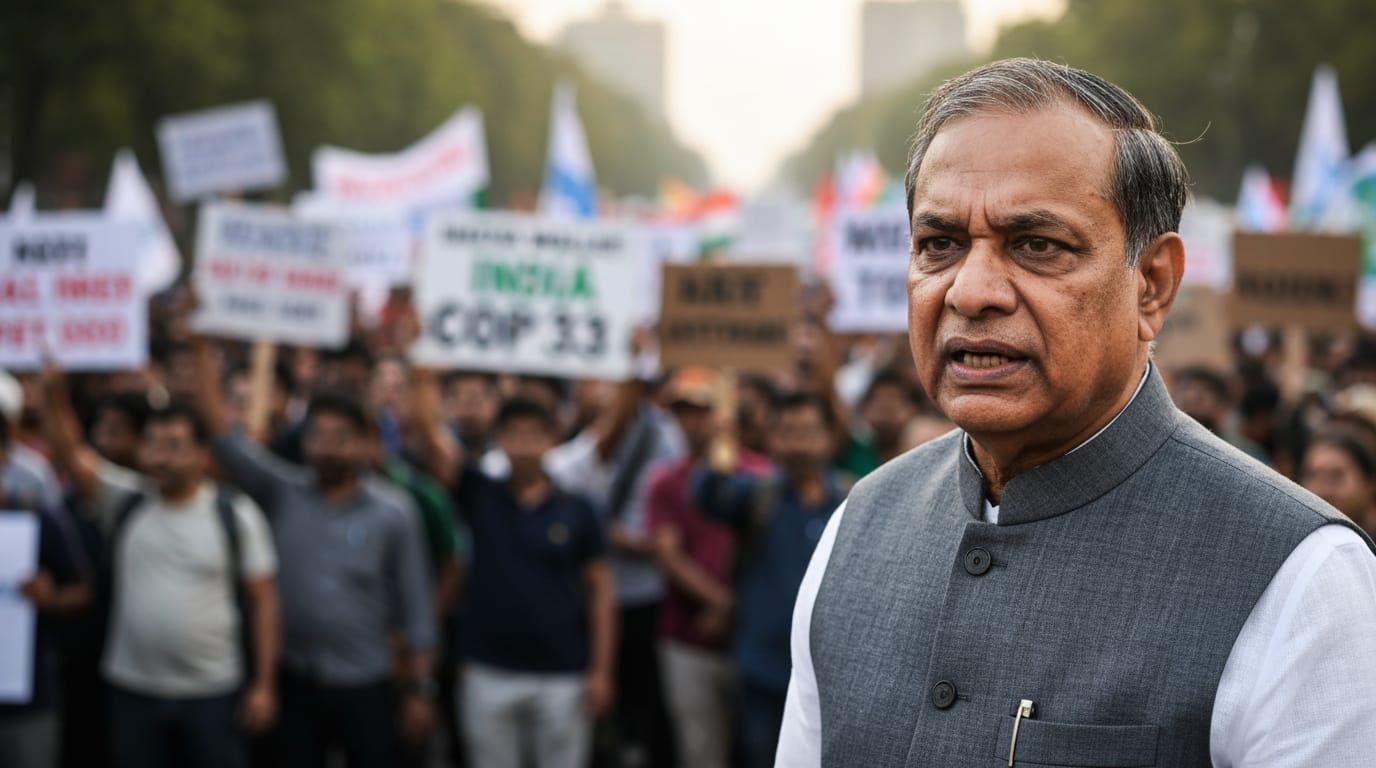
New Delhi, India – India has discreetly rescinded its offer to host the 33rd Conference of Parties (COP33) to the United Nations Framework Convention on Climate Change (UNFCCC) in 2028, a decision communicated to international partners on April 2, 2026. The move, coming barely four months after Prime Minister Narendra Modi publicly announced India's intent at COP28 in Dubai, has ignited widespread discussion within diplomatic and environmental circles regarding India's evolving climate strategy and its broader geopolitical priorities. While the official reason cited for the withdrawal was a "review of its commitments for the year 2028", a deeper analysis suggests a complex interplay of national interest, financial considerations, and the inherent challenges of leading global climate negotiations.
The Ambitious Bid and Its Quiet Retreat
India's initial proposal to host COP33 was a bold statement on the global stage. Prime Minister Modi, speaking at COP28 in December 2023, offered India as the host for the prestigious climate summit in 2028, signaling the nation's ambition to play a leading role in shaping global climate action. This bid garnered international support, notably receiving a welcome from the BRICS group of nations in July 2025. Demonstrating its commitment, the Indian government even established a dedicated "cell" within the Ministry of Environment, Forest and Climate Change to manage the extensive professional and logistical requirements of such a large-scale international event.
However, the enthusiasm that characterized the initial bid appears to have waned. On April 2, 2026, an Indian official informed other nations of the decision to withdraw, providing no further public explanation beyond the general reference to a review of 2028 commitments. The Indian government has yet to make a formal public announcement regarding the withdrawal, with the news first being reported by Climate Home News. This quiet retreat from a prominent global role has left many questioning the underlying motivations behind India's change of heart.
Navigating the Crossroads: National Interest vs. Global Mandate
At the core of India's decision appears to be a recalibration of its stance on global climate leadership, particularly concerning the potential conflicts between international expectations and domestic imperatives. Hosting a COP summit entails significant responsibilities, including the expectation to champion global climate action and facilitate consensus among nearly 200 nations. As the host and president, India would have been tasked with steering negotiations and potentially making compromises that could clash with its own evolving climate positions and national development goals.
A key factor contributing to this reconsideration is the looming second Global Stocktake (GST) scheduled for COP33. The GST is a critical mechanism under the Paris Agreement designed to assess global progress toward limiting temperature rise and is expected to place increased scrutiny on countries' climate actions. There was a growing realization within the government that hosting COP33, and thereby overseeing the GST process, could intensify international pressure on India to adopt more ambitious emission reduction targets. India recently updated its Nationally Determined Contributions (NDCs) for 2031-2035, committing to a 47% reduction in emissions intensity from 2005 levels, a 60% share of installed clean electricity capacity, and the creation of a 3.5 to 4.0 billion tonne CO2 equivalent carbon sink through forest and tree cover. However, the nation remains cautious about pledging even stricter targets without assured financial and technological backing from developed countries.
The Unmet Promise of Climate Finance and Geopolitical Realities
Frustration over the slow pace and inadequacy of climate finance from developed nations also emerges as a significant, albeit unstated, reason for India's withdrawal. For years, India has been a vocal proponent of the "Common But Differentiated Responsibilities and Respective Capabilities" (CBDR-RC) principle, emphasizing that developed countries, with their historical contributions to emissions, bear a greater responsibility to provide financial and technological support to developing nations. Despite the longstanding commitment by wealthy nations to mobilize $100 billion annually for climate action in developing countries, access to these funds has remained limited and challenging. Hosting a COP, without sufficient climate finance commitments, could have positioned India to shoulder the financial burden of climate action without adequate international support.
Furthermore, the evolving global geopolitical landscape and heightened concerns over energy security have likely influenced India's decision. Recent global conflicts, such as the West Asia war, have underscored the vulnerability of energy supplies and led many nations, including India, to prioritize short-term energy security, often through traditional fuels. Rising global oil prices and their impact on inflation and economic growth have further accentuated the need for stable and affordable energy, leading to a strategic shift in India's focus towards practical energy solutions and internal development. This involves expanding renewable energy capacity while maintaining a balanced energy mix, including coal and nuclear power, to ensure national resilience. The logistical demands of hosting a large-scale event like COP, which typically involves up to 75,000 participants and extends over two weeks, might also have been deemed an excessive strain on resources and government focus, especially with other "big-ticket" domestic events potentially planned around 2028, such as the Commonwealth Games in Ahmedabad in 2030.
Implications for Global Climate Governance and India's Path Forward
India's withdrawal from the COP33 hosting bid carries significant implications for both its own climate leadership and the broader landscape of global climate governance. Many climate experts view this as a "strategic missed opportunity" for India to showcase its rapid strides in renewable energy, electric mobility, and other climate initiatives on an international platform. It also represents a forfeited chance to champion the concerns of the Global South and demand greater accountability from developed nations regarding historical emissions and climate finance.
However, some analysts suggest that the decision allows India greater strategic flexibility in international climate negotiations. By not being the host, India can avoid the pressure to dilute its own positions to forge consensus and can prioritize its domestic development needs and energy security without being constrained by the demands of a global summit. The withdrawal also creates uncertainty regarding the next host for COP33, which, according to the UN's rotational system, is designated for a country within the Asia-Pacific group. South Korea has expressed some interest, but its national government has not formally bid, citing potential conflicts with its plans to host the G20 Summit in 2028.
Despite the withdrawal, India maintains that it will continue to engage constructively with the international community on climate action. Its updated NDCs reflect ongoing commitments to reducing emissions intensity, increasing clean energy capacity, and expanding carbon sinks. The government is also prioritizing on-the-ground projects, such as rooftop solar expansion and green hydrogen missions, focusing on practical implementation rather than solely on global negotiations. India's last time hosting a COP was in 2002, with COP8 held in New Delhi.
In conclusion, India's decision to withdraw its bid to host COP33 in 2028 marks a pivotal moment in its climate diplomacy. It underscores a strategic recalibration, prioritizing a pragmatic approach that balances international climate aspirations with pressing domestic developmental needs, energy security concerns, and the complexities of global geopolitics. While the move has sparked debate and questions about India's future role in global climate leadership, it ultimately reflects a nation charting a course that it believes best serves its national interests amidst an increasingly challenging global environment. The international community now faces the task of identifying a new host for COP33, as the dynamics of climate negotiations continue to evolve.


