India's Parliament Grapples with Women's Quota and Contentious Delimitation Bills
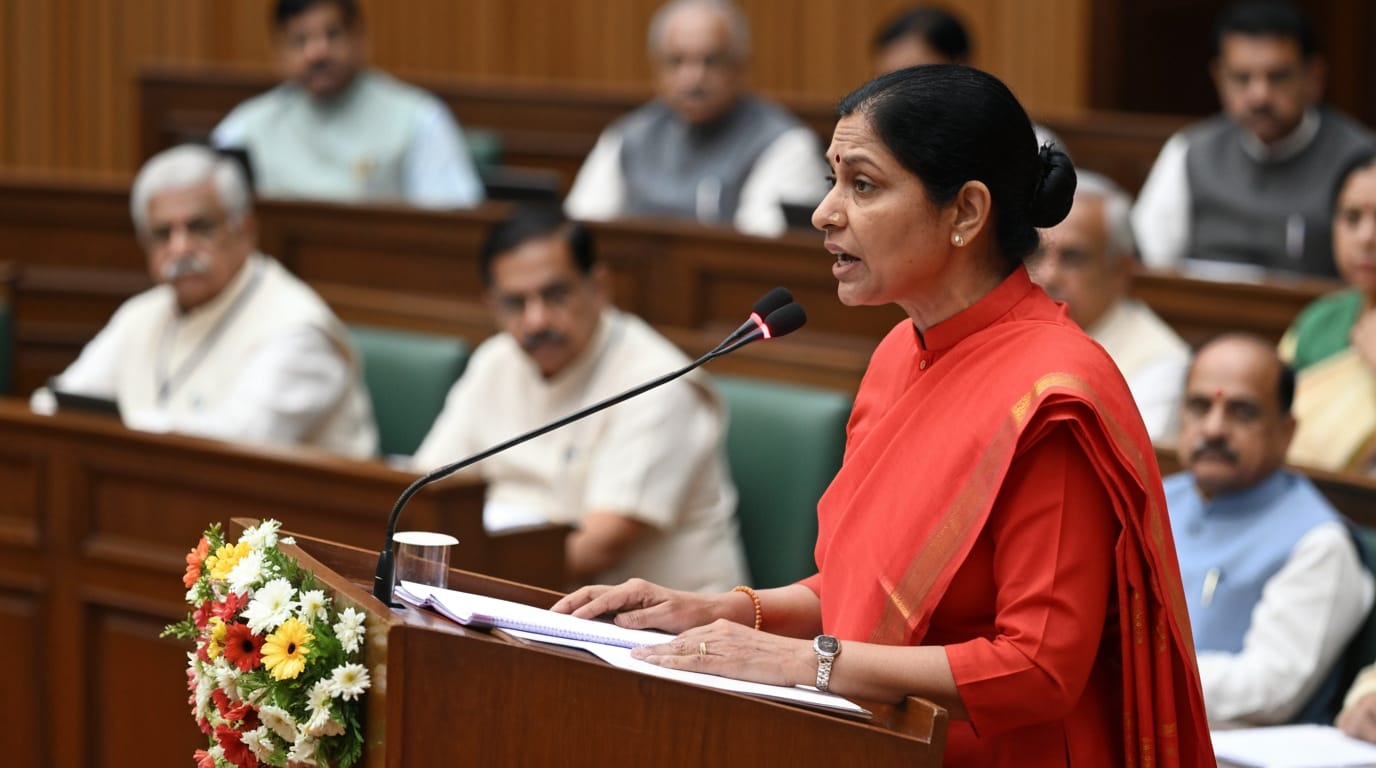
New Delhi, India – India's Parliament is currently witnessing a high-stakes legislative battle as it debates and votes on a series of critical bills aimed at operationalizing the long-awaited women's reservation in legislative bodies, alongside a controversial redrawing of electoral constituencies. While the government champions these measures as a landmark step towards gender equality, the opposition has unleashed sharp criticism, accusing the ruling party of strategically coupling a widely supported women's quota with a contentious delimitation exercise that could reshape India's political landscape and federal balance.
Reviving a Landmark Promise: The Women's Reservation Act
The current parliamentary session builds upon the Nari Shakti Vandan Adhiniyam, officially known as the Constitution (One Hundred and Sixth Amendment) Act, 2023. Passed with overwhelming consensus in September 2023, this historic legislation mandates a 33% reservation for women in the Lok Sabha (the lower house of Parliament), State Legislative Assemblies, and the Delhi Assembly. The Act also includes a crucial sub-reservation for women belonging to Scheduled Castes (SC) and Scheduled Tribes (ST) within this quota, ensuring representation for marginalized communities. Lauded as a significant stride towards greater political inclusion for women, who currently hold approximately 13.6% of seats in the Lok Sabha, the 2023 law was notified on April 16, 2026, officially bringing it into force. However, its actual implementation remained contingent on a complex process: a delimitation exercise conducted after the first census following the Act's enactment, which was initially projected to be after 2026. This linkage meant the quota's enforcement would likely be delayed until 2029 or later, sparking immediate concerns among advocates for women's representation.
The New Legislative Push and its Mechanisms
To address the implementation timeline and the existing constitutional freeze on delimitation (based on the 1971 census until after 2026), the government has introduced a new legislative package currently under intense scrutiny. This package comprises the Constitution (One Hundred and Thirty-First Amendment) Bill, 2026, the Delimitation Bill, 2026, and the Union Territories Laws (Amendment) Bill, 2026. These new bills aim to amend the 2023 Act, potentially delinking the delimitation process from the earlier post-2026 census mandate. Instead, the proposed changes suggest using the 2011 Census data for the upcoming delimitation exercise. A key provision of the Constitution (131st Amendment) Bill, 2026, is the significant expansion of the Lok Sabha's strength, proposing to increase the number of seats from the current 543 to as many as 850. This expansion, according to the government, is necessary to accommodate the 33% women's reservation without reducing the existing seats of general candidates, thereby minimizing political resistance. Union Law Minister Arjun Ram Meghwal indicated that an expanded Lok Sabha of 815 seats would result in 272 seats reserved for women. The Lok Sabha recently voted 251 in favor and 185 against the introduction of these bills, signaling a divided house even at this initial stage.
The Deepening Divide: Opposition's Fierce Objections
Despite bipartisan support for the principle of women's reservation, the government's approach to its implementation has ignited a fierce political row, with opposition parties raising substantial concerns about the implications of linking the quota to delimitation and parliamentary expansion. A primary objection revolves around the perceived strategic timing and the bundling of a popular reform with a complex and potentially contentious exercise. Critics, such as senior Congress leader Shashi Tharoor, have dubbed the delimitation proposal "political demonetisation," arguing it holds women's aspirations hostage to an administratively intricate process.
A major point of contention stems from the potential impact on federal balance and the representation of southern states. Opposition leaders, including Tamil Nadu Chief Minister M.K. Stalin and other members of the INDIA bloc, fear that a delimitation exercise based on updated population data could disproportionately increase the number of seats in northern states, which have seen higher population growth, at the expense of southern states that have successfully implemented population control measures. This, they argue, would reduce the political voice and representation of the southern states in Parliament.
Furthermore, the absence of a sub-quota for women belonging to Other Backward Classes (OBCs) within the reservation framework continues to be a significant demand from several opposition parties, including the Samajwadi Party (SP), Rashtriya Janata Dal (RJD), and All India Majlis-e-Ittehadul Muslimeen (AIMIM). AIMIM chief Asaduddin Owaisi notably voted against the 2023 bill due to the lack of reservation for OBC and Muslim women. Opposition members also advocate for the immediate implementation of the women's quota, contending that it could be introduced based on the current strength of the Lok Sabha without requiring a new delimitation exercise.
A Decades-Old Dream, a Future in Flux
The journey toward women's reservation in India's Parliament has been a protracted one, marked by multiple attempts and setbacks over three decades. The idea was first formally introduced in 1996 and subsequently faced at least six unsuccessful attempts to pass, often lapsing due to political hurdles and a lack of consensus. Even in 2010, a version of the bill passed the Rajya Sabha but failed to clear the Lok Sabha, reflecting the complex political dynamics surrounding such a transformative measure. In contrast, reservations for women in Panchayati Raj Institutions (local self-governance bodies) have been in place since 1992-93, demonstrating the feasibility of such quotas at the grassroots level.
The current debate highlights the enduring gap in women's political representation at the national and state levels, with women constituting less than 15% of legislators. The proposed legislation, if fully implemented, holds the potential to significantly alter the power dynamics within Indian politics, fostering greater gender parity and bringing diverse perspectives to policymaking. However, the path forward remains intricate. The ongoing parliamentary deliberations underscore the tension between the aspirational goal of women's empowerment and the intricate realities of federal representation, demographic shifts, and political maneuvering.
The outcome of the current parliamentary session will not only determine the immediate future of women's reservation but also set a precedent for how India navigates complex constitutional amendments and balances competing regional and demographic interests. As the nation watches, the hope for a more inclusive democracy hangs in the balance, contingent on the resolution of these deeply entrenched political and structural challenges.


