India's Passport Policy: A Travel Document, Not Conclusive Proof of Citizenship, Ministry Clarifies
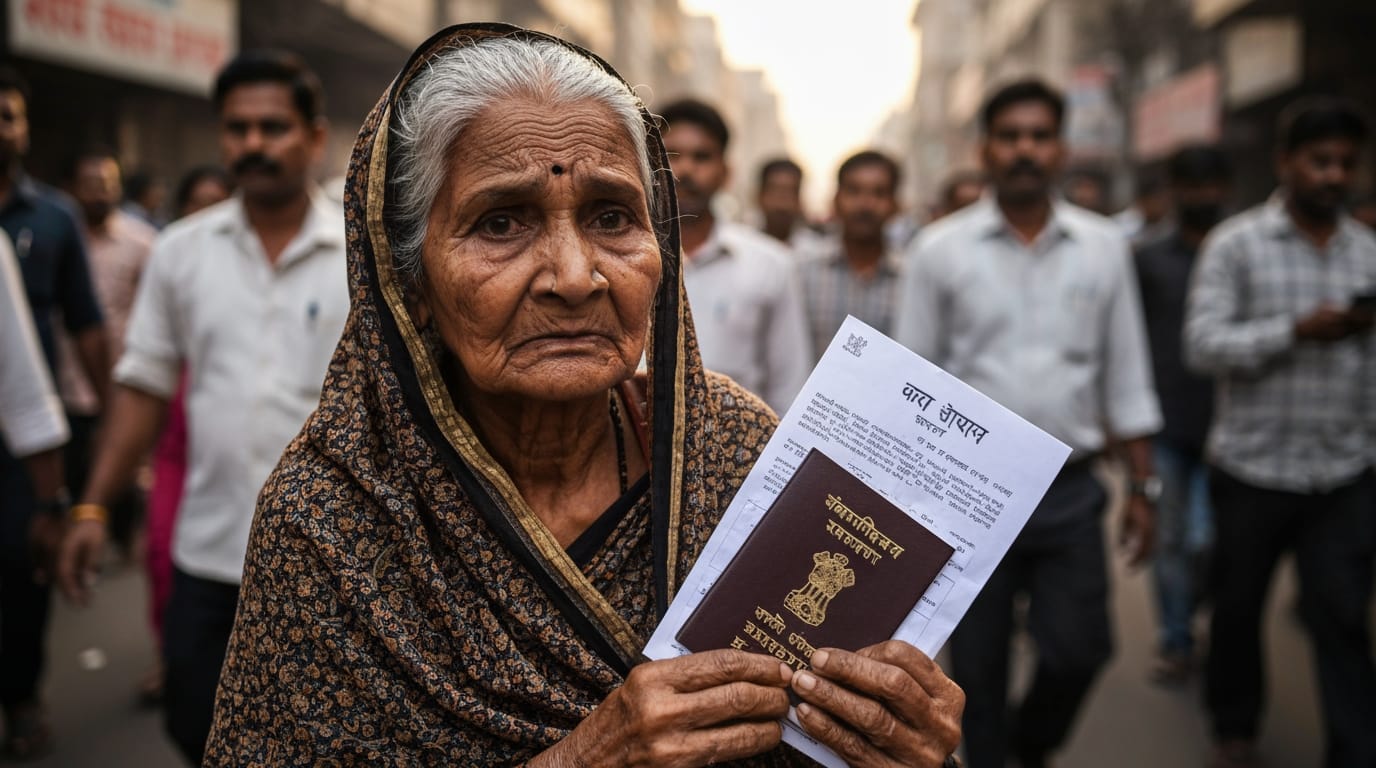
NEW DELHI – The Ministry of External Affairs (MEA) has ignited a significant nationwide discourse after clarifying that an Indian passport, while an essential international travel document, does not serve as conclusive proof of citizenship. The statement, made on the occasion of the 14th Passport Seva Divas, has quickly cascaded into widespread social media debate and prompted political leaders to question the established understanding of identity documents in the country. The ministry's position, however, is presented not as a new policy, but as a reaffirmation of a long-standing legal and administrative stance, drawing attention to the intricate layers of Indian citizenship laws.
The clarification by the MEA, delivered on Wednesday, June 24, 2026, underscored the primary function of a passport: to facilitate international travel and verify identity abroad. Officials emphasized that despite passports being issued exclusively to Indian citizens, the document itself remains the property of the Government of India. This distinction is crucial, as the ministry highlighted that the mere possession of a passport does not, by itself, determine or conclusively establish an individual's citizenship status within the country. The government pointed to Section 20 of the Passports Act, 1967, which stipulates that the Centre possesses the authority to issue a passport or travel document even to non-citizens under specific circumstances deemed necessary in the public interest. This legal provision reinforces the argument that a passport's issuance does not inherently confer citizenship. Furthermore, officials cited previous judicial rulings, including a 2013 judgment by the Bombay High Court, which similarly held that a passport cannot be considered conclusive proof of citizenship on its own.
This recent clarification from the MEA aligns with a broader pattern of government pronouncements regarding the evidentiary value of various identity documents. In past instances, the Supreme Court has reiterated that an Aadhaar card serves primarily as proof of identity and is not conclusive evidence of citizenship. Similarly, a voter identity card is recognized as a document for electoral participation and proof of residence rather than definitive proof of citizenship. The government's consistent stance underscores the complexity involved in establishing citizenship, which, according to officials, relies on a combination of documents and adheres to the provisions of the Citizenship Act, 1955. This legal framework outlines how citizenship by birth is determined: individuals born in India between January 26, 1950, and July 1, 1987, are considered citizens by birth; for those born between July 1, 1987, and December 2, 2004, at least one parent must be an Indian citizen; and for individuals born on or after December 3, 2004, both parents must be Indian citizens, or one must be a citizen and the other not an illegal immigrant at the time of birth.
The MEA's declaration quickly sparked a robust debate across social media platforms and drew sharp criticism from opposition leaders. Many users on platforms like X (formerly Twitter) expressed confusion and concern, questioning what documents would then be considered definitive proof of Indian citizenship if the widely recognized passport no longer held that status. Rajya Sabha MP Kapil Sibal, among others, voiced apprehension about the potential implications for voter rights and the general populace if the evidentiary weight of a passport were diminished. The debate highlighted a palpable public desire for clarity on the mechanisms for proving citizenship in a nation with a vast and diverse population. In response to the political and public outcry, government sources quickly moved to quell concerns, asserting that the statement did not signify a new policy shift but rather a reiteration of a long-established legal position. Officials maintained that there has been no change in policy regarding the evidentiary value of passports for at least the past 12 years.
Beyond the legal and political ramifications, the ministry's clarification carries significant practical implications for millions of Indian citizens. For many, a passport has often been considered one of the most reliable and universally accepted forms of identification, often used for various official purposes where proof of citizenship might be implicitly required. The government's emphasis that citizenship is determined under the Citizenship Act, 1955, and supported by a range of documents—including birth records, school certificates, electoral rolls, and land records—suggests that individuals may need to maintain a comprehensive portfolio of official papers to substantiate their claim to citizenship. While a passport can undoubtedly support such a claim, it is now explicitly stated not to be the sole or conclusive determinant. This nuance could influence how individuals approach document management and preparation, especially in scenarios requiring stringent proof of nationality.
In conclusion, the Ministry of External Affairs' recent clarification regarding the non-conclusive nature of passports as proof of citizenship has effectively opened a national conversation on the fundamental aspects of Indian identity and documentation. While the government maintains this is a long-standing legal position, the timing of the announcement and the subsequent social media and political reactions underscore the public's desire for unequivocal guidelines on what constitutes definitive proof of citizenship. As India navigates complex questions of identity and belonging, the debate serves as a crucial reminder of the multi-faceted legal framework that underpins citizenship in the country, encouraging citizens to understand the comprehensive set of documents required to establish their nationality.


