India's Strategic Gambit: The Nicobar Islands Emerge as a Geopolitical Linchpin Against China

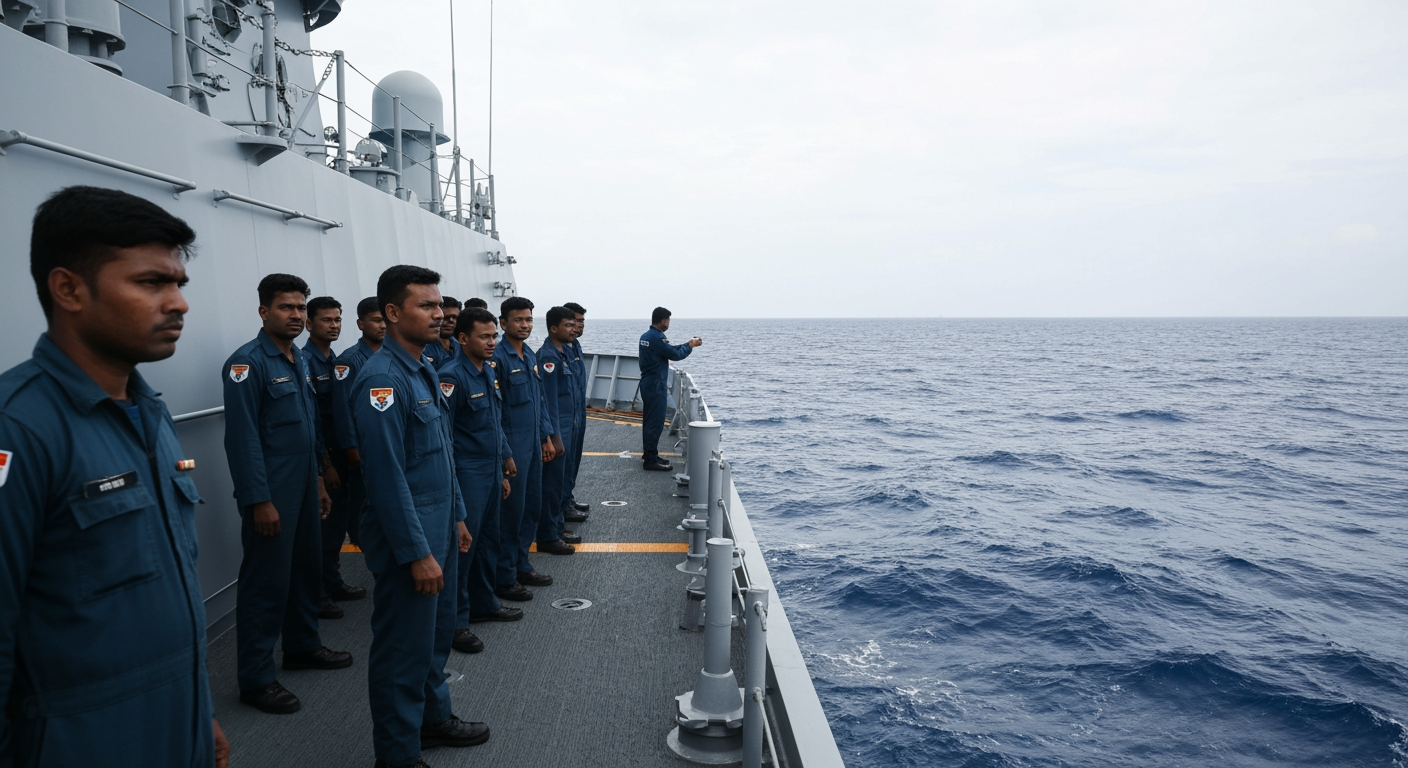
Great Nicobar Island, India – In a bold strategic maneuver with profound geopolitical implications, India is rapidly transforming its remote Nicobar Islands, particularly Great Nicobar, into a formidable commercial and military hub. This ambitious undertaking, spearheaded by the multi-crore Great Nicobar Project, is set to significantly bolster India's power projection capabilities in the Indo-Pacific, directly challenging China's burgeoning influence in the vital Indian Ocean region. The island chain's strategic location, dominating critical global shipping lanes, positions it as a crucial counterpoint to Beijing's "String of Pearls" strategy and its "Malacca dilemma."
At the heart of this transformation is the Great Nicobar Project, an approximately ₹81,000 crore (about $10 billion) initiative that includes the development of an International Container Transshipment Terminal (ICTT) at Galathea Bay, a dual-use greenfield international airport, a power plant, and a township. This comprehensive infrastructure development aims to leverage the island's unparalleled geographic advantage, positioning it as an "unsinkable aircraft carrier" for India. The strategic imperative driving this massive investment is clear: to secure India's maritime interests, enhance regional stability, and exert influence over one of the world's most critical maritime chokepoints, the Malacca Strait.
The Strategic Jewel: Location and Global Significance
The Nicobar Islands, an archipelago of 22 islands, lie approximately 1,300 kilometers southeast of mainland India but are remarkably close to Southeast Asia, with Great Nicobar situated just 40 to 150 kilometers from the western entrance of the Malacca Strait. This narrow waterway is an indispensable artery for global commerce, facilitating the passage of 30% to 40% of the world's trade and a staggering 75% to 80% of China's energy imports. The islands also offer a vantage point to monitor the Sunda and Lombok Straits, further amplifying India's surveillance capabilities across the eastern Indian Ocean.
Controlling access to or maintaining a strong presence near such chokepoints significantly enhances strategic leverage and maritime security. For India, the Nicobar Islands are not merely an outpost; they represent a natural strategic advantage in the eastern Indian Ocean, serving as a gateway to Southeast and East Asia. The ongoing development is set to transform Great Nicobar into a strategic maritime and economic hub, strengthening India's presence in the Andaman Sea and providing a critical bulwark against emerging threats.
India's Bolstered Military Presence and Dual-Use Infrastructure
India's commitment to fortifying its position in the Nicobar Islands is evident in its long-standing military presence. The Andaman & Nicobar Command (ANC), established in 2001, is India's only integrated tri-services command, combining elements of the Army, Navy, Air Force, and Coast Guard under a single unified structure. This command was specifically created to safeguard India's strategic interests in Southeast Asia and the Strait of Malacca, enabling rapid deployment of military assets.
The Great Nicobar Project will significantly enhance the ANC's capabilities. The planned greenfield airport will serve both civilian and military flights, featuring two runways capable of accommodating large aircraft. This dual-use facility, along with the deep-water transshipment terminal at Galathea Bay, will allow India to position ships, aircraft, and drones closer to vital maritime routes. Such infrastructure upgrades will boost surveillance, deterrence, and rapid response capabilities, providing logistical and administrative support to naval vessels operating in the region. Existing airfields across the archipelago, including those in Sri Vijaya Puram (formerly Port Blair) and the southernmost air station INS Baaz at Campbell Bay, are also undergoing upgrades to accommodate larger aircraft and fighter squadrons.
Countering China's "String of Pearls" and "Malacca Dilemma"
The development in the Nicobar Islands is a direct and strategic response to China's expansive maritime ambitions, often characterized by its "String of Pearls" strategy. This refers to China's increasing efforts to develop and expand ports and naval bases across the Indian Ocean region, from the Strait of Malacca to the Horn of Africa, including Gwadar in Pakistan, Hambantota in Sri Lanka, and Djibouti. China's objective is to secure vital energy imports and enhance its maritime influence by encircling India and establishing strategic access along key sea lanes.
India's Great Nicobar Project directly counters this strategy by strengthening its own forward position in the eastern Indian Ocean. By building a major port and dual-use airport so close to the Malacca Strait, India gains the ability to monitor, influence, and potentially control access to this critical waterway. This move leverages what is often termed China's "Malacca dilemma" – its significant strategic vulnerability due to the heavy reliance of its energy imports and trade on this single chokepoint. In a crisis, India's enhanced capabilities could pose a substantial challenge to China's maritime logistics, complicating its naval strategy in the Indo-Pacific.
Economic Vision and Environmental Considerations
Beyond its military significance, the Great Nicobar Project also carries a substantial economic vision. The International Container Transshipment Terminal (ICTT) at Galathea Bay aims to transform India into a leading maritime power by reducing its reliance on foreign transshipment hubs like Singapore, Colombo, and Dubai. This terminal is projected to handle 4 million Twenty-Foot Equivalent Units (TEUs) by 2028, with a full capacity of 16 million TEUs, making it one of Asia's largest ports. The project is expected to attract global shipping traffic, generate revenue, and create jobs, thereby boosting economic activity and connectivity in the region. It aligns with India's "Act East" policy and its broader Indo-Pacific strategy, promoting trade and deeper partnerships with Southeast Asian countries.
However, this ambitious development is not without its challenges. The project involves the diversion of approximately 130 square kilometers of forest land, representing about 1.82% of the island's forest cover, and the felling of close to a million trees. Concerns have also been raised regarding the potential impact on the island's unique biodiversity and indigenous communities, specifically the Shompen and Nicobarese peoples. Authorities assert that the development follows a regulated environmental framework, with clearances and compensatory afforestation plans in place, and no displacement proposed for indigenous communities.
Conclusion: A New Chapter in Indo-Pacific Geopolitics
India's strategic gamble in the Nicobar Islands marks a pivotal moment in the evolving power dynamics of the Indo-Pacific. By developing Great Nicobar into a formidable commercial and military outpost, India is not merely protecting its own maritime security but is actively shaping the regional geopolitical landscape. This project, with its dual-use infrastructure and enhanced military capabilities, positions India to effectively monitor, influence, and potentially control vital sea lanes. It serves as a potent counter-strategy to China's growing footprint in the Indian Ocean, signaling India's firm resolve to assert its role as a net security provider and a significant player in the Indo-Pacific. The remote Nicobar Islands, once a distant frontier, are now at the forefront of a grand strategic game, underscoring their irreplaceable value in India's quest for regional power and position.
Related Articles


Mounting Frustration Grips Russia as Economic Hardship and War's Toll Deepen
Moscow, Russia – A palpable shift in public sentiment is emerging across Russia, with growing frustration among citizens fueled by a confluence of economic pressures, increasing internet restrictions, and the undeniable...


Germany's Strategic Calculus: Ukraine Aid is an Investment in European Security, Not Charity
Berlin – The ongoing provision of substantial aid to Ukraine by Germany and its allies is increasingly being framed not as an act of altruism, but as a crucial investment in European security and stability. This...