Indonesian Islanders Take Cement Giant Holcim to Swiss Court in Landmark Climate Case
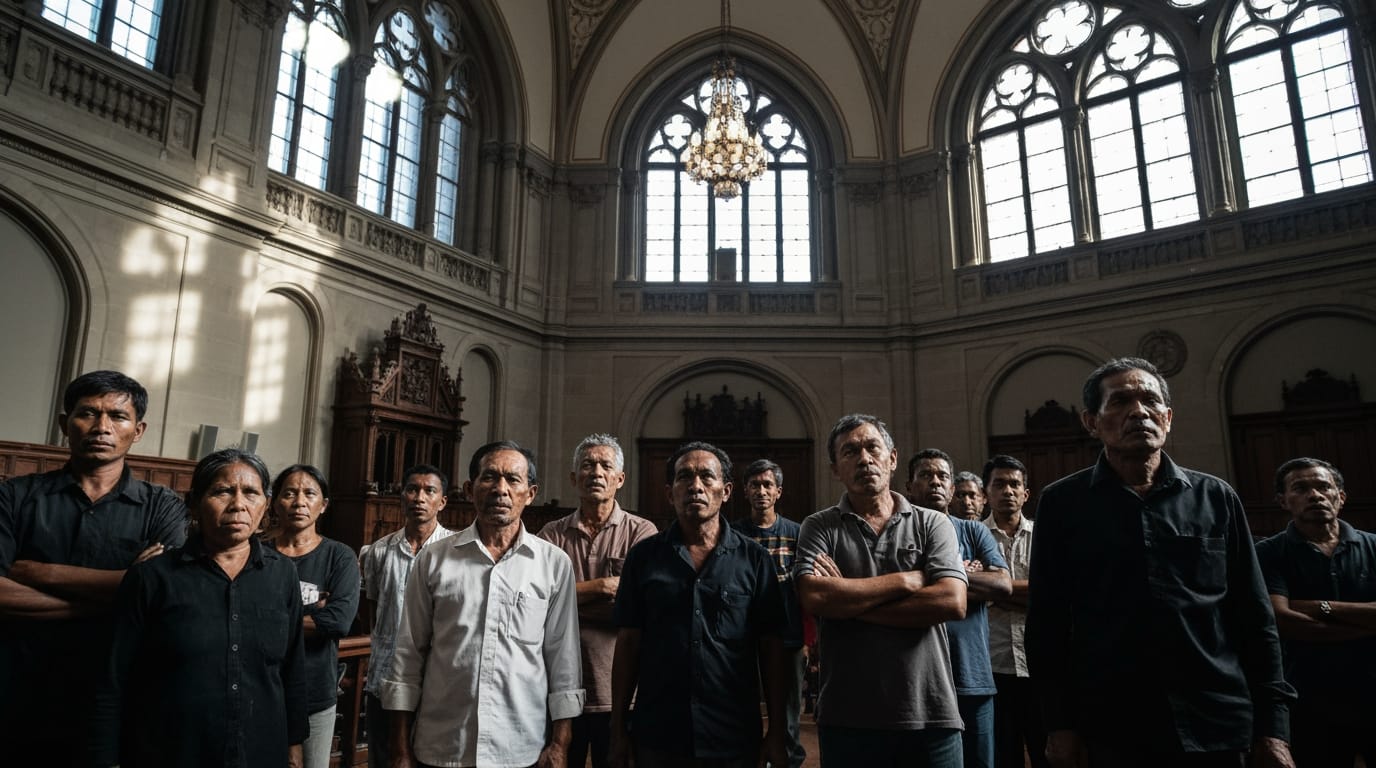
GENEVA – In a legal battle poised to redefine corporate climate responsibility, a small group of Indonesian islanders is confronting Swiss cement titan Holcim in a Swiss court, seeking compensation for climate change damages and demanding drastic cuts to the company's carbon emissions. The unprecedented civil lawsuit, initiated by four residents of the low-lying Pulau Pari, marks a critical moment in the global movement for climate justice, as it is believed to be the first major climate damages claim against a cement company and the first by Indonesian citizens against a foreign corporation for climate-related harm in Switzerland.
The case, which saw a preliminary hearing on August 31, 2025, in Zug, Switzerland, where Holcim is headquartered, centers on the devastating impacts of rising sea levels and intensified flooding on Pulau Pari, an island whose very existence is threatened by global warming. The plaintiffs, Arif Pujianto, Asmania, Edi Mulyono, and Bobby, assert that Holcim, as one of the world's largest CO2 emitters, bears a direct and proportionate responsibility for the destruction of their homes and livelihoods.
Pulau Pari: A Community on the Front Lines of Climate Change
Pulau Pari, a small island located approximately 40 kilometers north of Jakarta, Indonesia, epitomizes the vulnerability of coastal communities to climate change. With an average elevation of just 1.5 meters above sea level, the island has experienced a dramatic increase in saltwater floods in recent years, battering homes, contaminating freshwater wells, and damaging critical infrastructure and ecosystems. Reports indicate that the island has lost 11% of its surface area over the past decade, with environmentalists projecting that a significant portion, potentially most of its 42 hectares, could be submerged by 2050 if current trends continue.
The plaintiffs vividly describe the personal toll of these changes. Arif Pujianto, a fisherman, recounted his home being flooded for over 24 hours in 2018, leading to contaminated drinking water and rusted belongings, forcing him and his family to temporarily abandon their property. Edi Mulyono, another claimant, saw his guesthouse revenue significantly diminish after extensive flooding in 2021. These experiences, common among the island's 1,500 residents, underscore a profound injustice: communities that have contributed negligibly to global emissions are bearing the brunt of a crisis largely driven by industrialized nations and corporations. The decision to pursue legal action in Switzerland followed the failure of conciliation proceedings initiated in July 2022, culminating in a formal civil lawsuit lodged in January 2023.
Holcim's Global Footprint and Contested Responsibility
Holcim, a multinational construction materials company headquartered in Switzerland, is identified in the lawsuit as a significant contributor to the climate crisis. Formed from the merger of Holcim and French firm Lafarge in 2015, the company is the world's largest cement producer, operating in over 70 countries. Research by the Climate Accountability Institute suggests that between 1950 and 2021, the combined entity emitted more than 7 billion tonnes of CO2, accounting for approximately 0.42% of all historical global industrial emissions. The cement industry as a whole is a major emitter, responsible for an estimated 4% to 8% of the world's CO2 emissions.
The plaintiffs are seeking both symbolic and practical remedies. They demand proportional compensation, equating to approximately CHF 3,600 (around $4,500 USD) for each of the four individuals, to address mental harm and to fund local adaptation measures such as mangrove planting and flood defenses. This amount, supported by Swiss Church Aid (HEKS), represents 0.42% of the actual costs of damages and adaptation, aligning with Holcim's calculated share of historical global emissions. Beyond financial redress, the lawsuit calls for Holcim to drastically reduce its greenhouse gas emissions: a 43% cut by 2030 and a 69% cut by 2040, against 2019 levels. These targets are aligned with the Paris Agreement's goal of limiting global warming to 1.5 degrees Celsius.
Holcim, while not commenting directly on the ongoing claim, has publicly stated its commitment to climate action, affirming that it takes the issue "very seriously" and has "significantly reduced its CO2 footprint over the last decade." The company maintains that the allocation of CO2 emission allowances should be a legislative matter, not a civil court's purview. Holcim has also set science-based decarbonization targets, including a commitment to reducing its absolute Scope 3 emissions by 90% by 2050. However, supporting organizations like HEKS argue that Holcim's current efforts are "too little, too late," suggesting that the company's focus on reducing emissions per ton of cement, rather than absolute reductions, is insufficient.
The Swiss Legal Arena and Broader Implications
The decision to sue in Switzerland leverages the country's legal framework and the principle of corporate accountability for companies headquartered there. The lawsuit is based on violations of personality rights under Article 28ss of the Swiss Civil Code and claims for damages under the Swiss Code of Obligations. This legal approach asserts that Holcim's emissions have caused, and will continue to cause, direct harm to the plaintiffs' fundamental rights and their property.
The case is supported by a coalition of non-governmental organizations, including Swiss Church Aid (HEKS), the European Center for Constitutional and Human Rights (ECCHR), and the Indonesian Forum for the Environment (WALHI). Their involvement highlights a growing trend of NGOs assisting climate-vulnerable communities in holding powerful corporations accountable in their home jurisdictions. The fact that the Zug court approved the plaintiffs' request for legal aid in October 2023, acknowledging their financial hardship and the potential merit of their claims, underscored the lawsuit's seriousness.
This litigation emerges amid an escalating global trend of climate lawsuits. While many previous cases targeted governments or fossil fuel companies, this action against a major cement producer is novel. Its outcome could establish a crucial precedent, influencing future corporate accountability efforts, especially for plaintiffs from the Global South seeking justice against industrial giants in the developed world. The case also rekindles discussions around corporate responsibility in Switzerland, following the narrow rejection of the Responsible Business Initiative in 2020, which sought to legally oblige Swiss companies to respect human rights and environmental standards globally.
A Test of Corporate Accountability
The case of the Pulau Pari islanders versus Holcim transcends a simple dispute over damages; it represents a profound moral and legal challenge to the status quo of corporate environmental responsibility. The plaintiffs' struggle to protect their island from the ravages of climate change highlights the severe inequities of global warming, where those least responsible for the crisis bear the heaviest burdens. Their journey to a Swiss courtroom embodies a powerful call for justice and a demand that corporations acknowledge and mitigate their contributions to a planetary crisis.
As the Swiss court deliberates on the admissibility of the case, its decision will be closely watched by environmental activists, legal experts, and corporations worldwide. A ruling in favor of the Indonesian islanders could open new avenues for climate litigation, forcing companies to confront their historical emissions and proactively invest in sustainable practices. Conversely, a rejection could embolden corporations to continue advocating for legislative solutions over judicial intervention. Regardless of the immediate outcome, the lawsuit has already cast a spotlight on the human cost of industrial emissions and reinforced the urgent need for a more equitable and accountable approach to global climate action. The fight for Pulau Pari is, in essence, a fight for climate justice for countless vulnerable communities across the globe.


