Iran on the Precipice: Navigating the Complex Futures of a Post-Conflict Nation
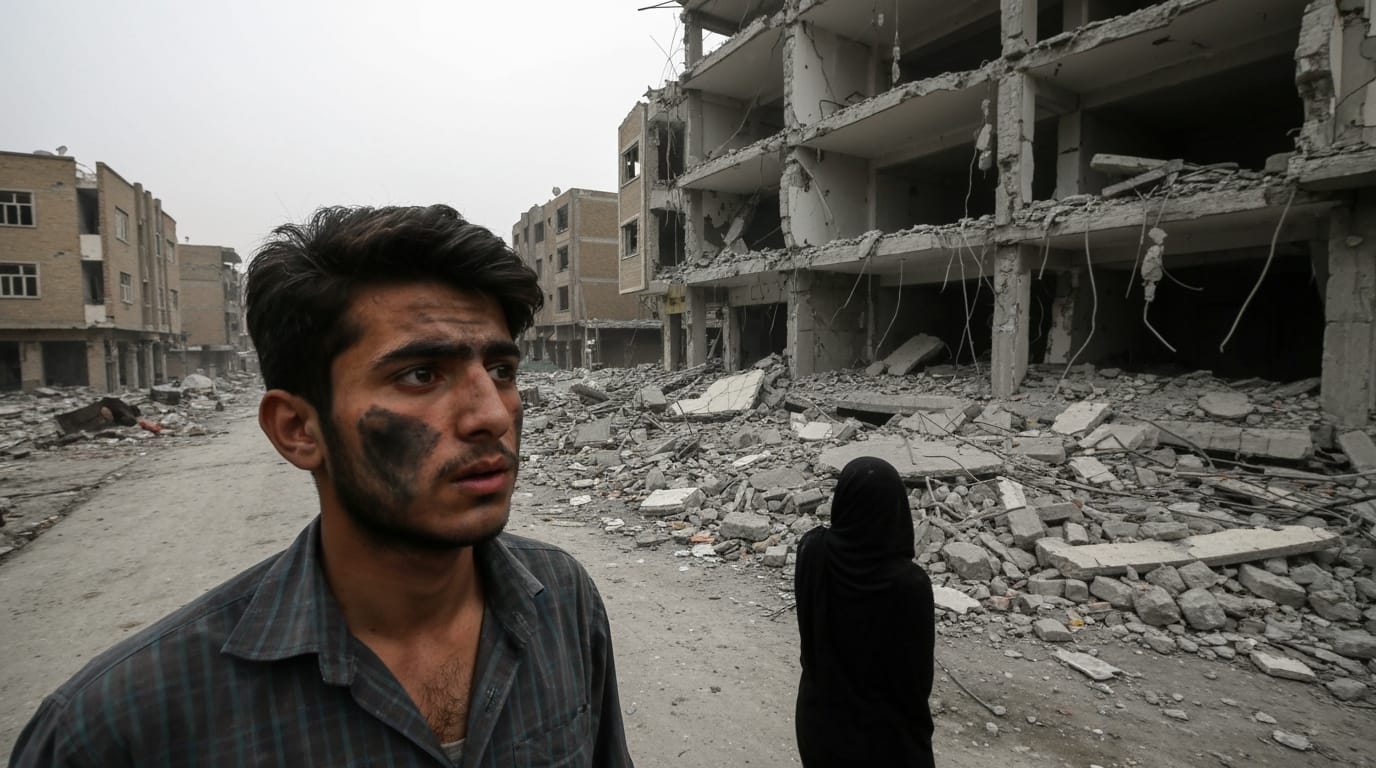
As the guns of a hypothetical conflict between the United States, Israel, and Iran fall silent, the path forward for the Islamic Republic and the broader Middle East remains shrouded in profound uncertainty. Experts and analysts present a spectrum of potential outcomes, ranging from internal power struggles and regional realignment to significant economic upheaval and a fragile, uneasy peace. The hypothetical cessation of hostilities marks not an end to challenges, but merely a transition to a new phase of complex geopolitical and societal dynamics, demanding careful consideration of its far-reaching implications.
Internal Power Vacuum and the Struggle for Iran's Soul
The cessation of hostilities, in one widely discussed scenario, follows a period of intense military engagement that has reportedly included the destruction of military and other official targets within Iran, and critically, the reported death of Supreme Leader Ayatollah Ali Khamenei. This event, as analyzed by various think tanks, would trigger a severe leadership vacuum and potential instability within Iran. The immediate aftermath could see a temporary leadership council attempting to project continuity, yet this is largely seen as a stopgap measure, not a lasting solution.
Analysts suggest that Iran’s power structure, though multilayered and resilient, would face unprecedented strain. The Islamic Revolutionary Guard Corps (IRGC), a powerful military-industrial complex, could emerge as a dominant force, potentially leading to military rule. This scenario implies a more securitized state, with proxies potentially gaining greater autonomy. While the complete collapse of the regime is considered plausible, it is often viewed as less probable unless the elite cohesion within Iran significantly fractures. More likely, some experts contend, is a form of "regime alteration"—a badly mauled but still functioning Islamic Republic, forced to restrain its behavior domestically and internationally as a prerequisite for ending the conflict. Such a development, however, carries the risk of internal unrest, as the government has previously faced significant protests.
Reshaping the Regional Order and Geopolitical Alignments
The hypothetical conflict and its resolution would fundamentally reshape the regional security architecture of the Middle East. Iran's network of regional proxies, often referred to as the "axis of resistance," including groups like Hezbollah and Hamas, would likely be significantly weakened due to sustained military actions and the potential loss of Iranian support. This diminishing influence could lead to new power dynamics, although the potential for these groups to act autonomously or seek new alliances remains.
The conflict has already demonstrated a tendency for broader regional escalation, with Iranian retaliation reportedly targeting Gulf Cooperation Council (GCC) states. The closure of the strategic Strait of Hormuz, through which a significant portion of the world's oil supply passes, has been a major point of concern, leading to fears of sustained shipping disruptions. Such actions underscore the precariousness of regional stability and the intricate web of interdependencies.
Globally, the conflict casts a long shadow over the roles of major powers. Russia, while rhetorically condemning the US-Israeli strikes, has shown no signs of direct military intervention, highlighting the limits of its leverage in a fragmenting regional order. China, a significant trading partner and investor in the region, would find itself in a complex bind, seeking to protect its economic interests while navigating heightened geopolitical tensions. The European Union, caught between upholding international law and aligning with the United States, would also face significant diplomatic challenges.
Economic Fallout and Global Market Shocks
The economic ramifications of such a conflict and its aftermath are projected to be substantial and far-reaching. Global oil markets have already reacted with significant price spikes, and the risk of sustained disruption to oil supply, particularly if the Strait of Hormuz remains contested, could lead to prolonged energy price increases. This scenario raises the specter of "stagflation," a combination of high inflation and low economic growth, impacting economies worldwide.
Beyond energy, the conflict threatens global supply chains, already strained by recent geopolitical events. Market volatility would likely remain elevated, although historical data suggests that financial markets, while initially sharp in their reactions, tend to adapt and recover over time, unless underlying economic fundamentals are deeply stressed. The reconstruction efforts within Iran, regardless of the post-conflict leadership, would require immense investment and could be hampered by ongoing international sanctions or internal instability. The immediate economic landscape is characterized by uncertainty, with the severity and duration of the conflict directly influencing the extent of global economic turbulence.
Pathways to an Uneasy Future
As the dust settles, several scenarios for the "end state" of the conflict are being considered by analysts. One possibility involves a return to diplomacy, where remaining Iranian leaders might be compelled to negotiate on nuclear and security issues under duress, mirroring situations seen elsewhere where new leadership accepts terms to avoid deeper intervention. However, the deep ideological divides and the severe blows sustained during the conflict could also lead to a prolonged period of maximum-pressure retaliation by elements of the IRGC.
Another pathway suggests that the conflict might not end in a clear victory or collapse but rather through exhaustion and a managed de-escalation. This would leave unresolved tensions and a higher degree of long-term instability in the region. The absence of a clear, internationally supported plan for post-regime governance in Iran further complicates these scenarios, increasing the risk of violent chaos and unintended consequences. Regardless of the specific trajectory, the post-conflict environment would likely be one of persistent challenges, with the potential for ongoing internal strife and continued regional friction.
In conclusion, the hypothetical cessation of a war between the United States, Israel, and Iran would usher in a period of profound re-evaluation and recalibration. Iran's internal political landscape would be subject to immense pressure, with the prospect of new leadership or significant changes in governance. Regionally, the balance of power would shift, and the global economic impact, particularly on energy markets, would be substantial. The world would grapple with the complex, multifaceted consequences of such a conflict, navigating a future where stability in the Middle East hinges on careful diplomacy, internal cohesion within Iran, and the strategic decisions of international actors.


