Iran Prepares for Unprecedented Six-Day Funeral as World Leaders Gather Amidst Heightened Tensions
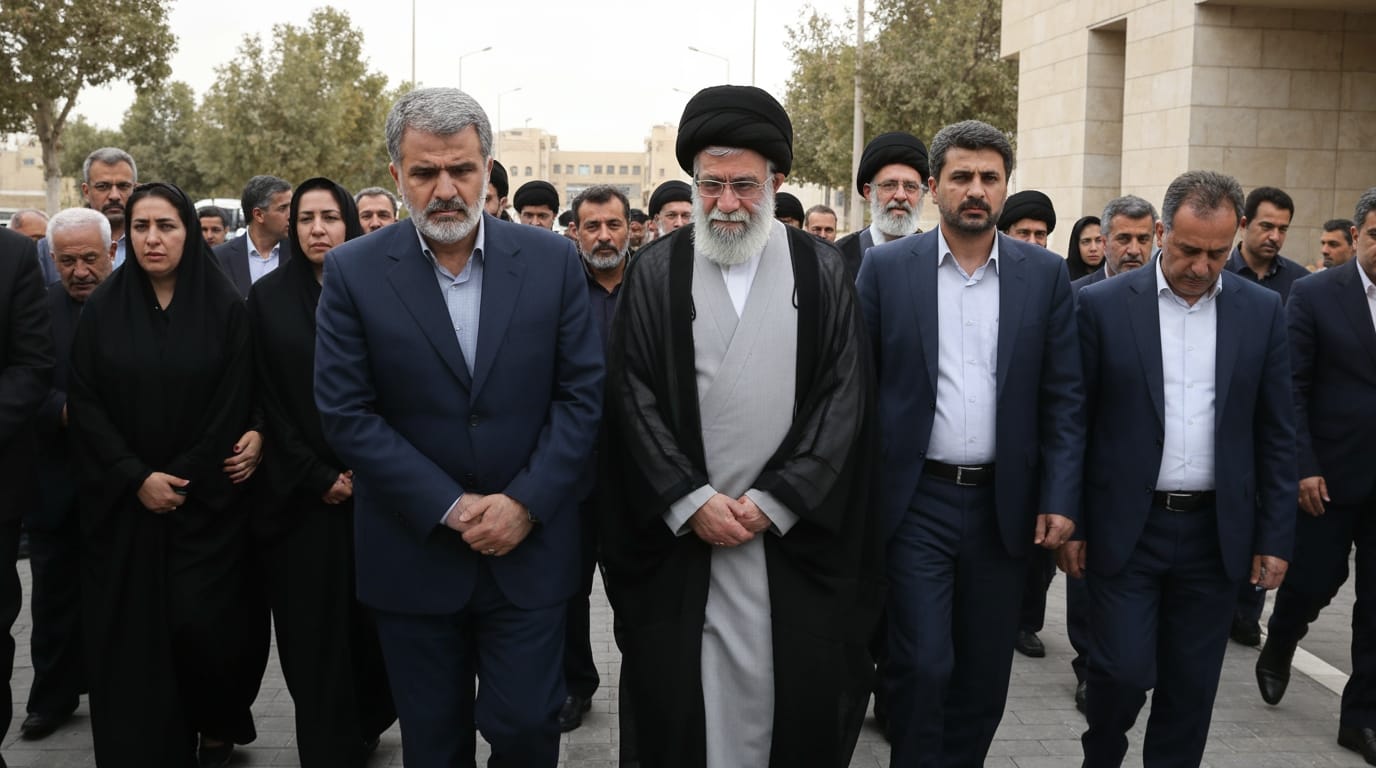
TEHRAN — Iran has embarked on a week-long state funeral for its former Supreme Leader, Ayatollah Ali Khamenei, drawing millions of mourners and an array of international dignitaries as the nation navigates a complex period of transition following his assassination. The elaborate ceremonies, spanning multiple cities across Iran and neighboring Iraq, serve as both a national outpouring of grief and a powerful projection of Iranian resilience and influence on the global stage, unfolding amidst an ongoing conflict with the United States and Israel.
Ayatollah Khamenei, who governed the Islamic Republic for 36 turbulent years, was killed on February 28, 2026, in a joint U.S.-Israeli strike on his residence in Tehran. His death, confirmed a day later, also claimed the lives of several family members, including his daughter, son-in-law, and granddaughter, and severely injured his wife, Mansoureh Khojasteh Bagherzadeh, who succumbed to her wounds on March 2. The funeral, originally postponed due to the immediate aftermath of the strike and the ensuing conflict, is now meticulously orchestrated to convey both religious devotion and geopolitical defiance.
A Grand Farewell Spanning Continents
The six-day funeral, scheduled from July 4 to July 9, marks an extraordinary logistical and emotional undertaking for Iran. The proceedings commenced unofficially on Friday, July 3, with ceremonies in Tehran dedicated to foreign leaders and arriving delegations. Public mourning will officially begin on Saturday, July 4, with Khamenei's body lying in state at Tehran's Grand Mosalla, a vast complex prepared with elaborate decorations and a heavy security presence.
On Monday, July 6, a massive funeral procession is anticipated to weave through the streets of Tehran, allowing millions of Iranians to pay their final respects. The body will then be transported to the holy city of Qom on Tuesday, July 7, for further ceremonies and veneration. In a significant gesture aimed at highlighting Khamenei's spiritual stature within the Shia world, the funeral cortege will travel to the Iraqi holy cities of Karbala and Najaf on Wednesday, July 8. This leg of the journey, arranged at the request of Iraqi politicians, is designed to underscore his role as a spiritual leader to Shia Muslims beyond Iran's borders. The week-long observances will culminate on Thursday, July 9, with the burial of the late Supreme Leader at the revered Imam Reza shrine in Mashhad, his hometown. The meticulous planning, according to Iran's First Vice-President Mohammad Reza Aref, the lead organizer, positions this event as "the most important event of this century" and potentially the most attended gathering since the 1979 Islamic Revolution.
National Mourning and a Message of Resistance
Iranian authorities anticipate an unprecedented turnout, with estimates suggesting between 10 to 20 million people could participate in the funeral rites across the various cities. This scale of mourning echoes the massive crowds that gathered for the funeral of Ayatollah Ruhollah Khomeini in 1989, an event that saw millions take to the streets. Black mourning banners adorn the streets of Tehran, and a red flag from Mashhad's Imam Reza shrine has been placed over Khamenei's coffin, signaling deep national grief and spiritual significance.
Beyond mourning, the funeral is strategically designed to project a message of unity, power, and resistance to both domestic and international audiences, particularly amid the ongoing conflict with the United States and Israel. Iran's chief negotiator urged citizens to turn out in massive numbers to avenge Khamenei's killing. The emphasis on a united front is especially poignant as the nation faces external pressures and internal questions regarding its future leadership. The authorities aim to demonstrate unwavering national cohesion and determination to extract concessions from U.S. negotiators during a fragile 60-day ceasefire.
International Attendance Amidst Geopolitical Divides
The funeral has drawn foreign delegations from approximately 30 to 100 countries, though Iran has been selective in disclosing the full list of attendees. Notable figures arriving in Tehran for the ceremonies include Pakistani Prime Minister Shehbaz Sharif, Tajikistan's President Emomali Rahmon, and Armenian Prime Minister Nikol Pashinyan. China is represented by He Wei, Vice Chairman of the National People's Congress Standing Committee, while Russia has sent former President Dmitry Medvedev as a special envoy for President Vladimir Putin. India's delegation includes Bihar Governor Syed Ata Hasnain and Deputy Foreign Minister Pabitra Margherita, alongside other political figures.
From the region, Iraqi President Nizar Amidi, Parliament Speaker Mohammed al-Halbousi, and Kurdistan Region President Nechirvan Barzani are attending, alongside senior Taliban representatives from Afghanistan. Delegations are also expected from nations such as Qatar, Lebanon, Syria, Venezuela, Belarus, North Korea, and various Central Asian states. Representatives from key regional allies and non-state actors, including Hamas, Hezbollah, Palestinian Islamic Jihad, the Houthis, and Iraqi Shia militias, are also anticipated to participate.
However, the international guest list also reflects Iran's complex and often strained relationships. European Union leaders were reportedly not invited, with Iran's deputy interior minister stating they "will not have the honour" of attending due to their failure to condemn the strike that killed Khamenei. The United States, United Kingdom, Israel, Canada, and Australia were explicitly not invited. Even major powers like Russia, China, and India, while sending delegations, have downgraded their representation, with their respective heads of state opting not to attend in person. This selective attendance underscores Iran's current geopolitical isolation from Western powers.
Succession and the Path Forward for Iran
Ayatollah Khamenei's death, an assassination amidst an ongoing war, has thrust Iran into a new era of leadership. His son, Mojtaba Khamenei, was named the new Supreme Leader by the Assembly of Experts on March 9, 2026. This succession marks a critical juncture for the Islamic Republic, as Mojtaba, a mid-level Shia cleric, is believed to have been the choice favored by the powerful Islamic Revolutionary Guard Corps (IRGC).
However, Mojtaba Khamenei himself was reportedly injured in the same February 28 strike that killed his father and other family members. His subsequent absence from public view has fueled speculation about his health and ability to govern, with statements often read by state media presenters rather than delivered by him directly. Despite these concerns, reports indicate he is actively involved in formulating war strategies and is "in control of the situation." Experts suggest that the post-Khamenei era may see a less concentrated form of political authority, with decision-making becoming more distributed among security institutions and entrenched power networks. This shift could redefine Iran's leadership architecture, adapting to crises by relying on a broader institutional consensus rather than solely on the singular will of the Supreme Leader.
Conclusion
The funeral of Ayatollah Ali Khamenei is far more than a somber occasion; it is a meticulously orchestrated national event, fraught with political and symbolic significance. As millions of Iranians mourn a leader who shaped their nation for decades, and as foreign dignitaries gather under the shadow of war, the ceremonies project a dual message: profound grief for a fallen leader and unwavering defiance in the face of external pressures. The procession, spanning across sacred sites in Iran and Iraq, underscores Khamenei's enduring religious legacy while simultaneously serving as a powerful demonstration of national unity and a defiant assertion of the Islamic Republic's continued strength in a rapidly evolving geopolitical landscape. This week of mourning marks a pivotal moment, closing one chapter in Iran's history and opening another under new, yet familiar, leadership, all while the world watches for its implications on regional and global stability.


