Iran's Deepening Economic Crisis Fuels Unrest, Tests Regime's Enduring Grip
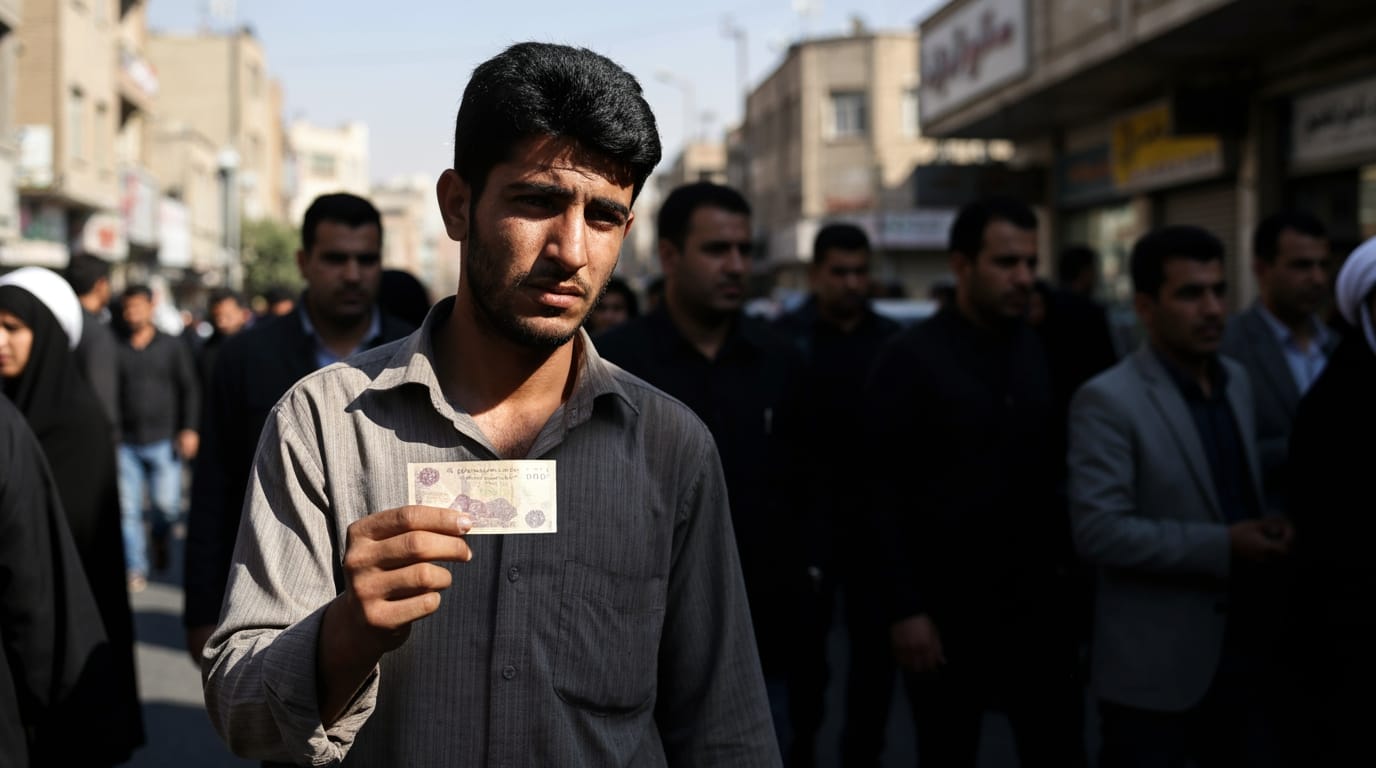
Iran is grappling with an escalating economic crisis that has ignited widespread social unrest, challenging the stability and legitimacy of its clerical rule more profoundly than in recent memory. Decades of international sanctions, coupled with pervasive internal mismanagement and corruption, have culminated in soaring inflation, a rapidly devaluing currency, and a severe erosion of public trust. This confluence of economic woes has brought the nation to a critical juncture, where the regime's tight grip on power is being tested by an increasingly desperate populace.
The Crumbling Economic Foundation
The Iranian economy is currently mired in a severe downturn, characterized by alarming financial indicators that directly impact the daily lives of its citizens. Inflation, particularly for essential goods, has reached staggering levels. As of October 2025, point-to-point inflation for food and beverages surged to 64.3%, an increase of 17 percentage points in just four months. This places Iran second globally for food inflation, surpassed only by South Sudan. State media outlets have themselves acknowledged that food prices in the country are among the highest worldwide, with many experts suggesting official inflation figures underestimate the lived reality for ordinary Iranians.
The national currency, the rial, continues its precipitous decline, crashing to historic lows against major international currencies. There are discussions within government circles to unify the exchange rate near 100,000 tomans per U.S. dollar, a significant depreciation that further erodes purchasing power. This currency collapse is compounded by a record outflow of capital, with nearly $9 billion leaving the country in Spring 2025 alone, contributing to a total of approximately $80 billion in capital flight between 2018 and 2024. Compounding these issues, authorities are reportedly preparing new fuel price hikes, with a three-tier gasoline plan at varying prices already approved.
Beneath these alarming statistics lies a deeply entrenched kleptocratic system, where political authority, security power, and economic privilege are intertwined. This system fosters opacity and impunity, hollowing out state capacity and enabling widespread corruption and fiscal mismanagement. A striking example surfaced with the revelation that Bank Iran Zamin has been "legally bankrupt for years" due to accumulated net losses, highlighting the fragility of a banking system undermined by political lending.
A Society Under Strain
The economic collapse has translated into widespread hardship and despair across Iranian society, fostering an environment ripe for dissent. Daily life has become increasingly unaffordable for many, pushing more families below the poverty line and fueling widespread anger. Protests, once episodic, have become more frequent, nationally synchronized, and socially broad, directly challenging the clerical establishment. These demonstrations are not merely protests against specific policies but represent a cumulative erosion of the regime's legitimacy and authority.
Beyond urban centers, a deepening water crisis is exacerbating economic pressure, crippling agriculture, and contributing to unrest in multiple provinces. The convergence of economic grievances with environmental concerns creates additional flashpoints for social unrest. The human cost of this sustained pressure is severe, with reports indicating thousands of casualties and detentions during crackdowns on protests. At least 12,000 people were reportedly killed in recent protests, and human rights organizations have documented the deaths of minors among the victims, further intensifying public outrage.
The Regime's Response: Repression and Control
Faced with mounting internal pressure, the Iranian regime has increasingly relied on its coercive apparatus to maintain control. Security forces have responded to protests with live fire, mass arrests, and systematic communications blackouts, including widespread internet shutdowns, in an attempt to suppress dissent and prevent information from reaching the outside world. Text messages warning families to keep young people at home and blaming "terrorist groups" for unrest illustrate the regime's strategy to shift responsibility for the violence onto the populace.
The Islamic Revolutionary Guard Corps (IRGC) and the Basij volunteer militia play a pivotal role in enforcing domestic order and maintaining the regime's authority. The IRGC not only controls significant military and economic sectors but also shapes foreign policy, while the Basij primarily focuses on internal societal control. The regime's theological worldview, rooted in the doctrine of velayat-e faqih, frames repression as a divine duty, providing a deeply ingrained justification for its harsh tactics against what it perceives as challenges to Allah's will. Despite the gravity of the current unrest, the regime has demonstrated a capacity to survive previous waves of dissent, although many observers suggest the current confluence of crises presents an unprecedented challenge.
Geopolitical Undercurrents
The internal economic and social turmoil in Iran does not exist in a vacuum; it is deeply intertwined with broader geopolitical dynamics. Years of crippling international sanctions, largely imposed due to Iran's nuclear program and regional activities, have been a primary driver of the economic hardship. The current environment of rising international pressure over the nuclear program further complicates the regime's ability to alleviate economic strain through external engagement.
Moreover, recent military setbacks, such as a conflict with Israel in 2025 that reportedly inflicted significant damage and resulted in the deaths of senior Iranian commanders, have eroded Iran's external deterrence and compounded internal strain. This external pressure, combined with internal instability, presents a delicate balance for the regime as it navigates both domestic challenges and its position on the international stage.
A Precarious Future
Iran stands at a precarious crossroads, with its economic foundations severely eroded and its social fabric strained by persistent hardship and repression. The regime's reliance on force and its sophisticated control mechanisms have thus far allowed it to weather numerous storms, yet the scale and synchronicity of recent protests, fueled by pervasive economic despair and a yearning for fundamental change, suggest a growing fragility. As the economic crisis deepens and public discontent intensifies, the intricate interplay between internal grievances and external pressures will continue to test the endurance of the Islamic Republic's tight grip on power, pointing towards an uncertain and potentially transformative future for the nation.