Iran's Dual Stance: Tehran Navigates Internal Upheaval Amidst Threats of War and Overtures for Dialogue with the US
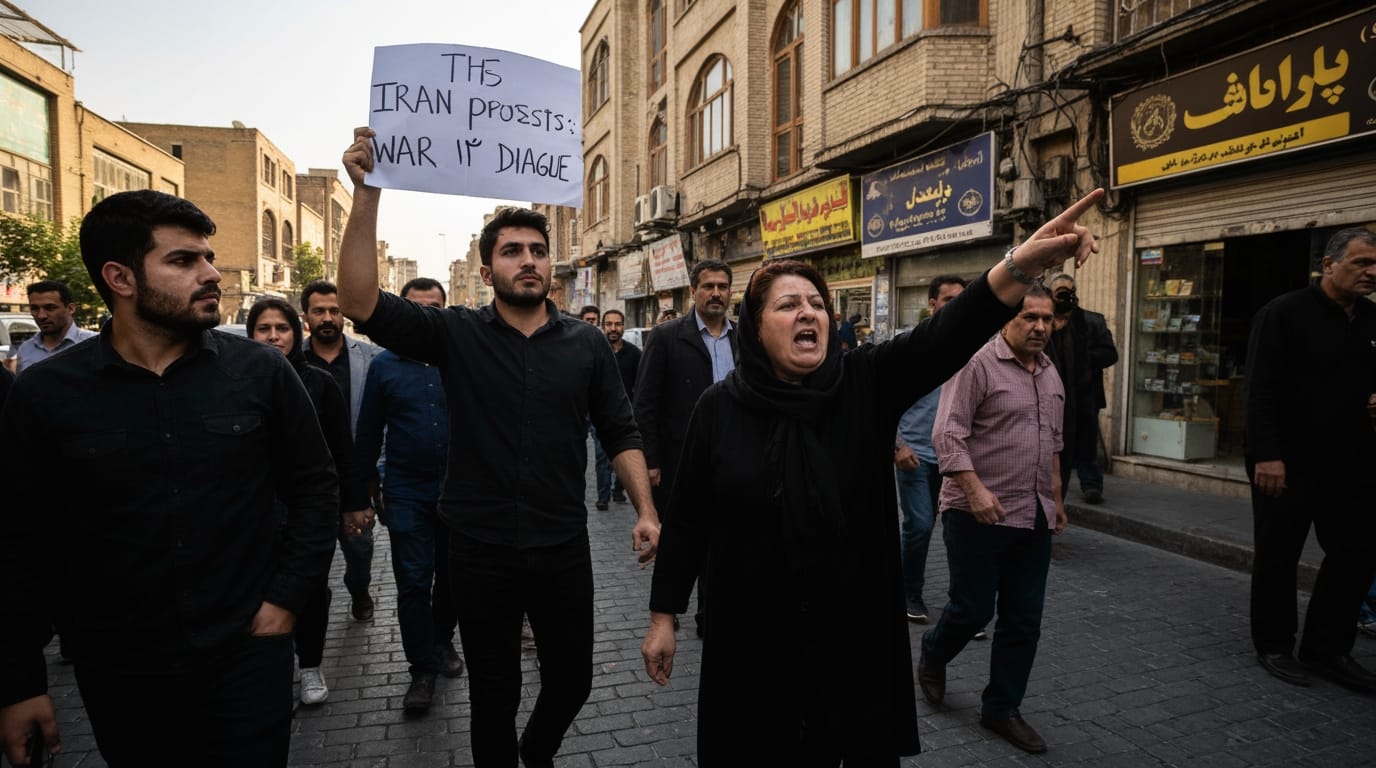
Iran finds itself at a critical juncture, grappling with widespread domestic protests fueled by a deepening economic crisis while simultaneously engaging in a high-stakes geopolitical dance with the United States, marked by both threats of military confrontation and suggestions of negotiation. As security forces violently suppress demonstrators across the nation, Iranian officials have declared readiness for "war and dialogue," reflecting a complex and seemingly contradictory strategy aimed at asserting sovereignty while potentially seeking an off-ramp from escalating tensions with Washington. The volatile situation underscores the precarious balance maintained by the Islamic Republic, caught between internal dissent and external pressures, with profound implications for regional stability and international relations.
The Genesis and Escalation of Unrest
The current wave of anti-government protests, which began in late December 2025, has rapidly engulfed Iran, marking the most significant challenge to the ruling establishment since the 2022 Mahsa Amini movement and potentially the 1979 Islamic Revolution itself. Initially sparked by severe economic distress, including a sharp devaluation of the Iranian rial, staggering inflation approaching 40%, and surging food and gasoline prices, the demonstrations quickly evolved beyond mere economic grievances. What began with merchants in Tehran protesting financial hardship soon spread to over 185 cities across all 31 provinces, transforming into a broader movement demanding an end to the current regime. Protesters have been heard chanting anti-government slogans and even calling for the return of the exiled Pahlavi monarchy, signaling deep-seated discontent with the theocratic system.
The government's response has been swift and brutal. Rights groups report a grim toll, with the US-based Human Rights Activists News Agency (HRANA) documenting at least 544 fatalities, including 496 protesters and 48 security personnel, and over 10,600 arrests as of early January 2026. Human rights organizations have received accounts of security forces employing lethal force, including snipers, and even targeting protesters' eyes. The use of widespread internet blackouts and communication disruptions has severely hampered independent verification of casualties and events on the ground, creating an information vacuum that has drawn international condemnation.
Tehran's Double-Edged Diplomacy
Amidst the domestic turmoil, Iran's foreign policy pronouncements have revealed a complex strategy of defiance mixed with a surprising willingness to engage. Iranian Foreign Minister Abbas Araghchi explicitly stated that Tehran is prepared for both "war and dialogue," a declaration that encapsulates the nation's posture on the international stage. This dual approach suggests a resolve to defend its interests against perceived external threats while leaving open channels for diplomatic resolution. Araghchi also dismissed reports of excessive force against demonstrators, asserting that the situation was "under total control" and accusing foreign entities of instigating the unrest.
However, the tone from other high-ranking officials has been decidedly more confrontational. Mohammad Bagher Qalibaf, the Speaker of Iran's Parliament, issued a stark warning, stating that US military and Israeli interests would become "legitimate targets" if Washington were to launch a military intervention in response to the protests. This threat underscores Iran's long-standing position of viewing external interference as a grave violation of its sovereignty and a pretext for severe retaliation. Supreme Leader Ayatollah Ali Khamenei has also maintained a defiant stance, vowing that the regime would "not back down" and blaming "a bunch of vandals" for causing chaos at the behest of the United States. Such rhetoric serves to solidify the government's narrative that the protests are not organic internal movements but rather externally manipulated attempts to destabilize the country.
Washington's Deliberations and International Concern
The unfolding situation in Iran has prompted a significant response from the international community, particularly from the United States. President Donald Trump indicated that Iranian leadership had reached out, expressing a desire to "negotiate," and suggesting that "Iran wants to negotiate". This statement hinted at potential diplomatic avenues despite the ongoing crackdown. Simultaneously, however, President Trump has also threatened "very strong options," including military action, should the Iranian government continue its violent suppression of protesters, signifying a readiness to consider robust interventions.
US officials are reportedly examining a broad spectrum of responses, ranging from cyber operations and information warfare to potential military strikes, including against nuclear facilities. Nevertheless, these discussions are tempered by concerns about potential unintended consequences, such as inadvertently unifying the Iranian public behind the government or triggering widespread retaliatory actions across the region. The international community has largely expressed alarm, with the UN Secretary-General stating he was "shocked" by reports of excessive force and urging restraint. The UN Human Rights Council has initiated an investigation into the crackdown, reflecting widespread global concern over human rights violations. Figures like exiled Prince Reza Pahlavi have also called for sustained protests, further complicating the internal and external dynamics.
Underlying Grievances and the Struggle for Information
Beyond the immediate economic triggers, the protests are rooted in deeper grievances that have simmered for years. The Iranian economy has been severely impacted by international sanctions, particularly since the US reimposed them in 2018, leading to a near 90% devaluation of the rial over that period. This economic pressure, coupled with widespread corruption and perceived governmental mismanagement, has created a fertile ground for dissent among a population struggling with daily life.
The human cost of the crackdown is stark, with reports indicating that the average age of those arrested is as young as 15. The government's tactic of imposing internet blackouts serves not only to disrupt the coordination of protests but also to obscure the severity of the repression from the outside world, creating a chilling atmosphere for citizens attempting to document and share their experiences. Activists and human rights groups face immense challenges in gathering and verifying information, often relying on smuggled footage and intermittent connections to piece together the full picture of the unfolding crisis.
A Nation at the Crossroads
The current situation in Iran represents a profound crossroads for the Islamic Republic. Internally, the regime faces an unprecedented challenge to its authority, fueled by a populace weary of economic hardship and demanding greater freedoms. The widespread nature of the protests, cutting across various demographics and geographic regions, suggests a deep fracture between the state and significant segments of society. Externally, Tehran is engaged in a delicate diplomatic tightrope walk, attempting to project strength and deter intervention through threats, while simultaneously signaling a willingness for dialogue with its principal adversary, the United States.
The interplay between these internal and external pressures will largely determine Iran's trajectory. The government's violent crackdown risks further alienating its populace and potentially inviting more robust international responses. Conversely, any perceived weakness in its stance against foreign powers could embolden external actors and undermine its regional position. As protests continue and international scrutiny intensifies, Iran remains a nation in flux, with its future hanging in the balance, shaped by the unpredictable forces of popular dissent, state repression, and complex geopolitical maneuvering.


