Iran's Escalating Execution Spree Amidst Regional Tensions Draws International Condemnation
TEHRAN, Iran – Iran is engaged in a rapidly escalating campaign of executions, which human rights organizations allege is being conducted under the pretext of "wartime conditions" amidst heightened regional tensions with Israel and the United States. Reports from multiple international watchdog groups reveal a dramatic surge in capital punishment, particularly in the period following recent military confrontations, with concerns growing that the Islamic Republic is leveraging the climate of external conflict to suppress internal dissent and instill fear among its population.
The statistics paint a grim picture, demonstrating a marked acceleration in the use of the death penalty. In 2025 alone, Amnesty International documented at least 2,159 executions, more than double the number recorded in 2024. Further corroborating this alarming trend, Iran Human Rights (IHRNGO) and Together Against the Death Penalty (ECPM) reported at least 1,639 executions in 2025, marking the highest figure since 1989 and a significant 68% increase compared to 2024. The Human Rights Activists News Agency (HRANA) recorded an even higher figure, with 2,063 executions between January 1, 2025, and January 1, 2026, representing a 119% jump from the preceding year. This increase has raised urgent alarms among international observers who contend that the Iranian authorities are exploiting the current geopolitical climate to intensify domestic repression.
A Deliberate Strategy of Repression
Human rights organizations are unequivocal in their assertion that Iran's judiciary is weaponizing the death penalty as a tool of political oppression. Amnesty International has explicitly stated that Iranian authorities are "using the cover of what they call 'wartime conditions' to intensify their repression of dissent through mass arbitrary arrests, accelerated grossly unfair judicial proceedings, politically motivated executions, harsh prison sentences, and asset confiscations." This strategy appears to aim at consolidating power and stifling any potential for renewed widespread protests, similar to the "Woman, Life, Freedom" movement that swept the country in 2022.
The timing of these executions is particularly noteworthy. Since what Amnesty International describes as "the unlawful military attack launched by the USA and Israel against Iran" on February 28, 2026, the organization has documented at least 41 politically motivated executions. In another report, Amnesty notes at least 39 political executions since this period. The Hengaw Organization for Human Rights reported that 43 political prisoners and prisoners of conscience have been executed since the beginning of 2026, marking a 139% increase compared to the previous year. After a 12-day conflict involving Israel and the United States ending in June 2025, Iran Human Rights director Mahmood Amiry-Moghaddam stated that officials were hanging an average of one person every three hours in October 2025. He emphasized that this surge is directly linked to the regime's apprehension of a social uprising, portraying the executions as an attempt to "create fear" and "show off its power" to a population perceived as a greater threat than foreign adversaries.
Flawed Justice and Disproportionate Impact
The increase in executions is compounded by grave concerns regarding due process and fair trials within Iran's judicial system. Reports consistently highlight that convictions are often based on coerced confessions extracted under torture, with detainees routinely denied access to legal counsel. The interval between arrest, sentencing, and execution has reportedly decreased, further undermining the possibility of a just legal process. In a move that formalizes this expedited approach, Iran's parliament approved a motion to fast-track a bill that would facilitate greater use of the death penalty for "espionage" or "cooperation with hostile governments," including Israel and the United States.
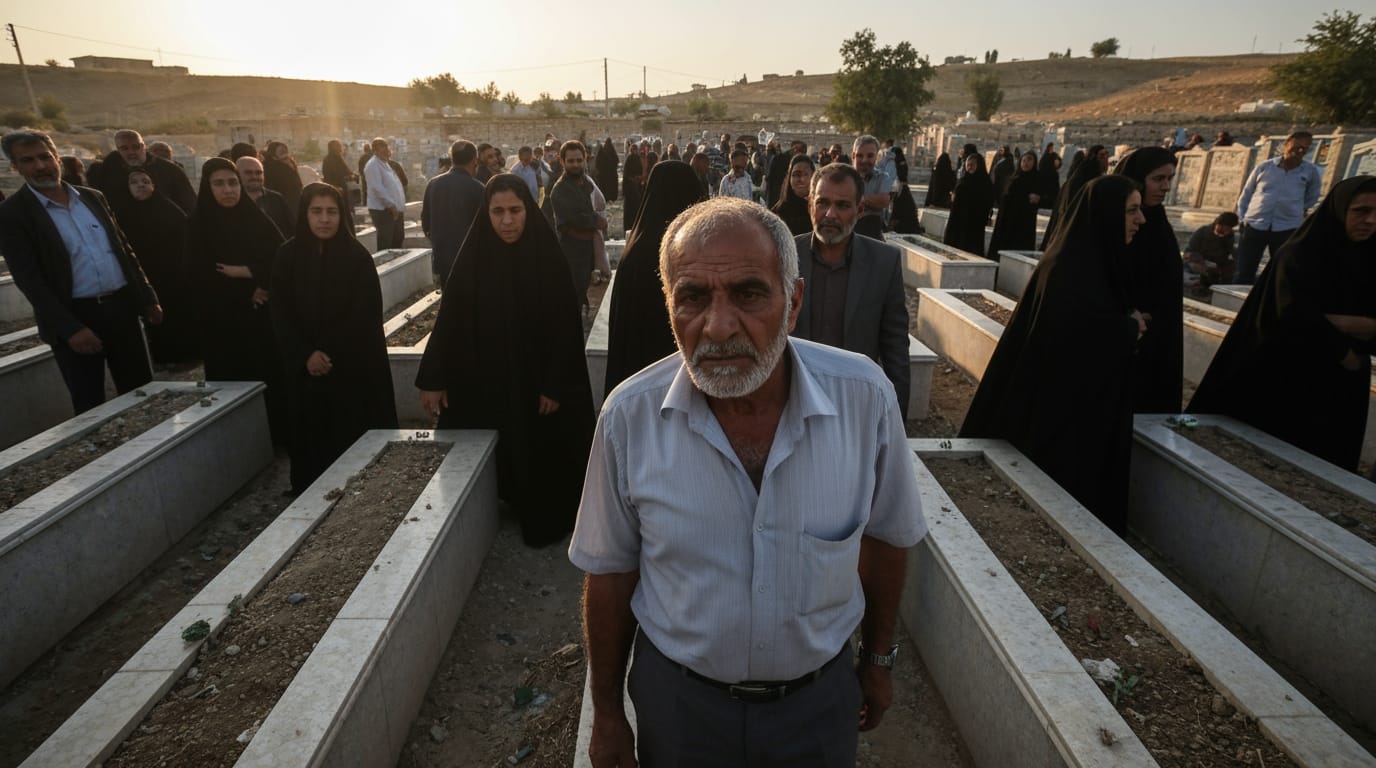
A significant number of executions are for drug-related offenses, accounting for nearly half of all executions in 2025, 56% in 2023, and 51.6% in 2024. Human rights groups argue that these drug-related charges are often a pretext, allowing the state to execute individuals without direct political accusations. Additionally, ethnic minorities, particularly the Baluchi and Kurdish communities, are disproportionately affected by the death penalty. Women are also not spared, with 48 women executed in 2025, 22 in 2023, and 31 in 2024. Some executions are carried out in secret, with families and lawyers not receiving prior notice, and in some cases, the bodies of those executed are not returned to their families, intensifying their suffering. The practice of public executions, also on the rise, is intended to generate social shock and collective fear.
International Outcry and Calls for Action
The alarming rise in executions has drawn strong condemnation from the international community. The UN Independent Fact-Finding Mission investigating alleged rights abuses in Iran noted a "surge in repression and extraordinary spike in executions" following Israeli airstrikes in June 2025. UN expert Mai Sato described the increase as a "deliberate policy of fear and retribution," highlighting that many executions follow unfair trials or vague national security charges. In September 2025, the Office of the United Nations High Commissioner for Human Rights expressed horror at an "unprecedented execution spree," stressing its incompatibility with Iran's obligations under international human rights law.
Human rights advocates are urgently calling for robust international action to compel Iran to halt its execution machine. Mahmood Amiry-Moghaddam of Iran Human Rights emphasized that "increasing the political cost of executions through international pressure can slow down the regime's killing machine." These calls include demands for an immediate moratorium on all executions and for international bodies to send representatives to monitor prisons and trials within Iran. The situation has become so dire that non-political inmates in prisons like Qezel Hesar have resorted to extreme forms of protest, including hunger strikes and sewing their lips shut, to draw attention to the relentless pace of executions. This desperation underscores the profound human cost of Iran's escalating campaign of capital punishment, executed under the shadow of regional conflict.