Poland's Main Opposition Shattered Amid Far-Right Shift, Reshaping Political Landscape

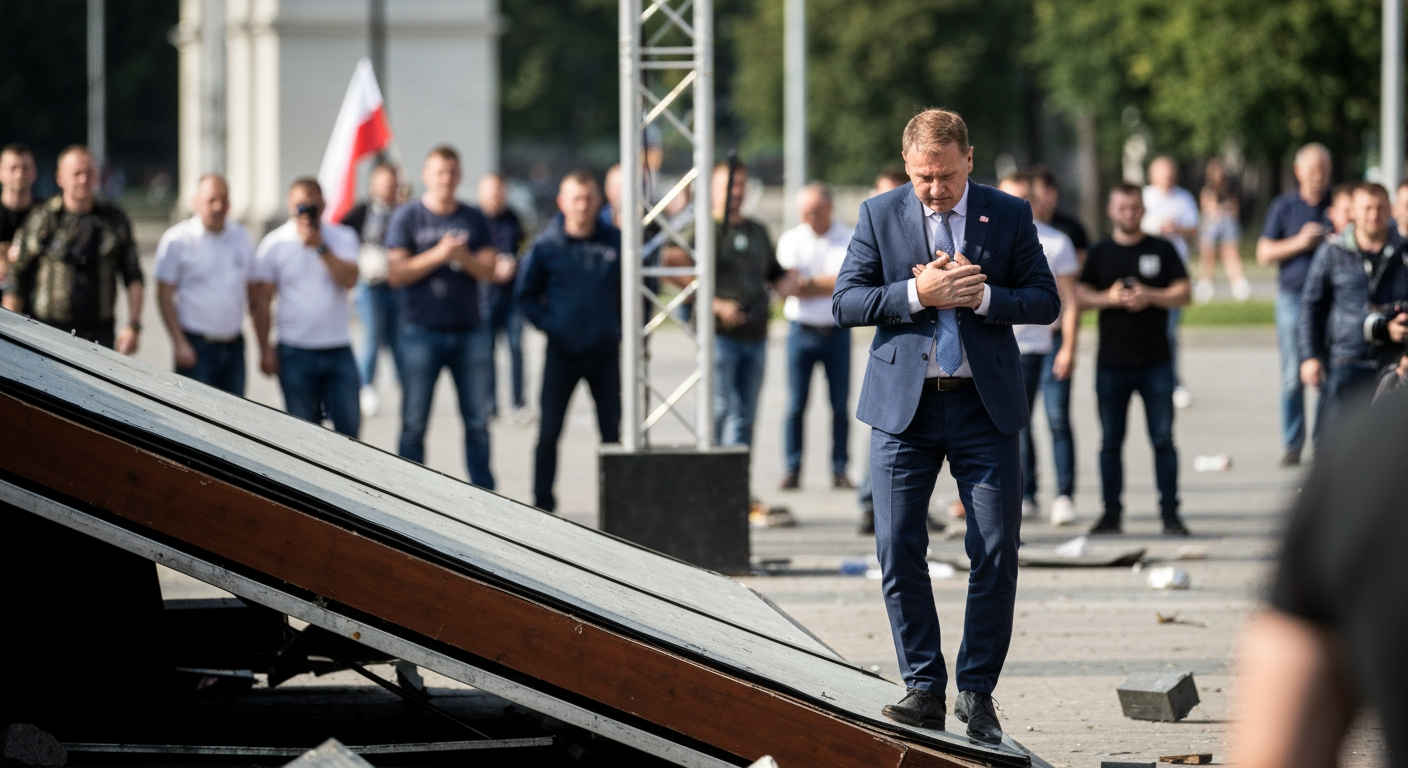
Warsaw, Poland – Poland's primary opposition force, the Law and Justice (PiS) party, has fractured following a dramatic internal power struggle, with dozens of its parliamentarians defecting or being expelled over the leadership's controversial strategy to embrace the far-right ahead of the 2027 parliamentary elections. The split, announced Friday, July 24, 2026, marks a seismic shift in the nation's political landscape, potentially weakening the conservative bloc and deepening the fragmentation of the Polish right. Former Prime Minister Mateusz Morawiecki leads the breakaway faction, which advocated for a more centrist approach, clashing directly with party leader Jarosław Kaczyński's determined push toward radical elements.
A Party in Decline: The Opposition's Internal Strife
Since its defeat in the 2023 parliamentary elections, which ended eight years of governance, the national-conservative Law and Justice party has grappled with a significant decline in public support, seeing its average poll numbers plummet to their lowest in over a decade. Having secured 35.4% of the vote in 2023, PiS's support has since fallen to approximately 23-24%, creating an urgent need for a renewed electoral strategy. This period of introspection and declining fortunes ignited a fierce internal debate over the party's future direction. One faction, aligned with former Prime Minister Mateusz Morawiecki, urged a return to more centrist voters and a focus on technocratic issues like economic development, believing this was key to regaining broader appeal.
Paradoxically, the party's decline coincided with a significant victory: the election of PiS-backed Karol Nawrocki as president in June 2025. While initially hailed as a success, Nawrocki's assertive presidency, marked by frequent clashes with Prime Minister Donald Tusk's government, inadvertently overshadowed PiS, making him the de facto face of the opposition and sidelining the party itself. This dynamic, coupled with the continued rise of fringe far-right groups, intensified pressure on PiS to redefine its identity and strategy.
The Far-Right Gambit: Kaczyński's Ultimatum
Against this backdrop of internal dissent and electoral challenges, PiS leader Jarosław Kaczyński pursued a strategy to consolidate the right-wing vote by moving the party further towards the extreme right. This calculated shift was largely motivated by the growing influence of burgeoning far-right parties, such as Confederation (Konfederacja) and the Confederation of the Polish Crown (KKP), whose combined support now rivals that of PiS. To spearhead this new direction, Kaczyński nominated Przemysław Czarnek, a known hardliner, as PiS's candidate for prime minister in the upcoming 2027 elections. Czarnek's selection signaled an overt appeal to radical voters and an openness to potential coalition with more extreme elements post-election.
The deepening ideological divide culminated in a decisive confrontation. Kaczyński issued an ultimatum, demanding that all party members sign a declaration of loyalty by Thursday evening or face the consequences. This move was designed to quash internal dissent and enforce adherence to the new, hardline trajectory. However, it proved to be the breaking point for a substantial number of MPs, particularly those allied with Morawiecki, who steadfastly rejected the demand. Morawiecki and his supporters openly criticized the party's accelerating shift away from moderate conservatism, arguing it would alienate crucial centrist voters and focus too heavily on cultural flashpoints rather than practical governance.
Fragmentation and its Immediate Aftermath
The refusal by the dissenting faction to sign the loyalty pledge led directly to the announced split. On Friday, July 24, 2026, Kaczyński confirmed that approximately 30 MPs had left the party. However, Morawiecki's faction claimed the true number of departing members was closer to 40, asserting that they had been "expelled" rather than voluntarily resigned. Among those departing were several prominent figures, including members of Morawiecki's "Rozwój Plus" (Development Plus) association, such as former Digital Affairs Minister Janusz Cieszyński and former Deputy Foreign Minister Paweł Jabłoński. This mass defection immediately reshapes the parliamentary arithmetic. Before the split, PiS held 186 seats in the Sejm, the lower house of parliament. The loss of 30 to 40 deputies means PiS could now be left with as few as 146 to 156 seats, effectively losing its standing as the largest opposition party and potentially falling behind Prime Minister Donald Tusk's Civic Coalition, which holds 156 seats. This fragmentation represents the most significant internal crisis in PiS's history, eroding its dominance over the Polish right, a position it had largely maintained for the past two decades.
Reshaping the Right: Implications for Polish Politics
The collapse of PiS's united front has profound implications for Poland's political future. The ruling pro-European Union alliance, currently holding 239 seats, now faces a more fragmented and potentially less cohesive opposition. The split not only diminishes PiS's parliamentary strength but also complicates the broader dynamics of the conservative movement. Morawiecki's new independent base offers an alternative for right-leaning voters disillusioned by Kaczyński's hardline approach, suggesting a future where the right-wing vote remains divided across multiple parties.
The ascendancy of far-right sentiments is not limited to internal PiS dynamics. The rapid rise of extreme parties has compelled Prime Minister Tusk's Civic Coalition to adapt its own rhetoric and policy, occasionally mirroring elements of the far-right agenda in an effort to stem voter migration and blunt their appeal. This demonstrates a broader trend of rightward shift influencing the entire political spectrum, as parties across the aisle navigate an electorate increasingly swayed by nationalist and conservative viewpoints. The upcoming 2027 parliamentary elections will now occur amidst a fractured opposition, a powerful ruling coalition, and a presidential office that acts as a significant, independent political force. The prospect of a consolidated right-wing front, which might have posed a stronger challenge to the current government, appears increasingly remote given the deep divisions now exposed within the former main opposition.
The fracturing of Poland's main opposition marks a critical juncture for the country's political trajectory. The strategic gamble by PiS leadership to align more closely with the extreme right has irrevocably altered the balance of power within the conservative movement, leading to a significant loss of unity and parliamentary influence. As Poland approaches its next parliamentary elections, the political landscape is set for a period of heightened uncertainty and realignment, with a newly fragmented right competing for influence against a ruling coalition that has itself felt the pressure to adapt to increasingly nationalistic currents. The long-term consequences for Polish democracy and its relationship with the European Union will undoubtedly be shaped by these evolving dynamics.
Related Articles


Mounting Frustration Grips Russia as Economic Hardship and War's Toll Deepen
Moscow, Russia – A palpable shift in public sentiment is emerging across Russia, with growing frustration among citizens fueled by a confluence of economic pressures, increasing internet restrictions, and the undeniable...

Germany's Strategic Calculus: Ukraine Aid is an Investment in European Security, Not Charity
Berlin – The ongoing provision of substantial aid to Ukraine by Germany and its allies is increasingly being framed not as an act of altruism, but as a crucial investment in European security and stability. This...