Iran's Middle Class Teeters on the Brink, Driven to Poverty by Economic Crises and Conflict
Tehran, Iran – A once-thriving middle class in Iran is rapidly dissolving under the relentless pressure of economic crises, international sanctions, and recent geopolitical instability, pushing millions into unprecedented levels of poverty and reshaping the nation's social and economic landscape. What was once a robust segment of society, essential for economic stability and political moderation, is now struggling for basic survival, grappling with hyperinflation, diminishing purchasing power, and profound uncertainty about the future.
The erosion of Iran's middle class is not a new phenomenon, but it has accelerated dramatically in recent years. Data indicates a significant contraction, with one study showing an average annual decline of 12 to 17 percentage points in the size of Iran's middle class between 2012 and 2019 due to sanctions. This means that by 2019, a middle class that would have comprised approximately 84% of the population without sanctions stood at just 56%. More recent estimates suggest this figure has fallen further, with some reports indicating the middle class now represents as little as 35% to 50% of the population. This demographic shift reflects a harsh reality: a significant portion of Iran's population is experiencing downward mobility, transforming what was once a foundation of stability into a precarious and vulnerable group.
The Crushing Weight of Sanctions and Inflation
International sanctions have played a pivotal role in this economic downturn. By severely restricting oil exports, which are Iran's economic lifeblood, and isolating the country from global financial systems, sanctions have led to a significant contraction in real GDP per capita. Between 2012 and 2019, Iran experienced an average annual per capita income loss of approximately $3,000 directly attributable to sanctions. These measures also severely disrupted trade and investment, causing merchandise imports and exports, as well as investment per capita, to fall significantly. The contraction of formal businesses pushed many middle-class workers into informal, less stable employment with lower pay and minimal social protections.
Compounding the impact of sanctions is runaway inflation, which has reached levels unseen in decades. By October 2025, inflation rates had skyrocketed to over 48.6%, easing slightly to 42.2% in December of the same year, but severely impacting household budgets. More alarmingly, annual inflation jumped to 77.2% year-on-year in May 2026, marking the highest rate recorded in Iran since World War II. Food prices, in particular, have surged, increasing by over 113% point-to-point. The value of the Iranian rial has plummeted, with the Central Bank of Iran reporting a 65.8% year-on-year inflation rate in April 2026, and the rial experiencing a 15% drop in just two days. This hyperinflation means that daily necessities are becoming unaffordable, with basic items like red meat becoming a luxury and chicken increasingly treated as an occasional meal for many families.
The Human Cost: Daily Struggles and Eroding Futures
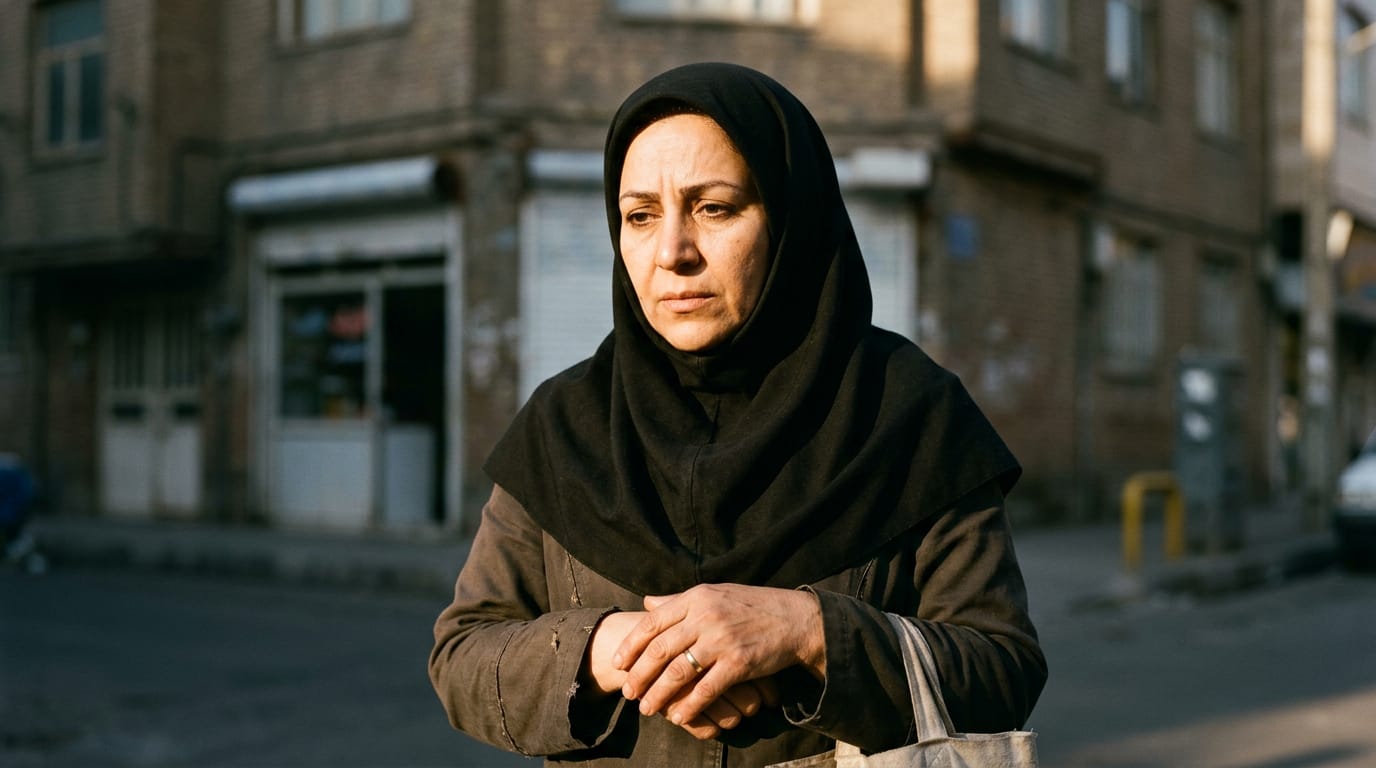
The economic hardships have translated into profound changes in daily life for millions of Iranians. Families that once enjoyed a comfortable middle-class existence are now forced to make impossible choices. There has been a significant increase in citizens, including women and children, relying on government welfare institutions. Many families are cutting spending on essential services like education and healthcare to meet basic consumption needs, while others are forced to relocate to more affordable areas or smaller housing units. Leisure activities, cultural consumption, and even private vehicle ownership have become luxuries many can no longer afford.
The crisis has also reshaped the profile of poverty in Iran, with a significant share of employed individuals still living below the poverty line. As of March 2025, estimates suggested that between 22% and 50% of Iranians were living under the poverty line, a stark increase from previous years. The Parliament Research Center projected an alarming rise, warning that if current trends persist, the poverty rate could surge from 41% in 2026 to 45.5% by 2028, effectively pushing nearly half the population below the poverty line. The United Nations Development Programme estimates that a recent conflict, which concluded with a tenuous ceasefire, directly pushed 3.5 to 4.1 million Iranians below the poverty line.
The psychological toll on the population is also becoming increasingly evident. Reports indicate a rise in stress levels, anxiety, and depression among Iranians, as the economic future appears bleak. The erosion of the middle class has also fueled a "brain drain," with educated young people and professionals seeking opportunities abroad, further weakening the country's social capital and public trust.
Domestic Challenges and Government Response
Beyond external pressures, internal factors such as domestic mismanagement, rampant corruption, and structural inefficiencies have exacerbated Iran's economic woes. The government's ability to respond effectively to the deepening crisis appears strained. The 2022 budget notably lacked robust support for the struggling middle and lower-income segments. Recent actions, such as increasing gas prices twofold, highlight the desperate measures being taken, even as reports suggest the government has struggled to pay military and police salaries and food stamps. There have also been instances of officials reportedly attempting to suppress public discussion of the severe economic problems. This struggle within the political establishment reflects the immense pressure of navigating a rapidly deteriorating economic situation and increasing social discontent.
The ongoing crisis has led to increased social unrest and protests across the country. In 2025, larger-scale anti-regime protests erupted over the dire economic situation, following earlier demonstrations in May sparked by severe food shortages. The International Monetary Fund (IMF) conservative estimate of annual inflation in Iran stood at 32.3% as of April 2022, yet minimum wage hikes have failed to keep pace, leaving millions struggling.
A Precarious Future
The future of Iran's middle class, and indeed its overall economic and social stability, remains highly precarious. The sustained economic pressure, characterized by a shrinking middle class, soaring inflation, and growing poverty rates, poses significant long-term challenges. The resilience of the Iranian populace is being tested as they adjust to a new reality of constrained consumption and diminished expectations.
The transformation of poverty from a temporary setback into a persistent condition fundamentally alters societal dynamics. It forces households to prioritize immediate subsistence over long-term development, potentially undermining the prospects for social and political change that a strong middle class traditionally champions. As the economic outlook remains bleak, with continued high inflation and geopolitical tensions, the very fabric of Iranian society is undergoing a profound and potentially irreversible shift towards a dual-class structure characterized by wealth at the top and widespread poverty at the bottom.