Iran's President Defends Stalled US Memorandum as Sole Path to Stability Amidst Escalating Tensions
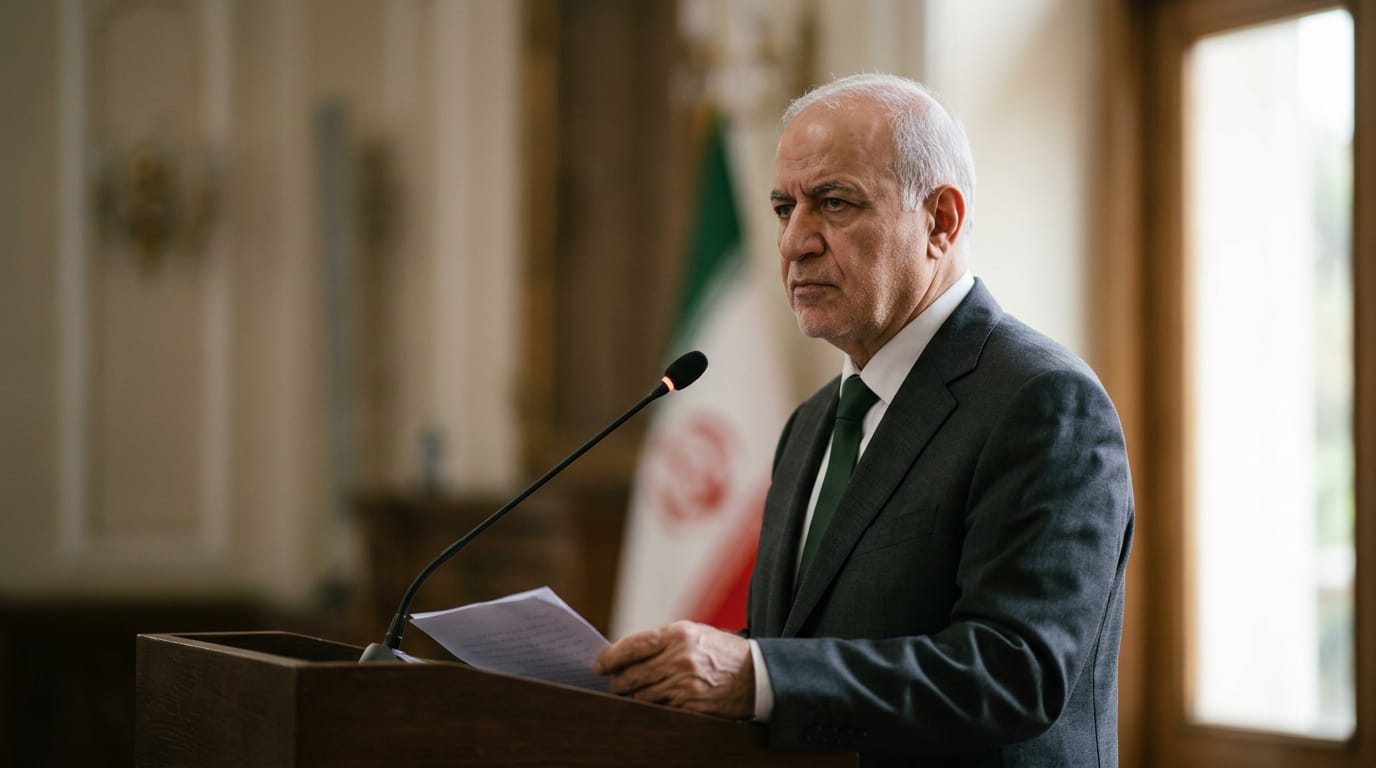
TEHRAN — Iranian President Masoud Pezeshkian has staunchly defended a recent Memorandum of Understanding (MOU) with the United States, positioning the precarious agreement as the nation's most viable route out of a prolonged state of "neither war nor peace." His defense comes as a critical 60-day deadline for the deal's implementation expired, leaving both countries far from a comprehensive accord and exacerbating regional instabilities. The President emphasized the agreement, signed by U.S. President Donald Trump in June, represented a path forward that upholds Iran's dignity and national interests, despite widespread skepticism and renewed military posturing.
The diplomatic overture, intended to de-escalate military confrontation and pave the way for a resolution on Iran's nuclear program, has faltered significantly in its initial stages. While Tehran grapples with severe economic sanctions and a naval blockade, Pezeshkian's administration insists that engagement, rather than isolation, offers the best hope for attracting crucial investment and stabilizing the nation's economy. The delicate balance between national interest and international diplomacy continues to define Iran's foreign policy landscape, particularly as hardline elements within the government voice strong opposition to any perceived concessions.
The President's Rationale: Escaping the Stalemate
In a speech published by the state-run IRNA early Sunday, President Pezeshkian articulated his administration's commitment to the memorandum, asserting that members of Iran's Supreme National Security Council view it as the optimal agreement. He contended the deal was forged on principles of "dignity, wisdom, and the national interest," explicitly refuting any claims of capitulation. Pezeshkian, who assumed office in July 2024, has highlighted the imperative of moving beyond a debilitating impasse characterized by ongoing conflict with the United States and Israel.
The Iranian economy remains under immense pressure from international sanctions and a naval blockade, which have severely hampered its ability to export oil, the country's primary revenue source. Pezeshkian acknowledged the "many problems" faced by Iranian citizens, attributing the current economic plight to a "full-scale economic, military and security war" with the United States. His advocacy for the MOU is inextricably linked to Iran's economic revival, arguing that the nation cannot attract necessary capital and investment in a climate of persistent risk. The President's remarks underscore a strategic push to alleviate economic hardship through diplomatic engagement, even as hardliners call for staunch resistance.
Pezeshkian affirmed that the Supreme Leader dictates national policies, indicating that the administration's pursuit of the MOU aligns with the broader strategic directives of the Islamic Republic. This reassurance is crucial within Iran's political structure, where the Supreme Leader holds ultimate authority over major state policies. The President's moderate stance, favoring a nuclear agreement with Western powers and modest domestic reforms, distinguishes him from his predecessors and suggests a potential shift in Iran's approach to international relations. He has also publicly stated that Iran does not seek conflict with its neighbors and harbors no ambition to develop nuclear weapons, signaling a desire for regional stability.
Anatomy of a Precarious Pact
The Memorandum of Understanding, signed in June by U.S. President Donald Trump, established an ambitious 60-day timeframe for de-escalating the conflict with Iran and progressing toward a comprehensive agreement on its nuclear activities. This interim deal aimed for an immediate and permanent cessation of military operations and the lifting of blockades. Key provisions included plans for the reopening of the Strait of Hormuz, a critical global shipping lane, and a commitment from the United States and its regional allies to allocate at least $300 billion for Iran's reconstruction and economic development.
The MOU outlined a path for future negotiations on Iran's nuclear program, a central and long-standing point of contention. The financial commitment from the U.S. and its partners was intended to provide a significant boost to Iran's economy, which has been severely impacted by years of sanctions. The mechanism for implementing this reconstruction plan was to be finalized as part of the broader deal within the 60-day period. The agreement represented a significant, albeit fragile, attempt to move away from direct military confrontation and toward a negotiated resolution of deeply entrenched issues.
The Stalled Peace: Challenges and Setbacks
Despite the initial optimism surrounding the MOU, the 60-day deadline passed last week with minimal progress on critical fronts. The two nations remain significantly divided, particularly regarding the reopening of the Strait of Hormuz. Reports indicate that the interim deal effectively collapsed weeks after its signing, with renewed hostilities marking the immediate aftermath.
Following the agreement, Iran reportedly began firing on vessels utilizing a bypass route along the coast of Oman, a route overseen by the U.S. military. This action prompted retaliation from the U.S., which in turn led to Iranian attacks on Arab nations hosting American forces, including Jordan, Kuwait, and Bahrain. In response to these developments, the U.S. rescinded waivers that had allowed Iran to sell its oil internationally and reinstated a blockade on Iran's ports, effectively undoing some of the key concessions outlined in the MOU.
The failure to make headway on reopening the Strait of Hormuz remains a significant hurdle. The June deal provided a vaguely defined role for Iran in facilitating traffic through the strait, opening the possibility for Tehran to levy fees after the deadline. Iran has since asserted control over the waterway, further complicating negotiations and demonstrating the deep distrust that continues to plague bilateral relations. The absence of detailed nuclear talks and the resumption of tit-for-tat actions underscore the formidable challenges in translating an initial memorandum into a lasting peace agreement.
Internal Divisions and Regional Dynamics
The defense of the memorandum by President Pezeshkian is set against a backdrop of complex internal political dynamics within Iran and heightened regional tensions. While Pezeshkian, described as a reform-oriented leader, champions diplomatic engagement, his administration faces considerable pressure from hardline factions. Mohsen Rezaei, the newly appointed hardline head of Iran's Supreme National Security Council, has issued stark warnings to neighboring countries against supporting any further U.S. efforts to sanction Tehran. Rezaei's statement, delivered forcefully, threatened "seismic" retaliation, reflecting a hardening stance within the security establishment.
Pezeshkian's selection of a cabinet that included figures such as Abbas Araghchi, a negotiator of the 2015 nuclear deal, indicates an attempt to balance different political camps and pursue a diplomatic path. However, the influence of the Supreme Leader, who died in 2026, and the continued strong presence of hardliners within key governmental and military structures mean that Pezeshkian's reformist agenda operates within defined constraints.
Regional actors have also played a role in the unfolding narrative. Pakistan, acting as a mediator, facilitated the initial announcement of the MOU. Its army chief is scheduled to visit Tehran, reportedly to strengthen bilateral cooperation and continue efforts to de-escalate tensions between the U.S. and Iran, urging both nations to return to the negotiating table. This highlights the broader international interest in resolving the prolonged conflict and the potential for regional diplomacy to influence the larger U.S.-Iran dynamic.
A Path Forward Amidst Uncertainty
President Pezeshkian's defense of the memorandum with the United States illustrates the intricate and often contradictory nature of Iranian foreign policy. His administration views the agreement, however imperfect and currently stalled, as a necessary step to navigate a perilous geopolitical landscape and secure Iran's economic future. The aspiration for a state beyond "neither war nor peace" remains a powerful motivator for engagement.
Yet, the path forward is fraught with obstacles. The passing of the 60-day deadline without substantial progress, coupled with renewed military incidents and sanctions, underscores the deep chasm of distrust between Tehran and Washington. The divergence between Pezeshkian's diplomatic overtures and the hardline rhetoric from elements within his government further complicates the situation. While the President seeks to leverage diplomacy to secure Iran's rights and economic stability, the effectiveness of this strategy will depend on a significant shift in the current trajectory of US-Iran relations, requiring both sides to overcome profound disagreements and a history of antagonism. The pursuit of peace remains an arduous journey, demanding sustained commitment and flexibility from all parties involved.