Iran's Strategic Chokepoint: How Hormuz Becomes Tehran's Leverage Against Washington
The Strait of Hormuz, a narrow maritime passage linking the Persian Gulf to the open ocean, has once again become the epicenter of escalating tensions between Iran and the United States. Recent Iranian attacks on commercial vessels in the vital waterway have drawn swift retaliation from Washington, underscoring Tehran's enduring strategy of weaponizing its geographic advantage to exert pressure on the U.S. and its allies. As global energy markets remain highly sensitive to disruptions, Iran's actions in this critical chokepoint serve as a potent reminder of its capacity to influence international politics and economy, even amid ongoing diplomatic efforts.
The World's Oil Artery Under Duress
At its narrowest point, the Strait of Hormuz is only about 21 miles wide, yet its strategic significance is immeasurable. It is globally recognized as the world's most important oil transit chokepoint. In 2022, an average of 21 million barrels of oil per day, representing approximately 21% of global petroleum liquids consumption, flowed through the strait. Beyond crude oil, roughly one-fifth of the world's liquefied natural gas (LNG) trade also transits this passage annually. Major consumers, including China, India, Japan, and South Korea, are heavily dependent on these energy shipments, with 82% of crude oil and condensate moving through Hormuz destined for Asian markets in 2022.
For Gulf nations such as Saudi Arabia, Iraq, Kuwait, the United Arab Emirates, and Qatar, the Strait of Hormuz is the primary and most economically viable route for their vast energy exports to reach international markets. Any disruption, whether from geopolitical tensions, military conflict, or maritime incidents, can immediately impact global oil prices, energy security, and international geopolitics. The lack of practical alternatives for bypassing the strait for most of these exports amplifies its critical role in the global energy network, making it a constant focal point for international security concerns.
Iran's Calculated Brinkmanship: A History of Harassment and Control
Iran's use of the Strait of Hormuz as a lever against perceived adversaries is not a new phenomenon. Iranian political and military leaders have historically threatened to control or close the Strait, often in response to international sanctions or military pressures. This threat forms a key component of Iran's deterrent posture, aiming to cultivate an atmosphere of uncertainty and instability to achieve its strategic goals.
The recent past has seen a resurgence of these tactics. This week, multiple commercial vessels, including a Qatari LNG tanker and a Saudi tanker, were struck in or near the Strait of Hormuz, prompting the U.S. to revoke oil sanctions waivers for Iran. U.S. Central Command confirmed these were Iranian attacks, describing them as "unwarranted, dangerous, and a clear violation of the ceasefire" that had been in place. These incidents follow earlier reports of Iran's strategy to mine the Strait, aiming to channel commercial shipping into sea lanes closer to its shores, thereby making it easier to control traffic and potentially collect "tolls." Iran's Revolutionary Guard Corps has even publicly declared "complete control" over the Strait, signaling Tehran's ambition to dictate passage through the waterway.
Such actions echo previous instances of Iranian assertiveness, including the seizure of vessels. In November 2025, the Islamic Revolutionary Guard Corps seized a Marshall Islands-flagged vessel transiting the Strait, releasing it days later after confiscating its cargo. These moves are often aimed at projecting strength and distracting from domestic crises, with regional analysts noting that the threat of disruption allows Iran to impose its regional policies and exact unofficial tribute.
Washington's Firm Stance: Protecting Freedom of Navigation
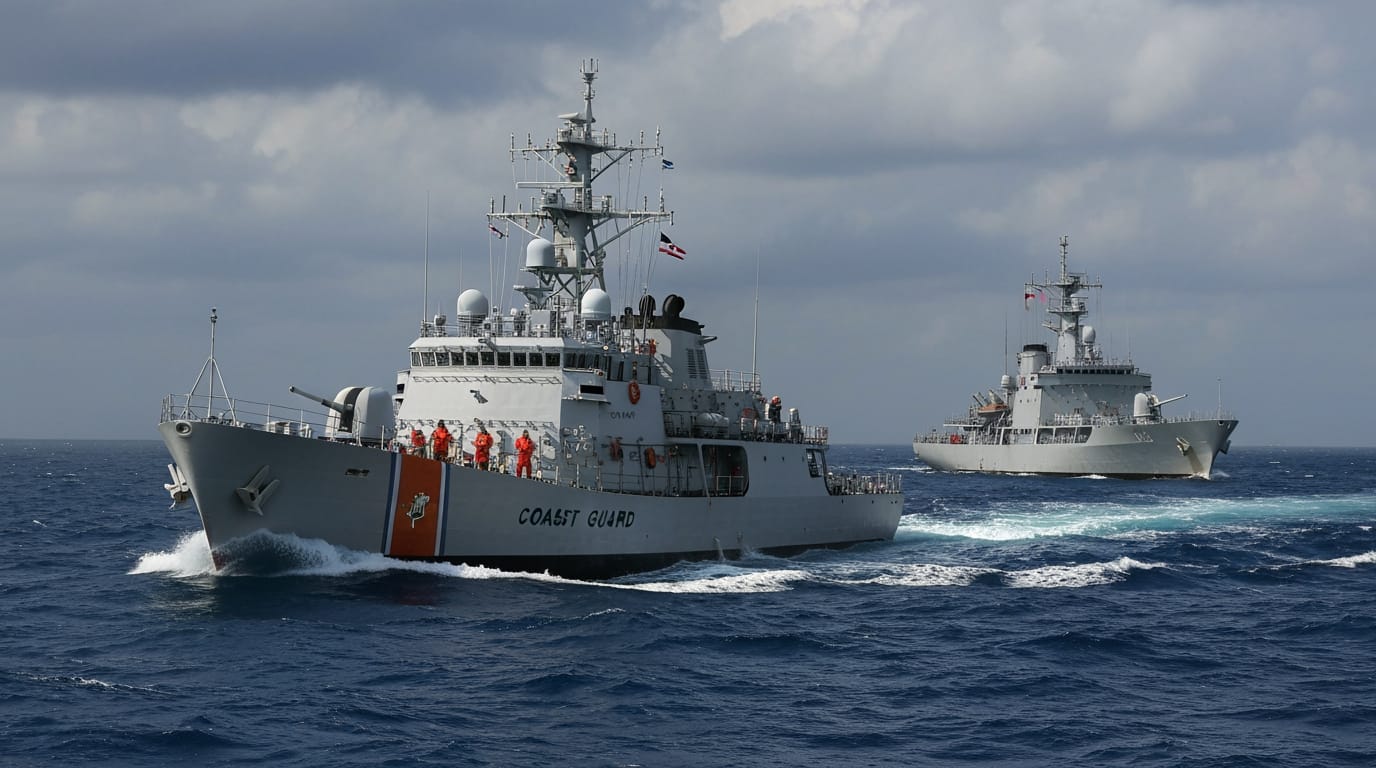
In response to Iran's persistent threats and recent attacks, the United States maintains a robust military presence in the region, primarily through its Fifth Fleet, headquartered in Bahrain. The U.S. Fifth Fleet's area of responsibility covers approximately 2.5 million square miles, including the Persian Gulf, Gulf of Oman, and parts of the Indian Ocean, and is tasked with safeguarding critical shipping lanes, particularly the Strait of Hormuz. This fleet operates to ensure freedom of navigation, deter regional threats, and protect international commerce.
Following the latest attacks on commercial vessels, the U.S. Central Command announced "powerful strikes" against more than 80 Iranian targets. These retaliatory strikes targeted Iranian air defense systems, command and control networks, coastal radar sites, anti-ship missile sites, drone launch sites, and Revolutionary Guard Corps small boats. The US action was an immediate response to Iran's aggression and a clear message that such behavior will be met with consequences. Simultaneously, the U.S. Office of Foreign Assets Control revoked General License X, which had authorized the sale of Iranian oil, effectively tightening sanctions. This dual approach of military response and economic pressure highlights Washington's commitment to protecting maritime security while also penalizing Iran's destabilizing actions.
Global Economic Reverberations: A Threat to Stability
The volatility in the Strait of Hormuz carries significant global economic consequences. Disruptions in this waterway can lead to sharp increases in oil and LNG prices, impacting energy costs for importing nations and contributing to global inflation. The "2026 Iran war," which saw the effective closure of the Strait, caused Brent Crude prices to surge past $120 per barrel and forced QatarEnergy to declare force majeure on all LNG exports. Experts noted that a prolonged closure would be "the greatest single risk" to both energy markets and the global economy, potentially leading to a global recession.
Beyond energy, the impact extends to global supply chains, transportation costs, and even food security. Countries in South Asia, for instance, rely heavily on the Strait for energy and fertilizer imports, with a prolonged closure threatening industrial production, leading to higher electricity costs, and potentially triggering civil unrest due to rising food prices. Gulf Cooperation Council states, which import between 70% and 90% of their food supply, would also face a "grocery supply emergency." The economic fallout underscores how intimately global markets are tied to the stability of this single chokepoint.
A Precarious Balance in Geopolitical Chess
The ongoing saga in the Strait of Hormuz illustrates a dangerous and delicate geopolitical balance. For Iran, control or the threat of control over this strategic waterway is a powerful tool to assert regional influence, respond to sanctions, and gain leverage in negotiations with international powers, particularly the United States. For the U.S. and its allies, ensuring freedom of navigation through the Strait is paramount for global energy security and economic stability.
The cycle of Iranian provocations and U.S. retaliations, as witnessed this week, demonstrates the inherent risks of escalation. While a full closure of the Strait has historically been deemed unlikely due to the severe repercussions for Iran itself, the strategy of creating uncertainty and partial disruption has proven effective in generating political and economic pressure. As diplomatic efforts continue alongside military posturing, the Strait of Hormuz will remain a critical barometer of the broader tensions between Tehran and Washington, its tranquility a constant testament to a precarious, yet vital, global equilibrium.